

Beyond the Lundin Trial: South Sudanese victims seek justice and compensation through Norway
For communities in South Sudan’s former oil-producing areas, the consequences of the country’s oil war continue long after the violence that forced thousands of people from their homes.
More than two decades after alleged war crimes were committed during oil operations in the former Sudan, South Sudanese victims are still seeking justice, recognition and compensation for the suffering they endured.
While a Swedish court is nearing a verdict in the war crimes trial involving former executives of Swedish oil company Lundin, civil society organisations are pursuing another route to accountability through Norway.
The effort centres on a complaint filed with Norway’s National Contact Point under the Organisation for Economic Co-operation and Development (OECD) guidelines for responsible business conduct.
The complaint concerns the 2022 merger between Lundin and Norwegian oil and gas producer Aker BP and whether human rights risks to potential victims were adequately considered.
The case was discussed in the 11th episode of The Lundin War Crimes Trial, a podcast produced by PAX and Global Idé, featuring Raymond Johansen, Secretary-General of Norwegian People’s Aid; Egbert Wesselink, former senior adviser at PAX; and journalist Petter Bolme of Global Idé.
Wesselink said the organisations raised concerns that the restructuring of Lundin’s business could leave the entity facing the allegations without sufficient assets to meet potential compensation claims if the accused were convicted.
He said the merger separated Lundin’s assets, estimated at about 12 billion US dollars, from the company left behind in Sweden, raising questions about its ability to meet possible liabilities.
“The whole idea behind the merger is to separate the assets from the legal liability,” Wesselink said.
He explained that the complaint was intended to establish whether Aker BP had adequately assessed the potential human rights consequences of the merger and consulted affected communities before completing the transaction.
Under the OECD guidelines, companies are expected to assess the human rights and environmental risks associated with their business decisions. Although the guidelines are not legally enforceable in the same way as national laws, member countries have National Contact Points that examine complaints and issue recommendations.
Wesselink said the Norwegian National Contact Point concluded that Aker BP had failed to conduct adequate human rights due diligence regarding the potential impact of the merger on victims’ rights.
He said the assessment also found that the company had not meaningfully engaged with affected stakeholders or adequately addressed the risks identified in the complaint.
One of the significant outcomes, according to Wesselink, was the recommendation that Aker BP engage with Orrön Energy, the entity left behind in Sweden, to explore options for ensuring that victims could still receive compensation.
The organisations involved in the complaint include five European organisations and three South Sudanese groups: PAX, Civil Society Coalition on Natural Resources, Global Idé, Church Aid, Liech Victims Voices, Norwegian People’s Aid, South Sudan Council of Churches and Swedwatch.
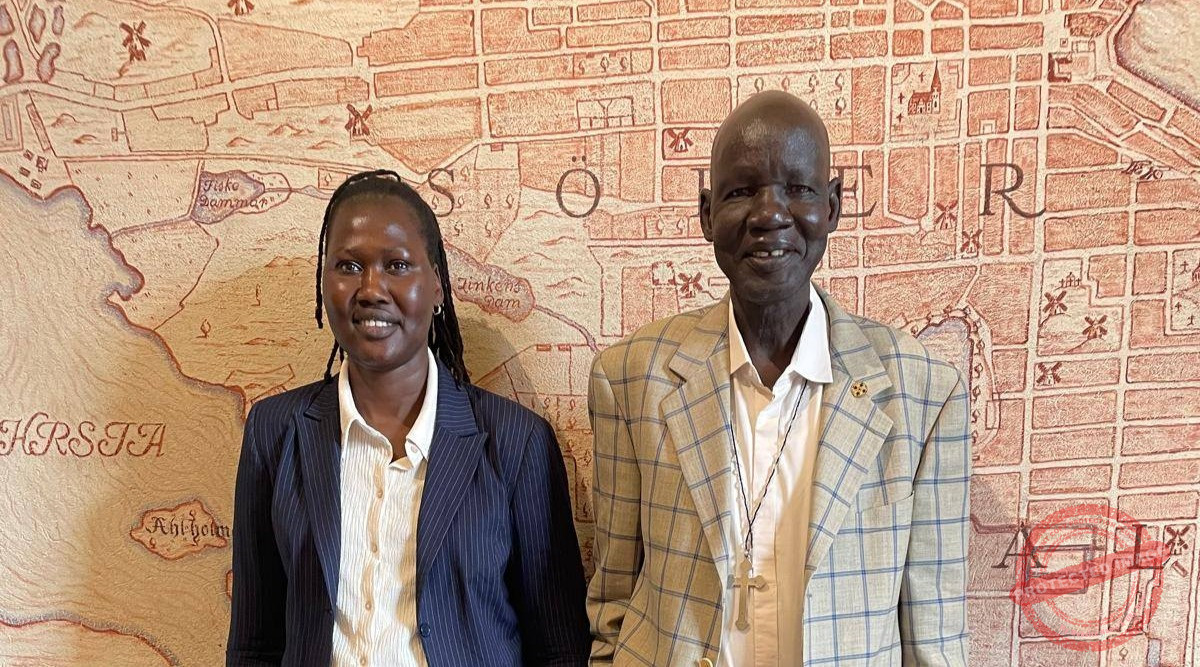
Liech Victims Voices represents people affected by the conflict in the areas where Lundin operated.
Johansen said Norwegian People’s Aid became involved because of its long-standing work in Sudan and South Sudan and its interest in ensuring that oil and gas companies operating abroad are held to responsible business standards.
He said the outcome of the Norwegian assessment was an important step, but expressed disappointment over Aker BP’s response.
“Aker BP was, of course, very unhappy with the result. They responded to the media that they disagree with this final statement, and they consider the case closed and do not plan any further action,” Johansen said.
He added that the organisations believed the company had responsibilities arising from the merger and should engage with the victims’ concerns.
Johansen also said representatives of the victims had travelled to Norway to seek discussions with Aker BP, but the company declined a meeting request.
The Swedish trial and the victims’ quest for justice
The Norwegian complaint is unfolding alongside a major war crimes trial in Sweden involving Ian Lundin, former chairman of Lundin Oil, and Alex Schneiter, the company’s former chief executive.
The two are accused of complicity in war crimes allegedly committed in the former Sudan between 1999 and 2003, during military operations linked to securing oil exploration activities in Block 5A.
The allegations relate to a period in which communities in the oil-producing areas experienced violence, displacement and destruction.
According to the podcast’s introductory account, nearly 200,000 people were forced to leave their homes, while an estimated 12,000 people lost their lives.
The prosecution has sought prison sentences of ten years for Lundin and six years for Schneiter. It has also requested the forfeiture of approximately 2.4 billion Swedish kronor and a company fine of three million kronor.
Journalist Petter Bolme, who has followed the proceedings, said the prosecution presented evidence, including company documents and security reports, which it argued demonstrated the executives’ knowledge of the violence around the company’s operations.
He said testimony from victims was among the most significant parts of the proceedings.
“The strongest point is probably the plaintiffs’ descriptions of what happened to them. It’s very hard to go around their experiences and their lives destroyed because of the oil development,” Bolme said.
Wesselink also highlighted the importance of the victims’ testimonies, saying their accounts described similar experiences of attacks, displacement and violence in different locations.
He said the prosecution had also presented internal company correspondence and security reports that, in his view, provided important evidence about what company executives knew about the security situation.
The defence’s position and the court’s final assessment remain separate from the allegations and arguments presented by the prosecution and the civil society organisations.
At the time of the podcast recording, the hearing phase of the trial had concluded, with the judges expected to deliver a verdict in early December.
Compensation beyond prison sentences
For the organisations supporting the victims, the pursuit of justice goes beyond whether the accused executives are convicted.
Wesselink said a conviction could provide recognition of the suffering experienced by affected communities, but added that legal proceedings alone would not address the continuing social and economic consequences of the conflict.
He said estimates based on compensation claims filed by lawyers representing victims in the Swedish proceedings could reach between three and five billion US dollars, although the final amount would depend on the legal outcome and assessment of claims.
However, he argued that meaningful justice should also include practical support for affected communities.
“The whole idea is, of course, to have some kind of reconciliation process. That Lundin apologize and then have a dialogue and ask what you need, you know, what would be justice in your eyes,” he said.
He pointed to access to education, food security, healthcare and economic opportunities as possible areas of support for affected families.
Johansen said the Norwegian assessment was an important step towards corporate accountability, but warned that its recommendations could have limited impact if companies were free to ignore them without consequences.
He said the organisations would continue following developments in Norway, while the Swedish trial could also influence the broader pursuit of justice.
For the victims, the two processes represent different avenues in a long search for accountability: one through criminal proceedings in Sweden and the other through corporate responsibility mechanisms in Norway.
As the Swedish court prepares to deliver its verdict, the central question for affected South Sudanese communities remains whether the pursuit of justice will eventually translate into meaningful recognition, reparation and improved living conditions.