





“A pillar of our national culture” – Ministry eulogises veteran playwright Joseph Abuk
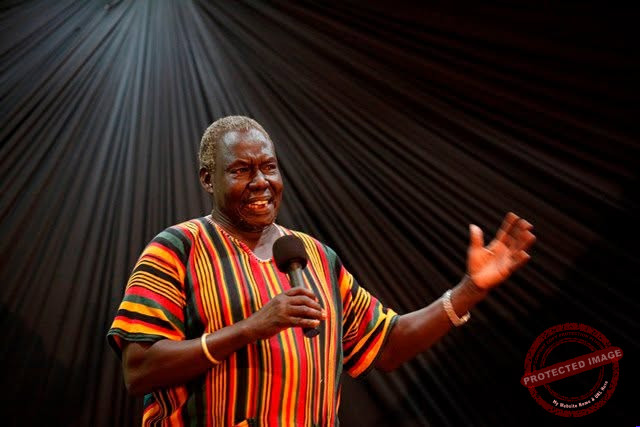
The Ministry of Culture, Museums and National Heritage has paid tribute to late veteran playwright Joseph Abuk Juma, describing him as a pillar of South Sudan’s national culture.
Abuk, a veteran playwright, author and translator, died on Sunday at the age of 83, according to his family.
In a condolence statement issued on Friday, the ministry described his death as a major loss to South Sudan’s cultural sector.
“The Ministry of Culture, Museums and National Heritage has learnt with deep sorrow and shock of the passing on of Mr. Joseph Abuk Juma, a distinguished son of South Sudan and a pillar of our national culture,” the ministry said in the statement.
“The entire staff of the Ministry extend their heartfelt condolences to his family, relatives, friends, and the whole cultural fraternity of South Sudan,” the statement added.
The ministry said Abuk made significant contributions to South Sudan’s cultural identity, arts and heritage.
Among his major contributions was his role as chairman of the technical committee that oversaw the selection of South Sudan’s national anthem in 2010.
The ministry said his leadership helped guide the search for a national identity on the eve of independence.
Abuk was also the founder of the South Sudan Theatre Organization, which represented the country on the international stage.
One of his notable achievements was translating and adapting William Shakespeare’s Cymbeline into Juba Arabic.
The play was performed at Shakespeare’s Globe Theatre in London in 2012 by a cast whose members came from different ethnic communities in South Sudan.
The ministry also credited Abuk with promoting and preserving South Sudanese culture, arts and music throughout his career.
He hosted the Culture and Tradition programme on SSBC, which focused on promoting the country’s cultural heritage.
The ministry described Abuk as a mentor who nurtured generations of artists, musicians and cultural workers.
It said he advocated for culture as a tool for unity, peace and national cohesion.
Abuk also served during the liberation struggle and continued his public service after independence.
The ministry said his legacy will continue through the national anthem and the cultural institutions he helped build.