
Editorial: Parliament stabs democracy in the back
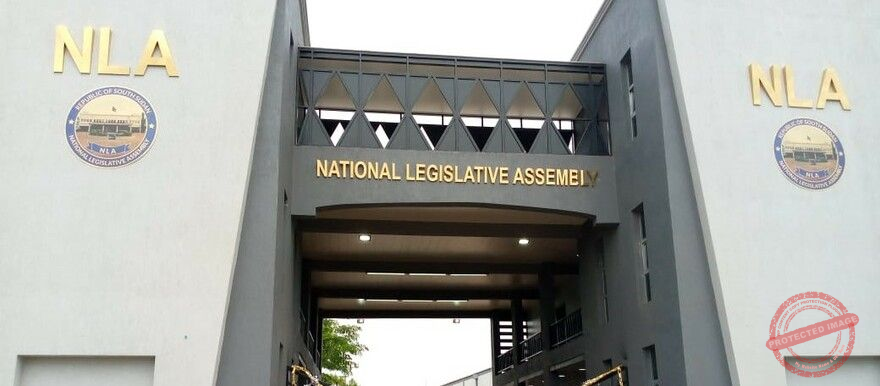
The decision by Speaker of the Revitalized Transitional National Legislative Assembly (RTNLA) to shut journalists and members of the public out of parliamentary proceedings on a constitutional amendment bill is not merely an administrative decision. It is a deeply troubling assault on democracy.
The media is widely recognized as the fourth estate—a critical pillar of democratic governance. Its responsibility is to scrutinize those who exercise public power, inform citizens about decisions made in their name, and hold leaders accountable. When the media is gagged, democracy is suffocated.
That is precisely what happened in Juba when Parliament ordered journalists and media crews out of the chamber as legislators began considering the Transitional Constitution of South Sudan 2011 (Amendment) Bill No. 13 of 2026.
The irony could hardly be greater. The matter under consideration was not an ordinary piece of legislation. It concerned the country’s basic law—the Constitution. Such a matter demands the highest possible standard of transparency, public scrutiny and accountability.
Instead, the doors were closed.
Speaker Joseph Ngere declared the proceedings in camera and directed security personnel to remove journalists and other non-members from the parliamentary premises. Parliament then proceeded with its deliberations and ultimately approved the constitutional amendment behind closed doors.
This raises fundamental questions: What did Parliament have to hide? Why were journalists prevented from witnessing a debate on a constitutional amendment? And why has Parliament failed to provide a convincing public explanation for the secrecy?
A democracy cannot operate on the principle that citizens are entitled to know what their representatives are doing only when those representatives choose to tell them.
Parliament is not a private club. It is an institution of the people. Legislators exercise authority on behalf of citizens, and constitutional amendments affect every South Sudanese—present and future. The public therefore has a legitimate interest in knowing how such decisions are debated, challenged and ultimately made.
The exclusion of the media is particularly disturbing.
Journalists do not attend Parliament merely as spectators. They serve the public by recording what happens, questioning lawmakers, providing context and ensuring that decisions taken in public office do not disappear into the shadows. A Parliament that prevents journalists from reporting on constitutional deliberations weakens one of the principal mechanisms through which citizens can hold government accountable.
Where the media is gagged, democracy is suffocated.
And where constitutional changes are debated and approved behind closed doors without a compelling explanation, the credibility of the entire process is placed in question.
Transparency is not a luxury in democratic governance. Accountability is not an inconvenience.