


How the Juba-Nimule road is choking South Sudan’s economy — Policy Analyst
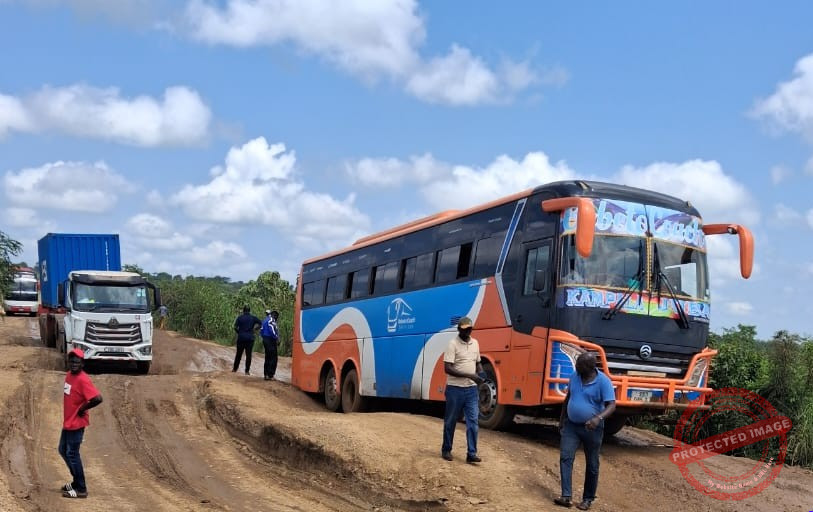
A South Sudanese policy analyst, James Baboya, warns that the crumbling 192-kilometer Juba-Nimule highway is strangling economic growth and draining billions from government revenue.
What was once a three-hour drive between Nimule and Juba has stretched into a seven-to-eight-hour ordeal, creating a transport bottleneck that Policy Analyst James Baboya warns is choking South Sudan’s economy and costing the government billions in lost revenue.
The road between Nimule and Juba spans 192 kilometers. A commercial driver could once navigate the stretch in under three hours. Today, that journey takes seven to eight hours, turning a transit route into an all-day haul for freight carriers and commuters.
Speaking to Eye Radio after traveling the route on Sunday, August 23, James Baboya, CEO of the Institute of Social Policy in South Sudan, witnessed the conditions firsthand and warned that the route’s deterioration has evolved into an economic crisis.
He notes that South Sudan relies on the Nimule corridor to import roughly 90 percent of its food, manufactured goods, and supplies arriving from the Port of Mombasa through Uganda and Kenya.
Baboya points out that as cargo trucks and intercity passenger buses navigate deep ruts and washed-out segments, vehicle rollovers have become routine. He emphasizes that cargo destined for markets in Juba often ends up spilled along the roadside, resulting in millions of pounds in damaged inventory for private importers, government contractors, and international humanitarian agencies.
“The situation on the Nimule Road has gotten worse—much worse compared to the many years it has served the people of South Sudan,” says Baboya. “It has created an enormous economic impact on businesses bringing goods and services to the country. This road has curtailed economic growth, suppressed employment creation, and worsened social and environmental conditions for citizens.”
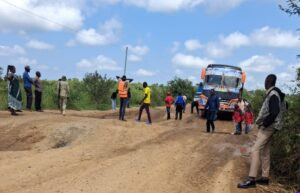
Baboya adds that the human toll is equally pronounced, explaining that intercity passenger buses operating between Kampala and Juba now face 24-hour transit delays, forcing commuters to endure conditions on a route that once took a fraction of the time.
Beyond the physical loss of goods and transport costs, Baboya stresses that the road’s condition suppresses public revenue at a time when South Sudan faces liquidity shortages.
| Metric | Current Status (Unpaved/Deteriorated) | Projected Status (Fully Tarmacked) |
| Average Transit Time | 7 to 8 hours | 2.5 to 3 hours |
| Monthly Tax Revenue (NRA) | ~60 Billion SSP | 200 Billion – 260 Billion SSP |
| Estimated Monthly Loss | — | 180 Billion – 220 Billion SSP |
Citing National Revenue Authority records, Baboya notes that tax checkpoints along the Nimule route generate roughly 60 billion South Sudanese pounds (SSP) monthly.
However, his policy estimates indicate that a tarmacked highway could generate between 200 billion and 260 billion SSP each month by facilitating trade volumes and turnarounds.
By failing to upgrade the highway, Baboya estimates the national treasury forfeits between 180 billion and 220 billion SSP every month. He emphasizes that this lost revenue could cushion the country’s liquidity crisis, pay civil servants and security forces, fund government operations, and anchor infrastructure projects.
Baboya warns that the infrastructure deficit extends beyond Nimule. He identifies key regional arteries across the country—including the Yei-Kaya, Mundri-Maridi, and Yambio corridors—as facing similar degradation, which he says drives up the cost of doing business nationwide and creates a mismatch between fiscal policy and economic realities.
Furthermore, Baboya argues that this physical friction hampers South Sudan’s ability to attract foreign direct investment, as international investors require functional trade infrastructure to commit capital.
Ultimately, Baboya asserts that without prioritizing trade infrastructure, building public trust and demonstrating economic progress remains a challenge. In his view, paving the Nimule corridor is a prerequisite for South Sudan’s economic stability, trade integration, and fiscal sustainability.