
From dreams to survival: The Struggles of a South Sudanese woman stranded in Libya

“My ordeal began in childhood, shaped by the harsh circumstances we faced in Sudan,” Adaw recalls. Her mother struggled to provide for their family, often working in the alcohol industry, which led to frequent arrests and educational setbacks for Adaw and her siblings. “I vividly remember standing before the judge in my school uniform as he questioned my mother,” she shares. “Moved by her plight, the judge offered her a lifeline—he ordered that she be allowed to work in the court.”
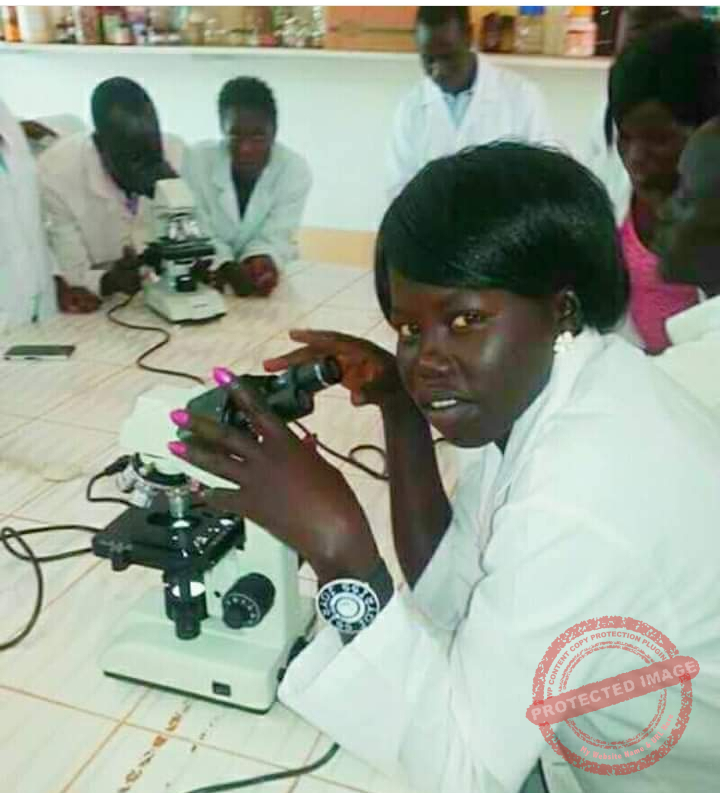
In 2017, Adaw fled to Egypt, where she found work as a nurse—a step down from her aspirations but a way to apply her skills. Yet, her six years in Egypt were filled with challenges, including discrimination and limited opportunities. Despite these struggles, Adaw was determined to pursue her education and was accepted into the Faculty of Medicine in 2016.
“Just as my life seemed to be taking a positive turn, war erupted in Wau,” she explains. Married and pregnant with her second child, Adaw was forced to flee to Juba. Alone and struggling to provide for her children, she made the difficult decision to migrate to Libya, hoping for a better future.
However, life in Libya proved even harsher. Despite her qualifications, Adaw could only find work as a school cleaner. “In 2023, I made the difficult decision to search for a better life for my children and me,” she recalls. “When I arrived in Tripoli, I realized there were few families from South Sudan. I had no place to stay and was forced to live on the streets.”
After a week, she secured a job and found temporary housing, feeling a glimmer of hope. Yet, that hope was short-lived. “When the schools closed for holidays, I lost my job, and with it, my only source of income,” she said.
The situation worsened when a government raid occurred near the UNHCR building, where she had sought refuge. “I returned to find my children gone, and I was arrested. Panic set in as I didn’t know where they had been taken.” After several days of uncertainty, she was released, but the worry of losing her children haunted her.
“I feel trapped by my circumstances,” Adaw expresses. “If things do not improve, I may be forced to take the dangerous step of illegal immigration to Europe.” Despite the immense challenges she faces, Adaw continues to hope for a solution that will allow her to build a stable future for her family. “My greatest hope is simply to provide for my children and ensure they have a safe life.”
Adaw’s journey is not just a story of struggle; it reflects the broader challenges faced by countless refugees and displaced individuals who continue to fight for a better future against overwhelming odds.