


Lawyer calls for an end to unlawful civilian detention amid concerns over Juba security sectors.
Human rights lawyer Godfrey Victor Bulla has called for civilian criminal cases to be handled by the police and public prosecution, amid complaints of alleged extortion, property seizures, intimidation and unlawful detention by security personnel operating in Juba’s residential areas.
Security sectors are local security posts established in residential neighbourhoods to support security operations. In Juba, they involve personnel from different institutions, including the police, Military Intelligence and the South Sudan People’s Defence Forces (SSPDF).
Speaking exclusively to Eye Radio yesterday, Bulla questioned the role of military personnel in handling civilian criminal cases, saying security sectors should be headed by police officers rather than the army.
His remarks follow a warning by Juba’s Caretaker Mayor, Christopher Sarafino Wani Swaka, who cautioned security personnel against unlawfully detaining suspects at these posts.
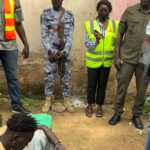
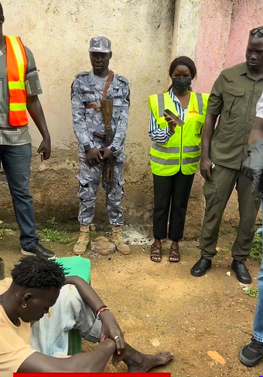
During an inspection tour in Nyakuron West, commonly known as Number Three, on October 17, Swaka questioned why a young man suspected of committing a crime was being held at a security sector instead of being taken to a police station for investigation.
“You have no right to keep someone who is suspected of a crime for 24 hours here in the sector. According to the law, you are not allowed because you are not here to carry out police duty or the prosecution procedure,” Swaka said, warning that personnel could be held responsible if a detainee died in their custody.
Bulla said military personnel should not assume the responsibilities of civilian police and prosecutors.
“The sector is supposed to be headed by police, but we find that the sector is headed by army personnel. What do army personnel know about the issues to do with civilian procedures of criminal law? The army is dealing with the SPLA Act, and within the Criminal Procedure Act, where the role of the police to apprehend is discussed. There is no mandate given to the army to arrest somebody. They have taken the jurisdiction of the court. They have taken the jurisdiction of the public prosecution, that’s completely wrong.”
Bulla also warned that inadequate accountability could allow individuals to misuse their positions and uniforms to intimidate civilians.
“This is anarchy and, to make matters worse, everybody can maltreat in the name of security personnel,” he said.
The concerns come amid efforts to reorganise security operations in the capital. On October 15, the Integrated Criminal Police introduced a new security arrangement at Mabil Checkpoint, including the establishment of Sector Seven and a committee tasked with reorganising existing sectors and strengthening operations in identified security hotspots.
The mayor’s warning and Bulla’s concerns highlight the need for security personnel to observe lawful arrest and detention procedures and transfer suspects to police stations for investigation and other legal processes.
Bulla called for clearer separation of responsibilities between the military, police and public prosecution, alongside investigations into reported cases of extortion, unlawful detention and property seizure.