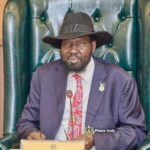
Interview: Why James Boboya is demanding reparations for his father’s ‘ghost’ appointment

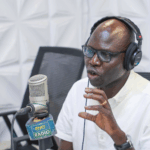
In this exclusive interview with Eye Radio Program Manager Koang Pal Chang, James Boboya Edimond speaks out after the Office of the President mistakenly appointed his late father, Steward Sorobo Budia, to a high-level government position—six years after his passing.
Although the government regretted the mix-up, James describes the error as a painful mockery of his father’s legacy and a violation of cultural respect for the dead. He is now calling for a formal meeting and compensation from the government to address the emotional damage caused to his family and community.
Koang Pal Chang: The nation was shocked to see your late father’s name on a list for a new political appointment. As a family, how did you first process the news that a man you buried years ago was being named to a high-level dialogue?
James Boboya: When we first saw the list circulating on social media containing our father’s name, it sparked a lot of internal reflection and frantic phone calls within the family. Many people who knew our family and the late Steward reached out to us. With every call, the memory of our dad became more alive. A few days later, we saw a statement from the Office of the President apologising and offering condolences. It is difficult to imagine—this is a man who lived close to the President’s own home, and the government even contributed to his burial. How could the government have no idea that he had died? For years, we have asked government officials for information because, as a signatory to the peace agreement, he was supposed to be represented in the government. We still don’t know if someone has been legally representing him without our consent. We are looking for answers.
Koang: To clear up any public confusion regarding the timeline: exactly when did your father pass away, and in what capacity did the government provide support for his funeral at that time?
James: That was in 2021, around January. By now, our dad has been in the grave for six years.
Koang: Now, there is also an allegation—and it is good for you to react to this—that he allegedly passed away while under detention. Is this the case?
James: No, our dad died of natural causes. One of the biggest impacts was that he was in the suburbs for negotiations, and then later, we went to Khartoum. As soon as the peace agreement was signed, it took a long time to be implemented, and those factors impacted the life of our dad. Eventually, he passed away from natural causes; he was not under detention.
Koang: There have been rumors circulating that your father’s passing occurred while he was in state custody. Can you go on the record to clarify the circumstances of his death and his whereabouts at the time?
James: No, our father died of natural causes. The peace process had a significant impact on his health; he was involved in negotiations in the suburbs and later in Khartoum. After the agreement was signed, the long delays in implementation took a toll on his life. Eventually, he passed away from natural causes at the Juba Medical Complex. He was never under detention.
Koang: What was his official position at the time of his passing?
James: His last formal role was as a signatory to the peace agreement and a member of the National Dialogue.
Koang: How would you describe his role in the governance and liberation of this country?
James: I would describe him as a loving person and a dedicated politician who wanted to resolve South Sudan’s problems. During difficult times, when many South Sudanese were incarcerated in Juba under the hands of the NCP, he used his influence to provide information and advocate for their release. He helped many people return safely to Yei, Morobo, Lanya, and the Bahr el Ghazal region, even when access was nearly impossible during the fighting that led to the CPA. At that time, he served as the Commissioner for Greater Yei based in Juba.
Koang: You mentioned that the family is calling for “reparations.” What do you mean by that, and why is it necessary?
James: It is about public damage. This error has damaged us as a family and a community. We see the mockery on social media; people are treating this as a joke or a “funny” political mistake, but it has reopened old wounds. In any other situation, we might have sued the government. However, we don’t want to take a purely legalistic route. We want to engage in dialogue with the Office of the President to identify measures commensurate with the value of his life and the gravity of what transpired.
Koang: In layman’s terms, are you asking for compensation?
James: Yes, it is compensation for the damage and the inflicted wounds that were beginning to heal, but have now been rubbed raw again. This is a normal moral and cultural practice in South Sudan. We want to take the “soft route” of compensation and ensure the late Steward is properly represented in governance. If his name is being used to recognize a political party’s seat, then his family should be part of that process.
Koang: The Office of the President stated that a “peace partner” submitted his name. Do you know who that is or if someone is benefiting from his name in the shadows?
James: We have no official information on who might be representing our dad in the shadows. We aren’t in contact with the party that submitted the name. This is exactly why we are urging the Office of the President to meet with us. We need to know who is behind this.
Koang: Are you hopeful that your call will be heard?
James: I believe the soul of our father is lingering; he died believing this country would become more positive. If there is respect for humanity and ethical consideration, we will get answers soon. If the government goes quiet, we have no power to force them—our only power is God.
Koang: Will you sue the political party that submitted his name?
James: No. Many politicians have seen our statements and videos. We are looking for them to come forward and admit it was their mistake, not the President’s, so we can begin a dialogue.
Koang: How is this situation affecting the family emotionally?
James: He was a politician for all South Sudanese. In our culture, the benefactor has died, but the spirit remains alive. We have deep respect for the dead. We are simply asking for the consideration that anyone who loves this country deserves. We hope for a resolution soon and a positive response from the Office of the President.