
UN warns South Sudan against changing peace agreement

The United Nations has cautioned against unilateral amendments to South Sudan’s Revitalized Peace Agreement, saying any changes outside an inclusive and consensual process could undermine the country’s fragile transition.
Speaking to the UN Security Council on Tuesday, Under-Secretary-General for Peace Operations Jean-Pierre Lacroix said that proposals to amend the agreement — including plans to defer key tasks such as the constitution-making process until after elections — would affect the agreement’s primacy and its standing above national legislation.
Lacroix told the Council, “The United Nations, African Union, and IGAD have made clear that the Revitalized Peace Agreement remains the only viable framework for stability and that any revisions must be agreed upon by all signatories.”
The warning comes amid a deepening political deadlock among the main parties to the agreement, alongside renewed clashes in several parts of the country.
He added that the Sudan People’s Liberation Movement/Army-in-Opposition (SPLM/A-IO) has said it was unable to take part in discussions on the proposed amendments because of ongoing legal proceedings involving First Vice President Riek Machar.
Lacroix reported that the SPLM/A-IO has rejected the initiatives and stated that its participation in dialogue depends on Machar’s release.
Lacroix said President Salva Kiir recently formed a national Broad-Based Committee to conduct a 45-day consultative process on election-related matters, but the mainstream SPLM/A-IO was excluded.
He also outlined regional efforts to revive dialogue, including the updated Tumaini process and a proposal by the African Union’s High-Level Ad Hoc Committee for South Sudan (C5) to hold a leadership retreat in Pretoria.
“There is no military solution in South Sudan,” Lacroix told the Council. “Political leaders must return to dialogue and seek consensus to overcome the current stalemate.”
Rising Violence and Displacement
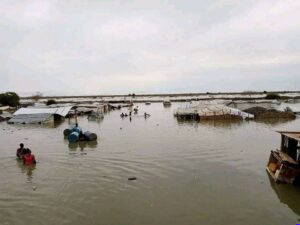
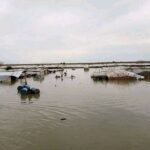
Lacroix reported a surge in violence, particularly in Jonglei State, where clashes between government and opposition forces have displaced more than 280,000 people. He said that reports of aerial bombardments, inflammatory rhetoric, and restrictions on humanitarian access have raised serious concerns for communities still scarred by previous cycles of conflict.
He said South Sudan remains one of the most dangerous countries for humanitarian workers, noting that 350 attacks on aid staff and facilities occurred in 2025, up from 255 in 2024.
Lacroix highlighted that the country is also grappling with its worst cholera outbreak in years, with more than 98,000 cases reported since September 2024.
Lacroix reported that health facilities have been struck or looted, including a hospital in Lankien hit during an airstrike on 3 February, which injured staff and destroyed medical supplies.
He said that humanitarian barges carrying assistance for 73,000 civilians were attacked in Upper Nile State between 30 January and 1 February.
He said more than 10 million people across the country require humanitarian assistance, including 7.5 million facing food insecurity.
Lacroix urged the Security Council to send a united message that attacks on civilians, health facilities, and humanitarian workers are unacceptable and that safe, sustained access for aid operations must be guaranteed.
UNMISS Presence Under Strain
Lacroix said UNMISS is implementing cost-reduction measures that have limited its operational reach. He said protection patrols have been cut by up to 40 percent in some areas and by as much as 70 percent where bases have closed.
He reported that the mission continues to deploy forces to areas of heightened risk, citing reinforcements sent to Akobo, Jonglei State, following renewed fighting, even though the base is scheduled for closure in March.
“The presence of UNMISS continues to serve as a deterrent in volatile areas and remains critical for civilian protection, humanitarian coordination, and support to the peace process,” Lacroix said.
He concluded, “South Sudan’s leaders must step back from this dangerous precipice and work collectively toward implementing the peace agreement and preparing the conditions necessary for credible, inclusive elections.”