Veteran liberation icon General Joseph Lagu is dead
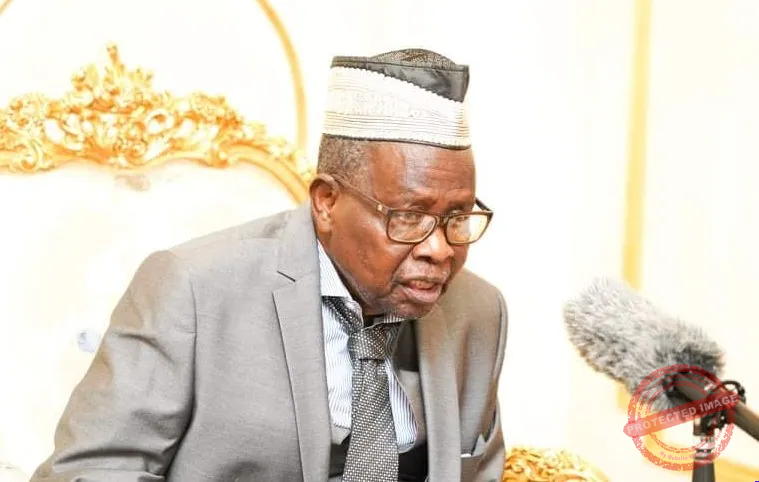
Veteran South Sudanese liberation leader General Joseph Lagu Yanga has died in Juba at the age of 95, according to a statement attributed to President Salva Kiir Mayardit.
President Kiir has declared national mourning in honour of the late general, ordering all national flags across South Sudan and at the country’s diplomatic missions abroad to fly at half-mast until General Lagu is laid to rest. The President also said he would personally bid the veteran leader a state farewell.
President Kiir described General Lagu as a towering nationalist and liberation hero who dedicated his life to the struggle for freedom and self-determination in South Sudan.
General Lagu, a former leader of the Anyanya One movement, was a prominent figure in the country’s liberation history and served in military, diplomatic and political roles.
The President praised his contribution to the country’s history, urging South Sudanese to mourn his passing while celebrating his life and legacy. He also called on citizens to unite in prayer for the bereaved family.
General Lagu’s death marks the loss of one of the historic figures associated with South Sudan’s long struggle for self-determination.
Lagu died on Monday, two days after his family appealed to the public to pray for his recovery following his illness and hospitalization in Juba.
He was one of the key figures in the first liberation struggle, leading the Anyanya One movement in its fight against the Sudanese government.
His death marks the passing of a major figure in the struggle for self-determination in the then southern Sudan.
According to the Joseph Lagu Foundation, Lagu was born on 21 November 1931 in Momokwe, a small settlement in Moli village, in present-day Magwi County, Eastern Equatoria State. He belonged to the Madi tribe.
Early life and military career
Lagu received his elementary or primary and secondary education in Malek, near Bor, and Rumbek, in present-day Lakes State, respectively.
After completing his education, he was admitted to study law at the University of Khartoum but chose to join the Military College in Omdurman, Khartoum, where he graduated in May 1960.
He was commissioned as an officer in the Sudanese Army and posted to the 10th Brigade under the Northern Command.
He was later selected to attend the Royal Military Academy Sandhurst in the United Kingdom but declined the offer and defected from the Sudanese Army to join the southern Sudanese liberation movement.
Leadership of Anyanya One
In 1963, Lagu became the leader of the resistance movement and renamed it Anyanya, a name derived from a deadly snake poison.
Under his leadership, the movement gained renewed momentum in the first Sudanese civil war, which began with the Torit mutiny on 18 August 1955 and ended in 1972.
The conflict is commonly known as the 17-year war.
Among the junior officers associated with the movement was John Garang de Mabior, who joined in 1970 and later led the Sudan People’s Liberation Movement/Army (SPLM/SPLA) during the second Sudanese civil war.
Lagu’s leadership culminated in the signing of the 1972 Addis Ababa Agreement with Sudanese President Gaafar Nimeiry, under the auspices of Ethiopian Emperor Haile Selassie.
The agreement granted southern Sudan regional autonomy and provided for the establishment of the High Executive Council.
Following the agreement, Lagu rejoined the Sudanese Armed Forces with the rank of Major General and was tasked with overseeing the integration of the different armed forces.
He later became commander of the Southern Division of the Sudanese Armed Forces, based in Juba.
The agreement ushered in a decade of relative peace and allowed the autonomous region to establish its own institutions of government.
During this period, five presidents of the High Executive Council were elected.
Political career and diplomatic service
In 1978, Lagu left military service and entered politics.
He was elected president of the High Executive Council through a popular vote, in a development described as the “wind of change.”
In 1982, Nimeiry appointed him second vice president of Sudan and transferred him to Khartoum.
However, in 1983, Nimeiry unilaterally abrogated the Addis Ababa Agreement, ending the regional autonomy arrangement.
Following the overthrow of Nimeiry’s government in 1985, Lagu relocated to the United Kingdom.
In 1989, he was appointed a roving ambassador by then Sudanese Prime Minister Sadiq al-Mahdi.
He continued in the role after Omar al-Bashir took power.
From 1990 to 1992, Lagu served as Sudan’s permanent representative to the United Nations in New York before returning to his role as a roving ambassador.
In 1998, al-Bashir appointed him as a presidential adviser, but Lagu declined the position, saying he wanted to maintain an independent voice on Sudan’s political affairs.
He remained involved in peace and reconciliation initiatives and worked with Moral Re-Armament, now known as Initiatives of Change.
His work took him to 18 countries.
Support for self-determination
Following the signing of the Comprehensive Peace Agreement in 2005 between the SPLM/A and the National Congress Party of Sudan, Lagu was again offered the position of presidential adviser to al-Bashir.
He declined the offer for a second time, choosing instead to support the Government of Southern Sudan in its pursuit of self-determination.
He later accepted an appointment as special presidential adviser to President Salva Kiir Mayardit in the lead-up to the 2011 referendum on independence.
Lagu subsequently retired from active service and settled in Juba.
His memoir, Sudan Odyssey: From Ruin to Hope, was published in 2006.
Lagu is survived by several children, including Josephine Lagu, a politician who previously served as a vice president in the transitional government.