
Ebola preparedness exercise exposes gaps in South Sudan’s emergency response capacity

South Sudan’s preparedness for a potential Ebola virus disease (EVD) outbreak faces operational gaps in emergency referrals, sample handling, safe burial arrangements and essential supplies, findings from a national simulation exercise have highlighted.
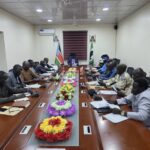
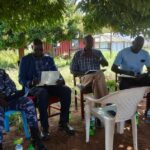
The gaps emerged from a full-scale simulation exercise conducted by the Ministry of Health, the National Public Health Institute (NPHI) and partners from 19 to 24 October in Juba, Yei and Yambio to assess the country’s ability to detect, contain and respond to a potential outbreak.
More than 100 participants from government institutions, UN agencies and health partners took part across 10 simulation sites, testing critical components of the national outbreak response system.
The exercise assessed early detection, notification, investigation, case management, infection prevention and control, laboratory operations, contact tracing, risk communication and coordination at national and subnational levels.
Following the exercise, participants reviewed performance and identified operational gaps requiring immediate and short-term action.
“A lot has been done BUT more needs be done to close the remaining gaps. This simulation exercise is critical to evaluate and find the remaining operational capacity gaps in our outbreaks management,” said Dr Moses Ongom, WHO Representative (OIC) for South Sudan.
The findings underscore the need to strengthen coordination and operational capacity across the country’s response systems before a potential outbreak occurs.
“As of October, South Sudan’s readiness level stands at 72.5 percent with varying levels of readiness in the 11 different pillars,” said Dr Ader Macar Aciek, Executive Director of NPHI.
He said the simulation was critical to determining whether the different preparedness pillars could work together effectively to contain a potential Ebola virus importation.
WHO’s October national pillar-based readiness assessment recorded 72.5 per cent. This assessment is separate from the simulation exercise.
As of 27 October, no confirmed EVD cases had been reported in South Sudan. The country continues to strengthen preparedness measures amid ongoing regional risks.
Ebola preparedness and surveillance
Nine new EVD alerts were reported nationwide between 22 and 27 October. Of the 81 cumulative alerts recorded by 27 October, 32 tested negative, 47 were discarded, and two cases in Morobo were awaiting laboratory results at that cut-off.
WHO’s 28 October update reported more than 5.4 million screenings at points of entry (POEs) since May 2026.
Between 22 and 28 October, 196,713 screenings were reported at the POEs in Nimule, Kaya, Olikwi and Rejaf River Port, with no public health alerts reported through those screening activities.
Under the leadership of the Ministry of Health and NPHI, WHO continued to support EVD preparedness efforts.
Five laboratory scientists were trained as trainers on the RADIONE Molecular Diagnostic System, a portable device for rapid disease testing.
In addition, 30 personnel certified by the International Air Transport Association (IATA) had been deployed across all 15 high-risk counties as of 28 October.
Safe and dignified burial preparedness
Gaps in safe and dignified burial preparedness also remain a concern.
According to the WHO update reported as of 28 October, 275 of the planned 300 volunteers had been trained, while 26 of 30 response teams were described as operational and equipped to respond.
Burial sites had been identified in seven of the 15 priority areas, although 13 counties still lacked dedicated burial transport, limiting partners’ ability to deploy.
The simulation also identified gaps in team activation and transport, highlighting the need to strengthen operational arrangements beyond training and equipment availability.
The Ministry of Health, NPHI and partners will continue to strengthen preparedness and response capacities to reduce the risk of EVD importation and improve outbreak readiness nationwide.