

South Sudan is not North Korea or Uganda: Dr. Jan Pospisil says elections could open door to generational political change
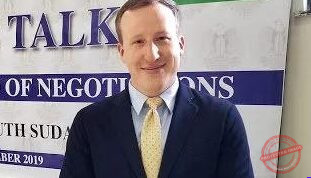
Political analyst Dr. Jan Pospisil has described South Sudan’s political environment as more vibrant and politically contested than often portrayed by international observers, arguing that the country cannot simply be compared to North Korea or Uganda.
Speaking in an interview with Kuirthiy TV, Dr. Pospisil said South Sudanese citizens were increasingly willing to express their political views, challenge established leaders and participate in electoral processes, despite the political and security challenges facing the country.
“South Sudan is really not North Korea, and it’s not even Uganda,” Pospisil said, adding that South Sudanese people were more willing to speak openly and push for their political views than some international observers might assume.
His remarks come amid preparations for the country’s long-awaited national elections, which have been extended following concerns over logistical, financial and institutional readiness.
Election extension was inevitable
Pospisil welcomed the announcement extending the election timeline, saying the December deadline had become technically unrealistic due to delays in funding, voter registration preparations and other essential electoral requirements.
He said the National Elections Commission (NEC) had been facing significant institutional and logistical challenges, making it difficult to complete the necessary preparations within the original timeframe.
“To be honest, I belong to those who are quite happy now that it’s finally announced,” he said, explaining that those closely following the commission’s work had known since August that the December deadline was unlikely to be met.
According to Pospisil, the electoral process requires several stages, including voter registration, candidate registration, screening, ballot preparation and the procurement and distribution of election materials.
He argued that these processes could not realistically be compressed into a few weeks, particularly when the commission was still dealing with funding uncertainties.
On the legal question surrounding the extension, Pospisil argued that the NEC had considerable authority under the Election Act to adjust electoral timelines when technical circumstances made the original arrangements impractical.
He specifically referred to provisions under Section 138, which he said grant the commission powers to postpone or adjust certain legal requirements where necessary to ensure elections can be conducted satisfactorily.
However, he identified questions surrounding the role of the Joint Monitoring and Evaluation Commission (JMEC) and the broader legal framework of the transitional period as issues requiring further consideration.
SPLM primaries expose growing generational change
One of the most significant developments Pospisil highlighted was the internal political contest within the Sudan People’s Liberation Movement (SPLM), where younger politicians have challenged established political figures during party primaries.
He described the development as an important indication that the ruling party is not necessarily a monolithic political organisation in which leadership decisions are always predetermined.
“What we’re seeing now in the primaries is actually quite an amazing thing of basically an old political class kicked out by young people who are just tired of what they have seen over the last years,” he said.
Pospisil argued that political proximity to the SPLM leadership or the presidency should not automatically be interpreted as evidence that an individual is part of the entrenched political establishment.
He maintained that the party’s internal contest could create opportunities for new political voices and potentially reshape the country’s political landscape.
He also suggested that the SPLM’s historical standing gives it a significant electoral advantage, although he cautioned that its dominance should not be interpreted as an indication that individual candidates are guaranteed victory.
According to him, South Sudan’s first-past-the-post electoral system could create opportunities for independent candidates to challenge established party structures.
He explained that individuals who do not participate in party primaries can still seek electoral office independently, provided they meet the applicable legal requirements, including obtaining the required signatures from registered voters.
Opposition parties should not abandon the electoral process
Pospisil challenged the argument that political opposition groups should avoid participating in elections simply because the conditions may not meet international standards of free and fair elections.
He acknowledged that political restrictions, intimidation and uneven access to political space remain serious concerns in South Sudan.
However, he argued that democratic institutions cannot develop without practical experience in electoral competition.
“The best preparation for elections is having elections,” he said.
He cited Kenya’s electoral experience to illustrate how democratic processes can improve over successive electoral cycles, despite continuing political and institutional challenges.
Pospisil argued that expecting South Sudan to move directly from years without national elections to a perfect democratic system was unrealistic.
He suggested that participation could allow political parties, candidates and institutions to identify weaknesses and push for improvements in subsequent elections.
He also warned against using the demand for perfect electoral conditions as a reason to perpetually extend the transitional period.
“We know we can play this transition for 10 more years. It won’t change anything. And it won’t get any better,” he said.
Political restrictions remain a major concern
Despite his relatively optimistic assessment of South Sudan’s political environment, Pospisil acknowledged that political freedoms remain uneven across the country.
He said restrictions on political movements, public rallies and the activities of opposition figures were particularly concerning in certain areas.
He cited travel restrictions imposed on some political figures and difficulties faced by opposition groups seeking to organise public rallies.
Pospisil attributed some of these restrictions to security officials and local authorities who, he argued, sometimes exceed their mandates in an attempt to control political activities.
He cautioned that the biggest challenge would be ensuring that local authorities, security officials and political actors respect the rules of electoral competition.
The analyst warned that individual officials could undermine the process by manipulating local political arrangements, restricting opponents or refusing to accept electoral outcomes.
He described this as one of the most tangible risks facing the upcoming elections.
Public appetite for elections is growing
Pospisil said research conducted by his team indicated strong public support for elections across South Sudan.
According to him, approximately 80 per cent of respondents in their survey expressed a desire to vote.
He added that support for elections was not confined to supporters of the ruling party, noting that even a significant proportion of respondents sympathetic to the opposition wanted the elections to proceed.
He argued that this growing public expectation could create a serious legitimacy problem for the government if the electoral process were abandoned or repeatedly postponed.
For Pospisil, the question is no longer simply whether elections are desirable, but whether political leaders can manage the process and respond to public expectations.
Transitional justice and accountability remain unresolved
The interview also examined the failure to fully implement transitional justice mechanisms envisaged under the peace agreement.
Pospisil acknowledged that accountability for atrocities and other serious violations remains a major unresolved issue.
He argued, however, that transitional justice provisions in peace agreements often involve difficult political compromises because parties to conflicts may be reluctant to sign agreements that could expose their leaders to prosecution or political isolation.
He stressed that this does not eliminate the need for accountability or address concerns about structural corruption within South Sudan’s political system.
He described corruption, particularly where it involves powerful individuals and institutions, as a serious challenge requiring attention.
South Sudan approaching the end of a political era
In his concluding assessment, Pospisil suggested that the country was approaching a decisive political transition, driven partly by the changing political circumstances of the generation that led the liberation struggle.
He argued that the political careers of many established leaders were approaching their natural end, creating an opportunity for younger generations to assume greater responsibility.
“I think we are going towards the end of an era,” he said, adding that the generational transition was likely to happen with or without elections.
He maintained that the central question was whether the emerging leadership would build a more responsive, accountable and service-oriented government.
Pospisil also warned that the country could face serious instability if the current political transition remained unresolved, particularly given the risks associated with a prolonged political deadlock.
The February deadline: Another test for the government
On whether the government would make effective use of the extended electoral timeline or allow another postponement, Pospisil said the outcome would largely depend on funding and political commitment.
He noted that the NEC had publicly indicated that funding was available, although he said he had not independently established the details of the financing arrangements.
“If the funding is there and nobody from the political leadership is objecting, I would think they will organize and do it,” he said.
He maintained that the commission had already undertaken considerable planning, making it possible to proceed if the necessary resources and political support were secured.
For South Sudan, the coming months will therefore be crucial in determining whether the country can finally move beyond its prolonged transitional arrangement.
Pospisil’s overall assessment was cautiously optimistic: the elections present risks, but they also offer an opportunity for political renewal, generational change and greater public participation.
As he observed, South Sudan’s political future is not predetermined. The choices made by its political leaders, institutions and citizens will determine whether the coming transition produces meaningful change or another missed opportunity.