

FROM THE ARCHIVES: “Once There Is Corruption, There Is Insecurity” – Kiir’s 2014 Address BAHIR DAR, ETHIOPIA – APRIL 2014
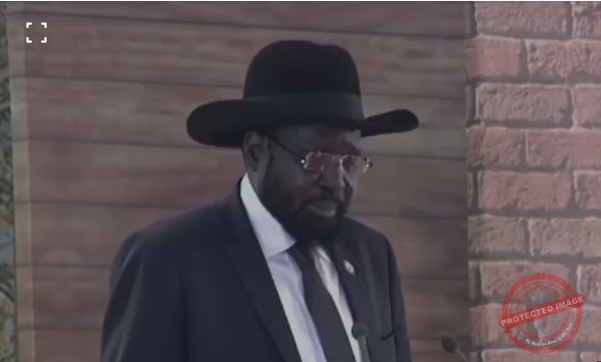
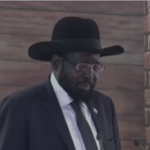
In April 2014, President Salva Kiir Mayardit delivered a speech addressing corruption, illicit financial flows, natural resource exploitation and insecurity in South Sudan, calling on African countries to take greater responsibility for solving the continent’s challenges.
Speaking at the Third Tana High-Level Forum on Security in Africa in Bahir Dar, Ethiopia, Kiir argued that the illegal movement of public funds was undermining African economies and contributing to security challenges.
“These illicit financial flows, the outflow of our money, are actually bigger than whatever inflows that we expect to come from outside,” Kiir told delegates.
He argued that corruption, illegal financial transfers, security and the management of natural resources were interconnected problems that required attention.
“Because if you want to talk about security, and you want to talk about the natural resources, and the financial control, all these things have become one thing,” he said.
Kiir also spoke about individuals who accumulated wealth through corruption and subsequently sought political power to protect their interests.
“Once you have enriched yourself sufficiently, then you look for power. You look for power so that you protect yourself. And these are the people who become very ruthless. They can use that money to silence anybody who talks against them,” he said.
Concerns over missing public funds
Reflecting on South Sudan’s early years following independence, Kiir expressed concern about the disappearance of government revenues, particularly money received through oil-sharing arrangements with neighbouring Sudan.
He alleged that some contractors had taken advance payments for infrastructure projects, including roads and bridges, without completing the promised work.
“Those who wanted to build roads will take this percentage so that they go and come with one tractor, one bulldozer, and they say they will come and build the roads. That was one way. Some people disappeared with the money up to now. They never came back,” Kiir said.
The President described attempts he had made to recover money from individuals suspected of misappropriating public funds.
“I started by giving out letters to those whom I have suspected to have taken money, that you bring back this money. There is an account that you have to meet this money there silently. Nobody will know it. And I will not expose you,” he told the gathering.
He also revealed that he had written to international financial institutions and foreign governments seeking assistance in tracing money believed to have been transferred to overseas bank accounts.
“I wrote to them to help me trace this money in their banks and send it back to me,” he said.
However, Kiir expressed frustration over the responses he received, saying some institutions were unwilling to disclose information about their customers.
“The other group said, well, we don’t expose our customers. We don’t have that in our laws. That we run after anybody who might have hidden money in any bank. We don’t do it. Full stop,” he said.
Natural resources and insecurity
Kiir also raised concerns about the management and exploitation of South Sudan’s natural resources, including oil, agricultural land, timber, minerals and water.
He argued that competition over these resources could become a source of insecurity, particularly when individuals and external interests sought to benefit from the country’s wealth.
“There are people who have now come up to fight us indirectly that they have not been allowed to share in these resources,” he said.
The President further rejected claims that outsiders had brought independence to South Sudan, insisting that the country’s struggle for self-determination had a long history.
“South Sudanese asked for their independence since 1947. I was not born. And see how old I have grown now,” he told delegates.
He recalled the decades of struggle that preceded independence, including the first rebellion in 1955, the Addis Ababa peace agreement in 1972 and the subsequent conflict that ended with the signing of the Comprehensive Peace Agreement in 2005.
Linking corruption to the December 2013 conflict
During the address, Kiir also linked the political and security crisis that erupted in South Sudan in December 2013 to struggles over wealth, political power and control of natural resources.
He alleged that some individuals who had accumulated wealth wanted political power to protect their interests and influence decisions concerning the country’s resources.
The President also claimed that agreements had been made outside South Sudan concerning the allocation of oil-field concessions in the event of a change of government.
He argued that such interests contributed to insecurity and instability in the country.
A call for African solutions
Towards the end of his address, Kiir called on African countries to take responsibility for addressing corruption, insecurity and illicit financial flows.
He urged the continent to develop homegrown solutions instead of relying entirely on external assistance.
“Africans themselves must get solutions for African problems. Nobody should come from outside to come and tell us, yes, I will do this for you. We should do things ourselves,” he said.
In his concluding remarks, Kiir returned to the relationship between corruption and insecurity, delivering one of the most memorable lines of his address.
“Security and corruption, put them together. Don’t separate them. They are separate. Once there is corruption, there is insecurity,” he said.