

Govt urged to see church as force for peace, not opponent

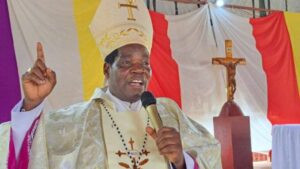
Civil society activist Edmund Yakani has called on South Sudan’s leaders to treat churches as neutral institutions that promote forgiveness, peace, and stability.
His comments follow a March 17 statement from the Office of the President criticizing the South Sudan Council of Churches for calling for accountability, justice, and the release of officials facing legal proceedings in Juba.
The Government told South Sudan Council of Churches that judicial processes into Dr. Riek Machar’s case must remain independent and warned that releasing individuals involved in ongoing legal proceedings before their cases conclude undermines justice.
In its statement, the government stressed, “Criminal accountability is a judicial process that must proceed independently and without interference, regardless of an individual’s political status or position,” the statement partially reads.
The government also emphasized that security, judicial, and political matters “are inherently state functions” and cautioned that “while we value the moral voice of faith-based institutions, it is essential that this role remains constructive and does not inadvertently blur into partisan political positioning.”
Yakani said the government’s response makes it appear as though the church has aligned with opponents.
“The government’s response sounds more like an attack on the church,” he said. “The church has stood with the people since independence. Without it, we could not have reached where we are today.”
He urged officials to engage directly with church leaders instead of relying on formal written statements.
“We hope the government talks directly to the church,” Yakani said. “Written responses raise questions and make citizens wonder why the church is now being viewed as an opponent.”
Yakani emphasized the church’s long-standing role in promoting reconciliation and protecting civilians.
“The church stands for forgiveness, dialogue, and human rights,” he said. “It should be seen as neutral and committed to peace and stability.”
The government said faith-based institutions should prioritize dialogue in their daily work.