





High Court halts Nyamini demarcation after Bari leaders challenge Nyangwara land claim
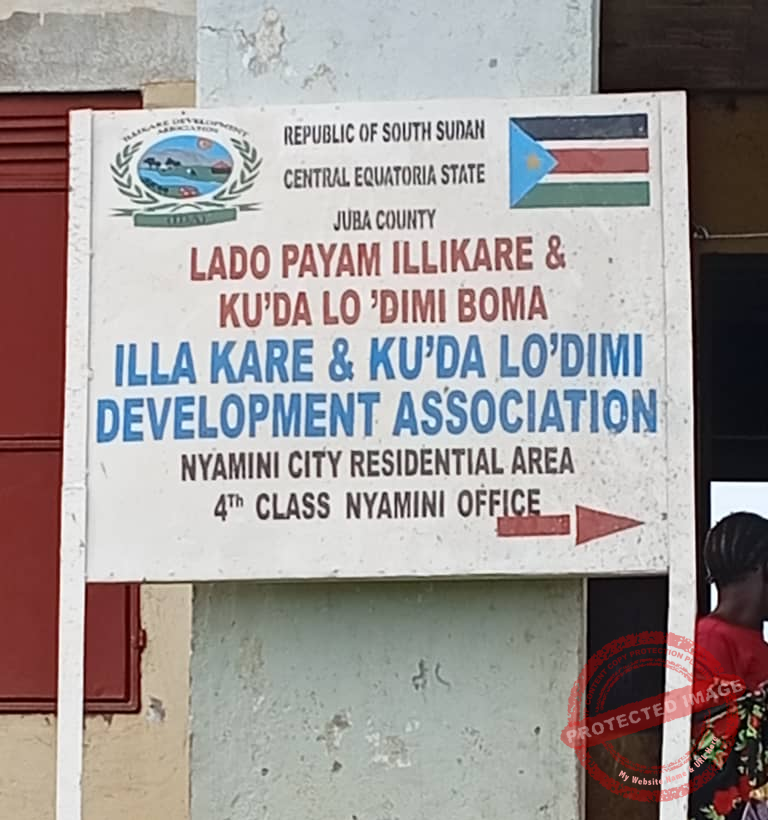
A long-running dispute over land in Nyamini, northwest of Juba, has taken a new turn after the High Court in Kator ordered a halt to the demarcation of about 32 square kilometres of contested land.
The order, issued on September 4, 2026, restrains demarcation of the disputed Nyamini area pending the determination of the substantive case before the court.
The case is registered as JOSS/CES/J/K/CIV. S No. 55/2026, with Olimpio Lokudu Pitia and others as plaintiffs and Sultan Emmanuel Juma Khalifa and Sultan Roman Lodu-Denis as defendants.
Importantly, the order does not determine ownership of Nyamini. It does not declare the land to belong to either the Nyangwara-Pojulu-Tijor community or the Bari community. Instead, it temporarily restrains demarcation while the court considers the underlying dispute.
That distinction is significant because the court order comes after more than a year of protests, petitions and government directives over land demarcation and allocation in the area.
From protests to court
The immediate background goes back to May 2025, when community leaders in the Nyamini and Lodimi areas announced the allocation of more than 22,700 plots for residential and investment purposes.
At the time, Olimpio Lokudu Pitia, identified by Eye Radio as chairman of Ku’da Lodimi Boma, said the development initiative had originally been planned for 2020 but had been delayed by disputes between neighbouring areas. He described Nyamini as land open to South Sudanese from all communities.
The announcement, however, triggered opposition from members of the Nyangwara-Pojulu-Tijor community, who argued that the land remained disputed and that their representatives had been excluded from the allocation process.
In early June 2025, Nyangwara-Pojulu-Tijor leaders petitioned the Central Equatoria State government to stop demarcation and land distribution. They called for a neutral process involving the neighbouring communities and proposed that traditional landowners first establish their ancestral boundaries before development proceeded.
On June 6, 2025, the Juba County Commissioner issued Local Order No. 2/2025, suspending demarcation in Nyamini. State authorities subsequently reiterated that land activities should remain suspended because of territorial disputes among communities in the area.
The dispute also led to arrests over alleged unauthorized land demarcation. Central Equatoria Deputy Governor Paulino Lukudu Obede subsequently ordered the release of detainees and called for consultations among the communities involved.
The Nyangwara position
The Nyangwara-Pojulu-Tijor community has consistently maintained that Nyamini forms part of its ancestral territory.
In August 2026, the community’s Secretary-General, Yapete Mogga Abdallah, said the dispute dated back to 2013 and accused individuals of continuing to show plots and issue tokens despite government orders.
Community leaders have pointed to the 1999 Warrant of Establishment of Dolo Local Council and recommendations of a 2013 Juba County Peace and Reconciliation Committee, which they say recognised the area’s historical and customary connection to the Yangwara community and recommended against unilateral demarcation while the dispute remained unresolved.
Those historical and customary claims are, however, the community’s position. They have not been determined by the High Court in the September 4 order.
Governor orders halt to plot documentation
The state government intervened again in March 2026.
On March 2, Central Equatoria Governor Emmanuel Adil Anthony issued Gubernatorial Order No. 19/2026, cancelling the issuance of plot documents in Nyamini and directing authorities to stop land documentation while the dispute was being addressed. The order also tasked the state security committee with engaging the affected communities.
Juba County subsequently warned that land demarcation, plot showing, allocation and related development activities in Nyamini remained suspended.
Despite those directives, Nyangwara-Pojulu-Tijor leaders alleged in August that land demarcation and allocation were continuing.
Radio Tamazuj reported on August 18 that the community accused authorities and individuals of defying the governor’s order. The allegations, including claims that armed personnel were facilitating land activities, were not independently verified.
The court case
Against that background, a court case was filed in March 2026 by chiefs and headmen from Ladu Payam and members of Ku’da Lodimi against two traditional leaders.
The Nyangwara-Pojulu-Tijor leadership publicly objected to the litigation and called for the dispute to be resolved peacefully.
The case has now resulted in the September 4 High Court order.
The immediate effect of that order is a halt to demarcation of the disputed area while the case proceeds.
But the order should not be interpreted as a finding that either side owns Nyamini.
Judge Ayiei Nyang Ayiei ordered that demarcation of the disputed area be restrained pending the court’s determination of the substantive dispute.
In other words, the court has preserved the disputed land from further demarcation; it has not yet resolved the question of ownership.
Why the order matters
The September 4 order is significant because it gives judicial force to a restriction on demarcation after months of competing government directives and community demands.
For more than a year, Nyangwara-Pojulu-Tijor leaders had called for demarcation to stop while the competing territorial claims were addressed. In June 2025, the dispute resulted in a county suspension, and in March 2026 the governor ordered a halt to the issuance of plot documents.
The High Court has now separately restrained demarcation of the disputed area pending the outcome of the case.
That does not mean the court has endorsed the Nyangwara position, nor does it mean the plaintiffs have been declared owners of the land.
The legal position at this stage is narrower: demarcation of the disputed 32-square-kilometre area is restrained while the court considers the substantive dispute.
Any claim that the September 4 order has awarded Nyamini to the Nyangwara, Bari or any other community would therefore go beyond what the order establishes.
A dispute with a longer history
The Nyamini controversy predates the latest court case and has been shaped by competing claims over customary boundaries, local administrative jurisdictions and land allocation.
The competing communities have presented different accounts of the area’s historical ownership and administrative status. Those claims remain contested.
The September 4 court order does not settle that history. Instead, it marks the latest legal development in a dispute that has moved from community petitions and government directives to the courts.
The substantive question of ownership remains before the High Court.