Lack of legal framework in South Sudan hinders environmental protection – Official
A Ministry of Environment official has cited the lack of a legal framework as a barrier to effectively enforcing environmental protection measures.
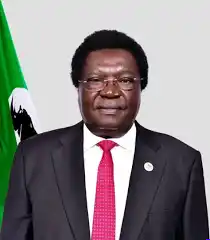
David Batali Oliver, Director General of Environmental Planning and Sustainable Development at the Ministry of Environment and Forestry made these comments on Friday during a stakeholder meeting on the environmental and social impact assessment for Jonglei oil exploration.
The meeting gathered intellectuals, academic women, and youth leaders from Jonglei State to discuss the pros and cons of oil exploration in Block B2.
The Director General of Environmental Planning and Sustainability asserted that the absence of a law impedes the ministry’s ability to fulfil its responsibilities.
Batali noted that the country still lacks an environmental protection law.
“The ministry mandate is to ensure that the environment is protected and managed Sustainably for the present generation and the future generations. However, becomes challenging,” Batali said.
“We don’t have an environmental protection law. This is the main challenge because the role gives you the authority and then the power to enforce it,” he said.
Peter Taban from NilePet emphasizes that the primary concern is the lack of appropriate baseline studies. He noted that Jonglei State is now making progress by addressing these issues to better manage the oil industry.
“There are numerous environmental concerns, and there’s been widespread outcry in states where oil companies operate due to the absence of proper baseline studies—whether socioeconomic or environmental,” Taban said.
“It seems we are now on the right track in managing our industry, and Jonglei State is beginning to correct past practices.”
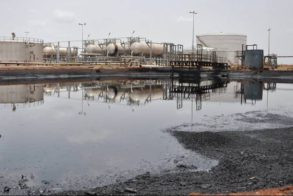
On May 22, 2024, an audit was initiated to investigate widespread birth defects in communities near oilfields, potentially linked to environmental issues.
Additionally, in April 2024, South Sudanese energy officials and a South African oil firm met to discuss oil exploration in Block 2 of Jonglei State, focusing on environmental protection.
The Ruweng Administrative Area reported three cases of children born with deformities between January and April 2024, attributing these to oil pollution.
Legal Framework
The Transitional Constitution has provided for the fundamental right of every person or community in South Sudan to have a clean and healthy environment.
It commits all levels of government in South Sudan to ensure that the environment is protected for the benefit of the present and future generations, through reasonable legislative action and other measures;
South Sudan has put in a National Environment Policy in place that mandates the Constitutional environmental rights of the people or Community and ensure healthy and clean environment for all.
However, according to a March 2024 report by the Ministry of Environment and Forestry, the country lacks National environmental legislations that provides for Regional and international cooperation, Implementation of multi-lateral environmental agreements and punitive measures and sanctions, among others.
The report also indicated the country lacks data on e-waste, stand-alone legal framework for waste management, including e-waste, informal e-waste collection vendors and limited awareness about dangers of improper handling of e-waste.