
President Kiir posthumously promotes General Joseph Lagu to full General
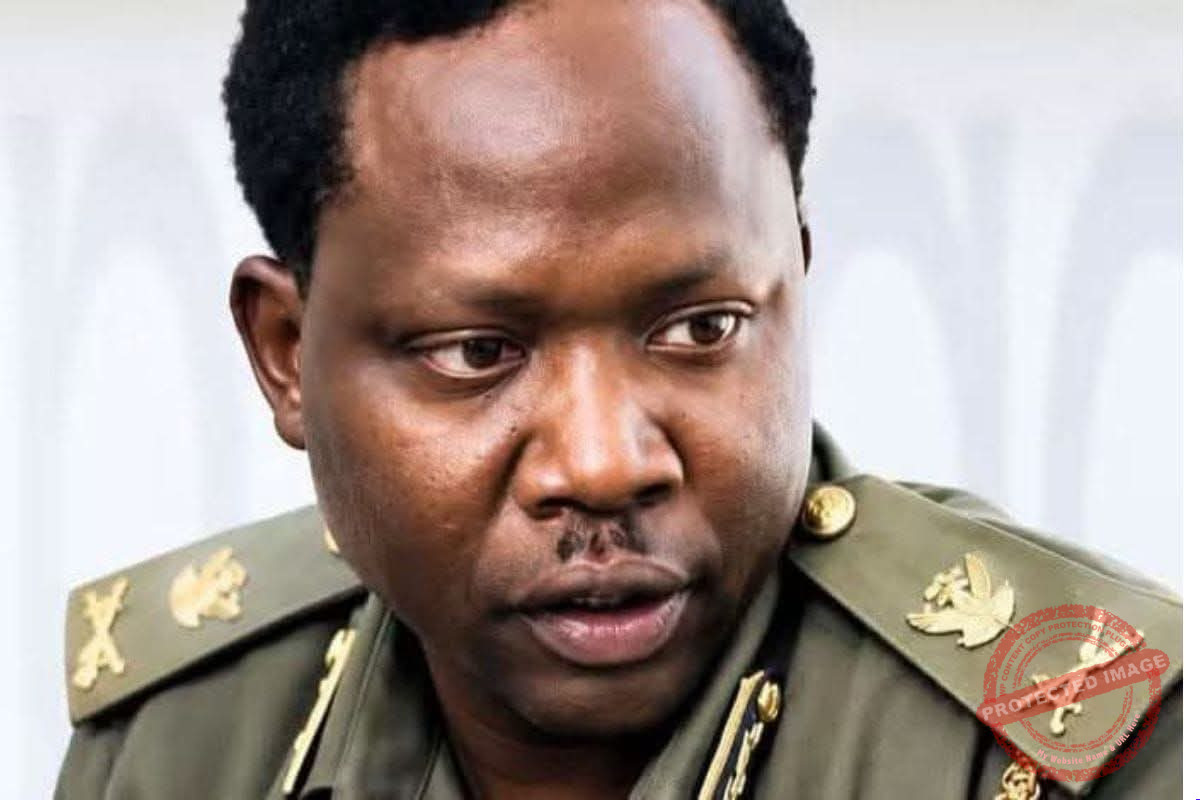
President Salva Kiir Mayardit has posthumously promoted the late liberation hero, General Joseph Lagu Yanga, from Lieutenant General to the rank of full general.
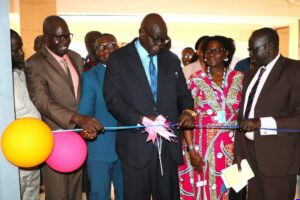
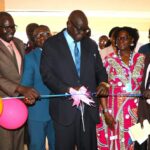
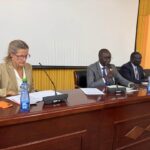
The promotion was announced informally by the Caretaker Minister of Cabinet Affairs, Ambassador Bol Wek Agoth, who chairs the organising committee for the official condolence book signing ceremony, during the event held at the Parliament Building in Juba on Thursday, November 5, 2026.
Addressing President Kiir during the ceremony, Ambassador Bol linked the promotion to the late General’s contribution to the establishment of southern Sudan’s autonomous government.
“Your Excellency, President, General Salva Kiir Mayardit, as you rightly said in your condolence message, and following the promotion of General Lagu to full general, we are here honouring the legacy of an icon, the first founder of our autonomous government of South Sudan, a person who provided us with leadership that gave birth to many of you, including yourself and others who came later, as some of the veterans have rightly explained,” Ambassador Bol said.
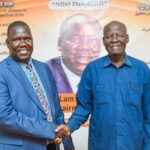
President Kiir also signed the condolence book in honour of the late General, recognising his contribution to South Sudan’s liberation struggle and historical journey.
The ceremony provided an opportunity for national leaders, government officials, diplomatic representatives and members of the public to pay tribute to General Lagu and express condolences to his bereaved family.
The condolence book will remain open at the Parliament Building to government officials, diplomats, dignitaries and members of the public until a day before the late General’s burial.
The announcement of the posthumous promotion raises questions about the legal provisions governing military promotions after an officer’s death.
Article 153 of South Sudan’s Transitional Constitution designates the President as Commander-in-Chief and empowers the office to commission, promote, retire or dismiss officers of the organised forces in accordance with the law. However, the Constitution does not expressly clarify whether this authority extends to officers who have already died. The formal legal basis for General Lagu’s posthumous promotion has not been made public.
Military and political legacy
General Lagu was one of the leading figures in South Sudan’s first liberation struggle and the former leader of the Anyanya One movement, which fought against the Sudanese government during the first Sudanese civil war.
Born on November 21, 1931, in Momokwe, present-day Magwi County in Eastern Equatoria State, Lagu joined the Sudanese Military College in Omdurman after choosing a military career over studying law at the University of Khartoum.
He graduated in May 1960 and was commissioned as an officer in the Sudanese Army. He later defected to join the southern Sudanese liberation movement.
In 1963, Lagu assumed leadership of the resistance movement and renamed it Anyanya. Under his leadership, the movement gained momentum during the 17-year conflict.
His leadership culminated in the signing of the 1972 Addis Ababa Agreement with Sudanese President Gaafar Nimeiry, under the auspices of Ethiopian Emperor Haile Selassie. The agreement granted southern Sudan regional autonomy and brought an end to the first civil war.
Following the agreement, Lagu rejoined the Sudanese Armed Forces with the rank of Major General and was tasked with overseeing the integration of different armed forces. He later served as commander of the Southern Division, based in Juba.
Lagu subsequently entered politics and was elected president of the High Executive Council of the autonomous southern region in 1978. In 1982, he was appointed Second Vice President of Sudan by President Nimeiry.
After the abrogation of the Addis Ababa Agreement in 1983, Lagu left Sudan following the overthrow of Nimeiry’s government in 1985.
He later served in diplomatic positions, including as Sudan’s Permanent Representative to the United Nations in New York from 1990 to 1992.
Following the 2005 Comprehensive Peace Agreement, Lagu supported the Government of Southern Sudan’s pursuit of self-determination and later served as a special presidential adviser to President Kiir ahead of the 2011 independence referendum.
He also documented his experiences in his 2006 memoir, Sudan Odyssey: From Ruin to Hope.
General Lagu died in Juba on Tuesday at the age of 95, leaving behind a legacy closely associated with South Sudan’s struggle for freedom and self-determination.