South Sudan laments dire impact of Sudan war on its oil export

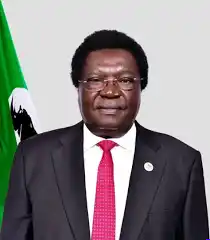
Foreign Minister Ramdan Goc told the UN General Assembly that the International Community must stand with South Sudan and double its efforts in resolving the Sudan conflict which has affected the country’s chief crude oil export.
Reading out a statement on behalf of the government of South Sudan on Thursday, Minister Goc stated that his country’s economy has been ruined by the ongoing conflict between Sudanese military factions.
“It is worth mentioning that the conflict in the Republic of Sudan has directly impacted the economic situation in South Sudan, with oil production significantly reduced since April this year,” he said.
South Sudan is suffering from catastrophic inflation after the Sudan war put its financial lifeline at risk, especially after one of the pipelines transporting 60% of its crude oil broke down in February 2024.
On September 16, President Salva Kiir and the Chairman of Sudan’s Sovereign Council, Abdel Fattah Al Burhan discussed resumption of oil exports through Sudan, following four months of repairs on the oil infrastructure.
“Given the fact that our economy is entirely reliant on revenue from the sale of our crude oil transported through Port Sudan on the Red Sea, we urge the international community to double its efforts toward resolving the conflict in Sudan,” Goc said.
“We further call for more solidarity with South Sudan as it struggles to overcome and withstand the dire economic impacts created by the conflict in Sudan.”
The dwindling oil export is not the only problem resulting from the conflict in Sudan as the crisis the north has burdened the country with an influx of 800,000 people including refugees and returnees.
While commending the efforts of UN and humanitarian agencies working to alleviate the suffering of the victims of this conflict, Minister Goc said his government strongly encourages support for an IGAD initiative to bring about peace to Sudan.
“We also believe that the international community’s support for the victims of the war remains inadequate and unresponsive to the impact on the host communities that are also grappling with serious humanitarian challenges.”
The conflict between the Sudanese Armed Forces (SAF) under General Abdel Fattah Al-Burhan and RSF of General Mohamed Hamdan Daglo, erupted in April 15, 2023, and has killed an estimated 150,000 people, displaced 10 million others and triggered one of the world’s worst humanitarian crises.
On Thursday, September 26, the army reportedly launched a major offensive characterized by heavy bombardment in the capital, Khartoum, in a bid to regain areas under the paramilitary Rapid Support Forces (RSF).
Four people were killed during artillery shelling by RSF after the army warplanes carried out air strikes in the capital and north of Khartoum in its biggest such assault in months, Al Jazeera news outlet reported.
The Sudanese army is also said to have taken took control of three main bridges, including two that connect the city of Omdurman with the capital, Khartoum after attacking military sites belonging to RSF.