U.S. conditions December election funding on release of political prisoners
The United States has conditioned its financial support for South Sudan’s elections on the release of political prisoners and the commitment of national funds toward the polls.
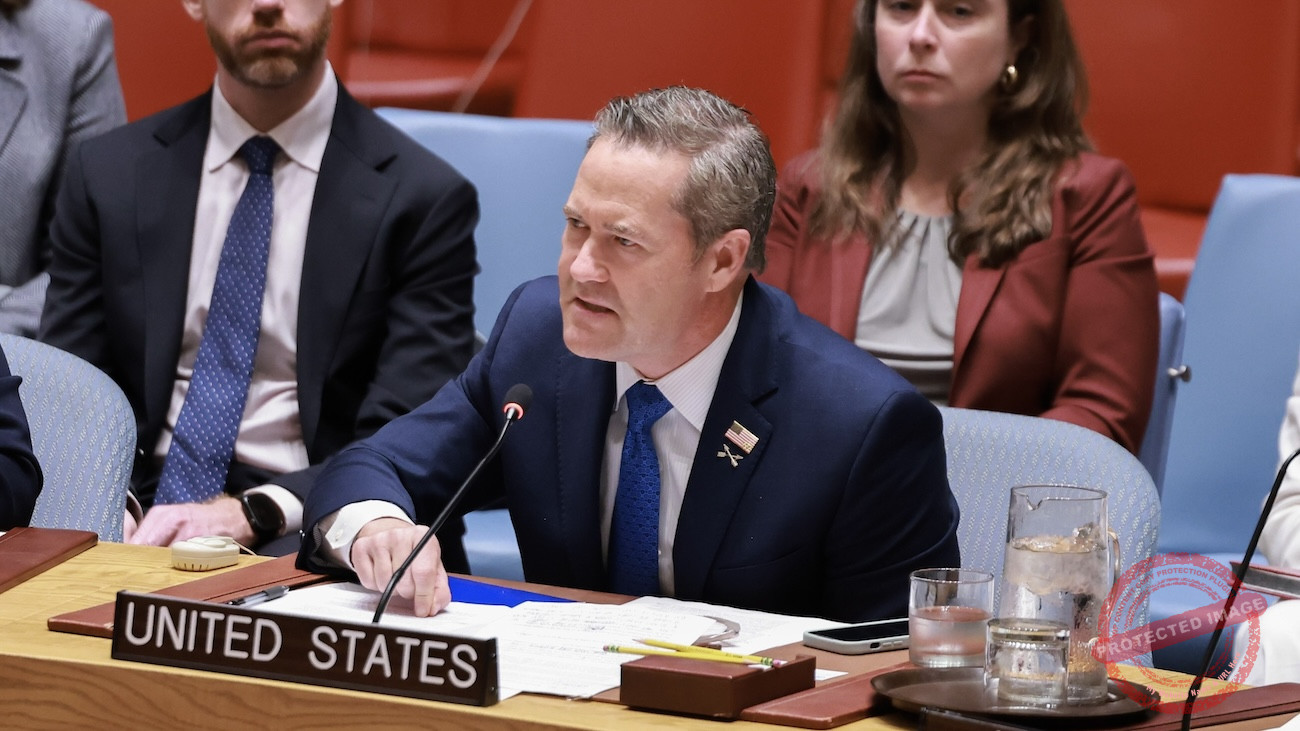
Speaking at the UN Security Council on Friday, May 1, Ambassador Mike Waltz stated that dialogue remains impossible while opposition leaders are under arrest, noting that taxpayers should not fund a political process that the host government itself does not fund.
The statement follows a vote to extend the mandate of the United Nations Mission in South Sudan (UNMISS) until April 30, 2027. This renewal marks a shift in policy, as the Council moved to streamline the mission by removing capacity-building and development activities.
Citing reports from the Secretary-General that electoral preparations are minimal, the U.S. expressed skepticism regarding the feasibility of upcoming polls.
Ambassador Waltz raised concerns regarding the lack of technical and political progress required for the upcoming vote, adding that elections require the implementation of the 2018 peace agreement and a return to political dialogue.
“The Secretary General’s own report is clear, electoral preparations remained minimal to non-existent,” Waltz stated. “Key decisions are still delayed, funding is missing, and a peaceful, credible election requires the outstanding provisions of the 2018 peace agreement to be implemented first, which they haven’t been.”
He further added: “If the transitional government truly means to hold free and fair elections, it must first return to genuine dialogue among the parties to that agreement,” Waltz stated.
“And genuine dialogue cannot happen while key leaders are imprisoned—including the head of the second-largest party to the agreement, who remains under arrest and on trial. Additionally, we shouldn’t have foreign taxpayers being asked to fund a political process that the transitional government will not fund itself.”
He further established a requirement for future funding: “Future U.S. support for elections, including through the United Nations, will depend on whether South Sudan’s leaders put their own public resources behind elections, public services, and government salaries.”
Ambassador Waltz informed the Council that the U.S. expects the mission to return to its primary functions: maintaining peace, protecting civilians, and ensuring humanitarian access. He argued that previous programs allowed the transitional government to outsource its own responsibilities.
“The American people are focused on getting this peacekeeping mission, UNMISS, back to basics: to keep the peace, to protect civilians, support humanitarian access, and to be accurate in its reporting to this Council,” Waltz said. “Peacekeeping operations are a temporary tool, not an endless stream of support for states to exploit and misuse.”
The U.S. delegation highlighted data showing that between October 2025 and March 2026, UNMISS recorded over 480 Status of Forces Agreement (SOFA) incidents. These records include instances where peacekeepers were blocked, and humanitarian access was denied.
“What does that mean? That means 480 times peacekeepers were blocked, humanitarian access was denied, repatriation flights were obstructed, bases were forced to close, and millions of dollars were lost and wasted,” Waltz explained.
Referencing reports from 2014 that described the UN and the host government as being on a “collision course,” Waltz criticized the practice of renewing mandates without requiring progress.
“The core problem is a host government that actively undermines its commitments to peace and the mission it agreed to accept,” he said. “It should force all of us to ask why the same warnings, the same obstruction, the same suffering, the same excuses from the same leadership keep showing up year after year.”
The U.S. concluded by calling for the responsible use of revenue, an end to the diversion of assistance, and a commitment to the security of South Sudanese citizens.
“This Council’s patience is not infinite,” Waltz cautioned. “The people of South Sudan have waited long enough.”