



Uganda proposes restructuring into 16 Federal States under new governance blueprint
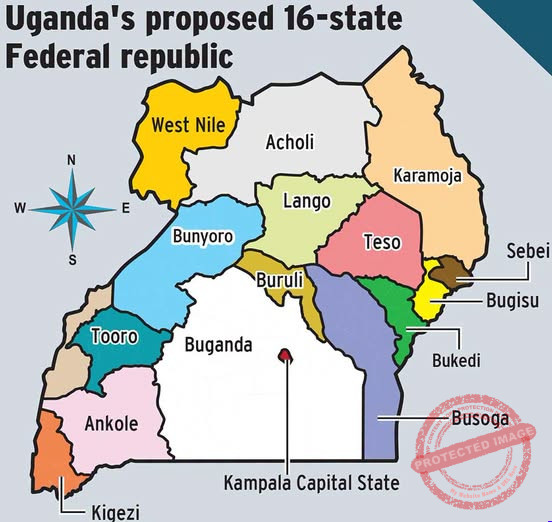
A new governance proposal seeking to transform Uganda into a federal republic has outlined plans to divide the country into 16 semi-autonomous states, introduce a bicameral national Parliament and establish a constitutional revenue-sharing arrangement between regional governments and the federal centre.
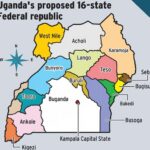
In publication by News Vision on Tuesday, the blueprint, commonly referred to as Loyola’s Proposal, envisions replacing Uganda’s existing unitary governance structure with a federal system comprising Kampala Capital State and 15 regional states: Buganda, Buruli, Busoga, Bunyoro, Tooro, Ankole, Kigezi, West Nile, Acholi, Lango, Teso, Karamoja, Bugisu, Bukedi and Sebei.
Under the proposed arrangement, each state would have an elected governor, state secretaries and a state assembly responsible for regional administration, planning and delivery of public services.
Proposed Two-Chamber National Parliament
The blueprint proposes replacing Uganda’s current unicameral Parliament with a bicameral legislature consisting of a National Assembly and a Senate.
The National Assembly would comprise representatives elected from constituencies alongside special interest representatives, while the Senate would represent the interests of the country’s 16 federal states, with each state allocated one seat.
The proposed Senate would provide a platform for regional representation in national decision-making, while the National Assembly would retain constituency-based representation.
40 Per Cent of National Revenue Proposed for States
A major component of the proposal is a constitutional revenue-sharing formula that would allocate 40 per cent of national resources to the regional states, while the remaining 60 per cent would be retained by the federal government.
Based on the financial estimates outlined in the blueprint, approximately UGX 30 trillion would be distributed among the 16 states, translating to roughly UGX 2 trillion per state annually.
The remaining UGX 42–43 trillion would be managed by the federal government to finance national responsibilities, including defence, foreign affairs, macroeconomic stability and major infrastructure projects.
The proposed state allocations would support regional infrastructure development, healthcare delivery and other economic and social development priorities.
Regional Administration and Distribution of Responsibilities
Under the proposed federal arrangement, the 16 states would exercise greater administrative authority over their respective territories.
State governments would be responsible for identifying regional development priorities, planning public investments and overseeing service delivery through their elected leadership and legislative assemblies.
At the national level, the federal government would retain responsibility for matters requiring central coordination, including national defence, international relations, economic management and infrastructure projects extending across multiple states.
The blueprint presents the arrangement as a framework for distributing political authority and financial resources between the national government and regional administrations.
A Proposed Alternative to the Existing Governance Structure
The proposal represents a significant departure from Uganda’s existing unitary governance model and outlines a new constitutional and administrative structure based on regional federalism.
Its implementation would require fundamental constitutional and legislative changes, alongside the establishment of the proposed state governments, federal institutions and revenue-sharing mechanisms.
For now, the 16-state federal arrangement remains a proposal and has not been adopted as Uganda’s official system of government.