

30 vulnerable families in Malakal receive land titles
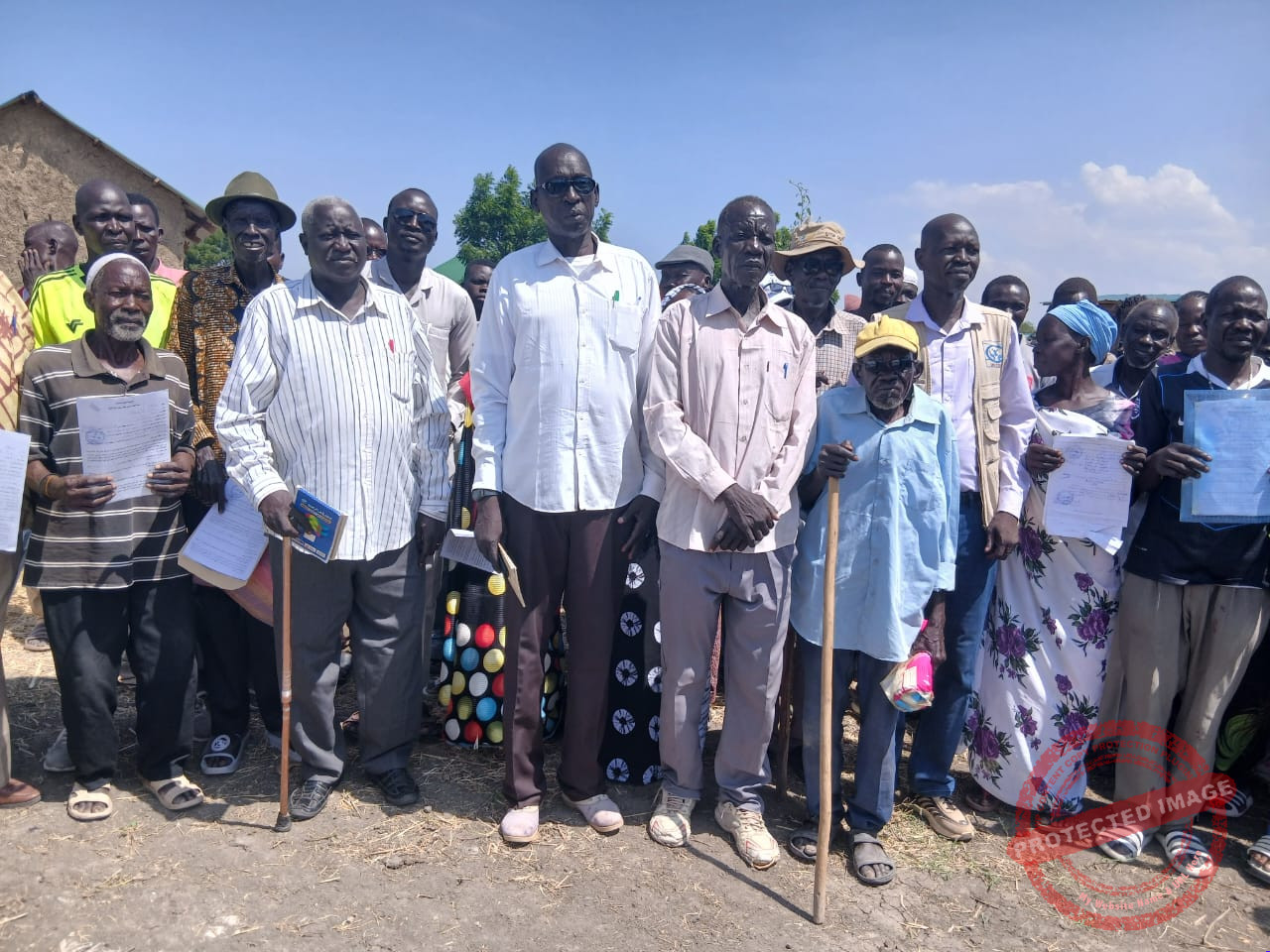
Thirty vulnerable community members in Malakal who lost their land titles during past displacement have received plot registration documents through an initiative by the Civil Society Coalition on Natural Resources (CSCNR), in partnership with Norwegian People’s Aid (NPA).
The documents were handed over during the launch of a land and property rights awareness campaign aimed at strengthening post-conflict recovery, preventing land disputes and promoting peaceful coexistence in Upper Nile State.
The beneficiaries include widows, orphans, elderly people, women, internally displaced persons (IDPs), returnees and persons with disabilities.
Speaking at the launch, Chukwan Philip, Director General in the State Ministry of Roads, Bridges and Physical Infrastructure, welcomed the initiative, describing it as vital for post-conflict recovery and stability.
Philip said the intervention aligns with Section 78(1) of the Land Act 2009, which guarantees citizens the right to restitution of land rights lost due to involuntary displacement during past conflicts. He also cited Article 32(1) of South Sudan’s Transitional Constitution, which guarantees every citizen the right to own and acquire property.
CSCNR Chairperson Charles Judo said Upper Nile State had suffered extensive destruction from successive conflicts since 2013, leaving vulnerable residents at increased risk of losing their property rights.
“The goal of this campaign is to enhance land tenure security, reduce land-driven conflicts, help vulnerable people recover lost ownership documents, and promote peace among local communities,” Judo said.
Alongside the document handover, CSCNR and NPA conducted a capacity-building workshop for 44 community leaders, youth and women’s representatives to improve public understanding of the Land Act 2009, land classification and mechanisms for resolving land disputes.
Martin John, one of the beneficiaries, expressed gratitude for receiving his land title but said financial hardship remained a major obstacle to rebuilding his home.
“We are happy to have our land documents back, but we lack the financial means to construct permanent houses,” Martin said.
He appealed to humanitarian agencies to support the construction of durable shelters and help clear overgrown access roads in the Luakat area.
Another participant, identified only as William, urged the Ministry of Roads, Bridges and Physical Infrastructure to review and reduce land registration fees to make formal land ownership more affordable for low-income residents.
Community members and civil society representatives also called on authorities and humanitarian partners to establish additional police posts to improve security, expand land document recovery programmes across Upper Nile State and provide the ministry with modern surveying equipment to strengthen physical planning.
The initiative is expected to contribute to improved land tenure security and peaceful coexistence, while addressing the challenges faced by vulnerable families seeking to rebuild their lives after years of conflict and displacement.