




H Brothers food products found damaged, not expired, investigation committee says
A government investigation committee probing allegations of expired food products at H Brothers General Trading and Investment Company Limited in Gumbo, Juba County, says laboratory tests have established that the products in question were damaged but not expired.
The findings follow nearly a month of investigations into allegations that the company was repackaging expired maize flour and other food products for resale.
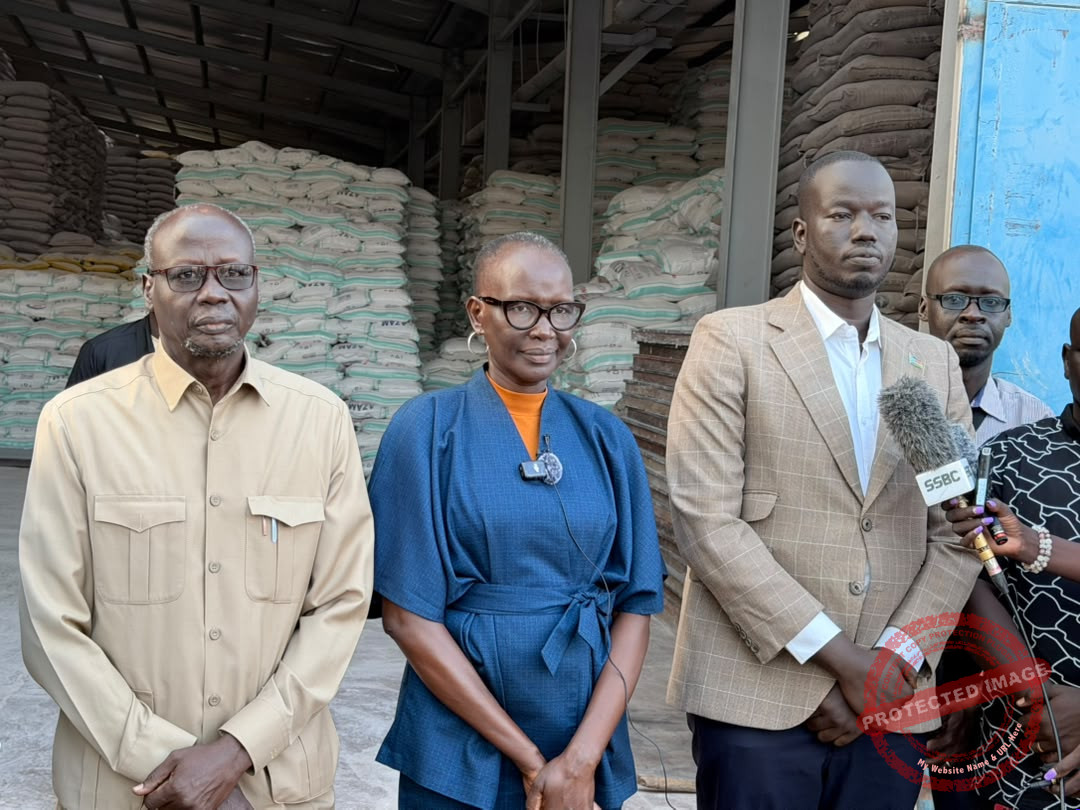
Speaking on Saturday at the company premises, Garang Mayor Nyariel, a member of the investigation committee and Quality Manager at the South Sudan National Bureau of Standards (SSNBS), said samples collected from the company’s warehouses were tested at the national laboratory and a partner laboratory in the region.
He said the results from both laboratories were consistent and did not establish that any of the sampled products had expired.
“The Bureau of Standards would like to stress that with all the consignment that were there, we did not manage to find any of the product expired, but we did find a lot of non-conforming products,” Nyariel said.
He added that the tests did not identify any immediate public health risk from the sampled products and that interested parties could access the laboratory findings through the Bureau.

Background to the investigation
The investigation follows the arrest of eight suspects by Juba County authorities over allegations of repackaging expired maize flour for resale at H Brothers General Trading and Investment Company Limited in Gumbo, on the outskirts of Juba.
In a statement issued by the Office of the Caretaker Commissioner on October 24, the county administration said the suspects were arrested on Saturday afternoon during a surprise inspection of food stores.
According to the statement, security personnel found the suspects transferring expired maize flour into new sacks for resale, raising concerns about food safety and consumer protection.
The company, which operates a grinding mill factory, was subsequently closed, while the eight suspects were taken into custody pending further legal proceedings.
Juba County Caretaker Commissioner Moulana Kalisto Lado warned traders against selling expired food products, saying the county administration would take action against businesses violating public health and consumer safety regulations.
He also pledged to ensure that those found responsible were held accountable in accordance with the law.
On October 26, Central Equatoria State Governor Augustino Jadallah Wani directed a swift investigation into the allegations following an inspection of the company’s premises.
In a statement published on his official page, the governor’s office said the delegation had discovered large quantities of food items, including wheat flour, sugar, biscuits, cooking oil and powdered juice, which were allegedly expired and repackaged into new sacks, jerricans and boxes with altered expiry dates.
However, the company’s manager, who spoke to Eye Radio anonymously at the time, disputed the allegations.
The manager maintained that the products had not expired but might have been damaged by heat while in storage.
The manager also said the company had previously been inspected by the South Sudan National Bureau of Standards and issued an inspection certificate concerning goods that needed to be separated from other food products.
The SSNBS subsequently disputed the company’s account, clarifying that it had not certified H Brothers to repackage expired goods.
Penalties and corrective measures.
Despite the laboratory findings that the products were not expired, the Minister of Trade and Industry, Dr. Labanya Margret Mathya, said the company would face several penalties over the damaged and non-conforming goods.
She said the measures included dumping and destroying the damaged products, refurbishing the company’s storage facilities and improving the welfare of South Sudanese employees.
Mathya said the refurbishment was necessary to ensure that the warehouses met the required standards for food safety and the protection of the company’s investment.
“There are other penalties which have been set by the committee, including refurbishing of the stores, ensuring that the stores meet the standard that is required to protect even their investment. In fact, we are protecting the people of South Sudan, including the investment of H-Brothers,” she said.
The minister also raised concerns about the welfare and living conditions of South Sudanese workers employed by the company.
“Number two, the protection of the people working here, the state in which South Sudanese live is horrifying. Foreigners live in this country better than the South Sudanese themselves,” she said.
Mathya further warned the company against employing children without following the required labour regulations.
“And we’ve informed them not to hire young children. We know some households are headed by young children. But if you’re to hire them, you have to go to the Minister of Labour, and they will not allow you to do that,” she warned.
Absence of state and county officials
The absence of the governor and the Juba County Caretaker Commissioner during the presentation of the findings raised questions about their participation in the final stage of the investigation.
A source close to Caretaker Commissioner Lado told Eye Radio that the commissioner had not been informed by the Ministry of Trade and Industry about the presentation.
The committee, however, said the Central Equatoria State Government was represented by two officials who participated alongside committee members during the presentation.
Company ownership
Meanwhile, the Undersecretary in the Ministry of Trade and Industry, Yel Luol, told Eye Radio that H Brothers General Trading and Investment Company Limited is owned by shareholders from three nationalities: South Sudanese, Eritreans and Ethiopians.
However, he did not disclose the identities of the shareholders.
Damaged products destroyed
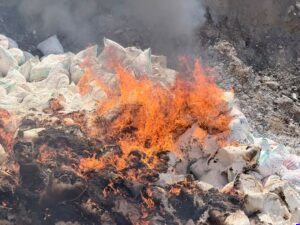
Following the presentation of the findings, the committee proceeded to the Nesitu dumping site, where the damaged food products were dumped, destroyed and burned.
The consignment destroyed comprised:
• 2,115 bags of wheat flour;
• 20 bags of sugar;
• 35 jerricans of cooking oil;
• 3 bags of rice; and
• 3 bags of powdered juice.
The destruction of the products formed part of the corrective measures imposed on the company following the investigation.