
Ugandan comedians urge more platforms to promote South Sudanese talent
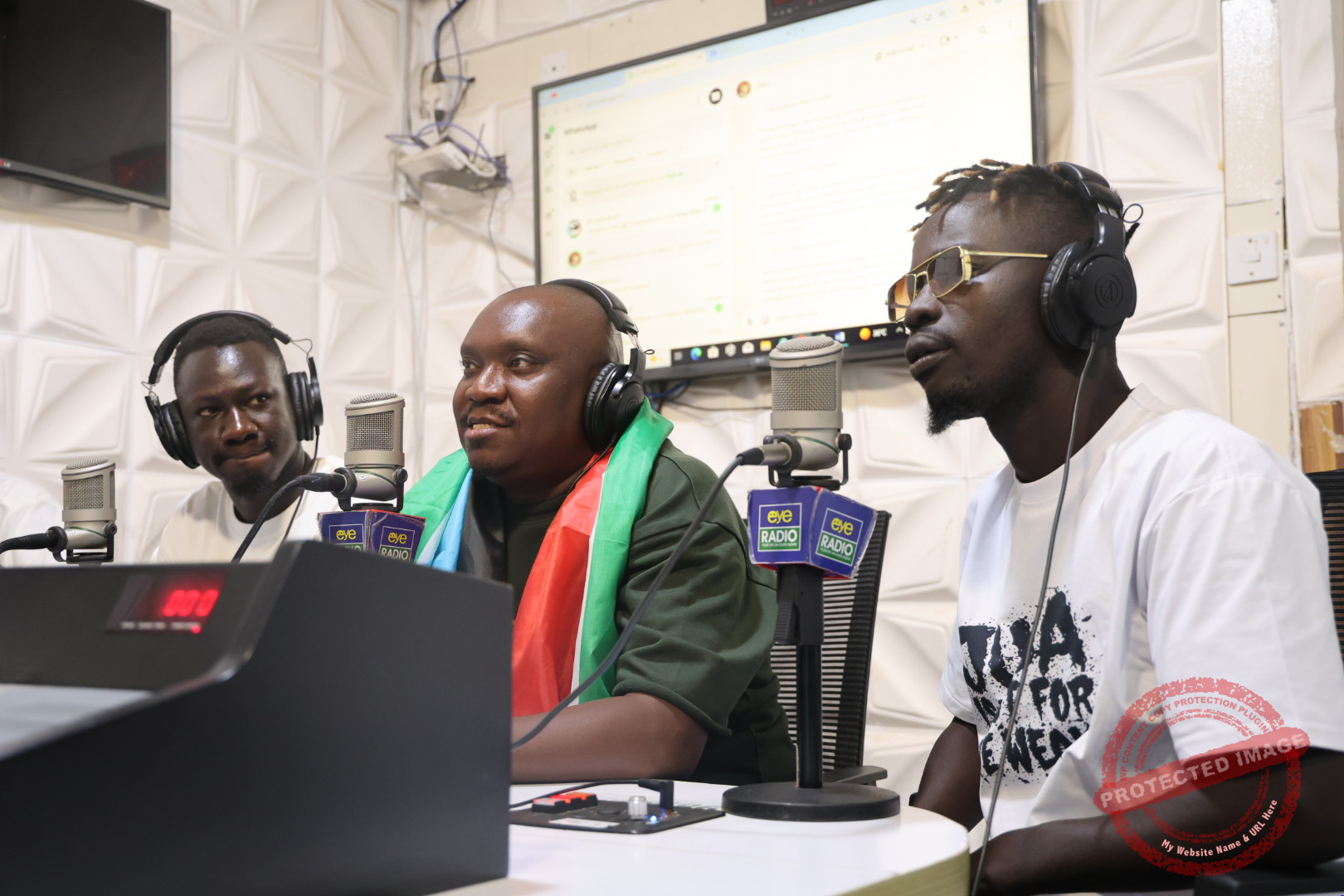
Ugandan comedians Patrick Salvador and Dr Hilary Okello have urged South Sudanese performers to work together and create more opportunities to develop the country’s comedy industry.
Speaking on Eye Radio’s Rhumba Show, Salvador said South Sudan had talented comedians but lacked sufficient platforms to showcase their abilities, gain experience and reach wider audiences.
“I don’t think South Sudan needs to learn anything. You already know what to do. The only problem is the platforms,” Salvador said.
He explained that Uganda’s comedy industry grew after performers were given opportunities to showcase their talent through organised competitions and entertainment platforms.
Salvador said stand-up comedy was virtually non-existent in Uganda before 2009, when MultiChoice introduced a competition to identify the country’s funniest comedian.
“First of all, stand-up comedy was non-existent in Uganda before 2009. We didn’t have stand-up comedy,” he said.
He said the competition provided an opportunity for a new generation of comedians, including himself, to emerge and establish their careers.
“The reason why you might say in Uganda it’s big is because we were given an opportunity by platforms,” Salvador said.
He added that comedians who benefited from those opportunities later recognised the importance of creating similar platforms for upcoming performers.
“If we weren’t given this platform, we would not have come through,” he said, explaining how the experience inspired his generation to support others entering the industry.
Meanwhile, fellow Ugandan comedian Dr Hilary Okello has encouraged emerging South Sudanese comedians to take the initiative by organising themselves, collaborating and starting small projects instead of waiting for government or private investors to create opportunities.
Okello said potential sponsors and investors were more likely to support creatives who demonstrated commitment through their own initiatives.
“Things like the government, companies, and people who are willing to invest and support you, they only want to support somebody who is in motion,” he said.
He urged young comedians to organise themselves and demonstrate progress before approaching potential supporters.
“If you’re just waiting to be given a platform that, okay, we have built a theatre now, guys, come here,” he said. “First gather yourselves, start small, build.”
Okello said collaboration and consistency could help comedians establish a stronger foundation for their careers.
“So, for young comedians out there, let’s just collaborate, let’s partner, but also let’s start,” he said.
“It’s better to start and then perfect along the way,” he added.
Meanwhile, John Chirbek, founder and host of the ninth edition of the Beledna Talk Show, said the programme was creating opportunities for South Sudanese entertainers to connect with regional artists and establish professional relationships beyond the country’s borders.
Chirbek said inviting comedians and entertainers from other countries was intended to encourage collaboration and expose local performers to opportunities within the region.
“These are the opportunities that I want to give. The reason I bring the regional comedians and entertainers is that they can collaborate,” he said.
He cited the example of South Sudanese comedian Wakil Jej Komondo, who connected with a visiting regional comedian during the programme and was subsequently given an opportunity to travel to Rwanda.
“When he came and he saw Wakil Jej Komondo, he liked his talent and he was able to change contacts and he took him to Rwanda,” Chirbek said.
He said the experience demonstrated how regional networking could create opportunities for South Sudanese entertainers to showcase their abilities internationally.
“South Sudan was really represented there. So that means we have already accomplished one of the missions why the Beledna Talk Show was established,” he said.
The three speakers highlighted the importance of collaboration, investment and platforms in developing South Sudan’s creative industry, with calls for both emerging performers and established stakeholders to play a role in creating opportunities for local talent.