
Security Council renews mandate of UN mission in South Sudan

The United Nations Security Council has extended its peacekeeping mission in South Sudan for another year.
Thirteen members voted in favour of the extension and two abstained over the incorporation of certain language while raising issues regarding the penholder’s approach.
The two abstained countries are China and the Russian Federation.
The 15-nation organ decided to extend the mandate of the United Nations Mission in the Republic of South Sudan, or UNMISS, until 15 March 2024 and to maintain its force levels with a ceiling of 17,000 troops and 2,101 police personnel.
The Council mandated UNMISS to carry out tasks in four key areas — protection of civilians; creation of conditions conducive to the delivery of humanitarian assistance; support for the implementation of the Revised Agreement and the Peace Process.
Others are to monitor, investigate, and report on violations of international humanitarian law and violations and abuses of human rights — while requesting the Secretary-General to inform it of any obstacles to the protection of civilians.
The Council also directed UNMISS to ensure effective, timely, and dynamic protection through a comprehensive and integrated approach.
This is by promptly and effectively engage any actor credibly found to be preparing attacks or engaging in attacks against civilians, internally displaced person camps, and the UNMISS protection of civilian sites; and maintaining a proactive deployment and a mobile, flexible, robust, and effective posture.
The Council further underscored that elections should be viewed as a phased approach and that UNMISS should focus in the near-term on key conditions, including the prevention of a further escalation of political violence; creation of conditions for an inclusive, constitutional drafting and review process; and the prerequisite inclusive civil space to conduct free and fair elections.
It called for strengthening the mission’s sexual- and gender-based violence prevention and response activities while the Government of South Sudan to expedite the implementation of the action plan on addressing conflict-related sexual violence and hold those responsible to account.
The Council also requested the Secretary-General to provide a comprehensive written report every 90 days, which should include an analysis of risks associated with climate change that may adversely impact peace and security in South Sudan and the implementation of the mission’s mandate.
Following the adoption, the Ghanaian representative to the Security Council welcomed the extension saying the resolution is the outcome of best efforts and forms a good basis for future improvements that may be required.
“We voted in favour of the resolution because we strongly believe that UNMISS continues to be a stabilizing factor in the brotherly country of South Sudan, and remains critical in addressing the multifaceted social, economic, political, and security challenges in South Sudan,” said Harold Adlai Agyeman.
“We stand in solidarity with the South Sudanese people and encourage political actors to further the national reconciliation efforts and the effective implementation of the 2018 revitalized agreement on the resolution of the conflict in South Sudan,
“We wish to commend the penholder [USA] for the professional manner and thank all council members for their exceptional cooperation and flexibility.”
Anna M. Evstigneeva is the representative of the Russian Federation to the UN Security Council.
She said her country abstained due to their concerns regarding the UNMISS mandate on the protection of civilians, which provides for the broad work of peacekeepers without including the necessary coordination with the Government of South Sudan.
Dai Bing, China’s representative to the council also said the resolution adopted contains elements aimed at exerting lopsided pressure on South Sudan and fails to consider the situation on the ground.
He also added that elections, finance and domestic resources management all remain internal affairs; it is not up to the international community to engage in such matters.
Dai said the draft resolution, in making demands and imposing conditions in those areas without the consent of the government of South Sudan, exceeds the Council’s normal prerogatives.
But João Genésio de Almeida Filho, Brazil’s representative to the UN Security Council disagrees.
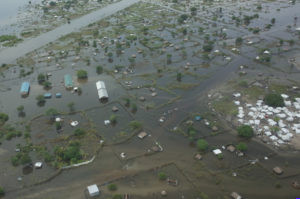
He said the situation in South Sudan is of great concern, as the population faces a catastrophic humanitarian crisis and ongoing inter-communal violence has created enormous suffering.
“The situation in South Sudan is of great concern, the South Sudanese face a catastrophic humanitarian crisis with millions needing food, water and healthcare assistance. In addition, the ongoing inter-communal violence has caused significant suffering,” said João Genésio.
“In addressing the impact of climate change in South Sudan, the Security Council must acknowledge that peacekeeping operations are ill-suited to dealing with these issues<
“We trust that the approved mandate will allow UNMISS to continue its vital work in South Sudan, protecting civilians, supporting the peace process, ensuring the delivery of humanitarian assistance, and monitoring violations of international humanitarian law and human rights law.”
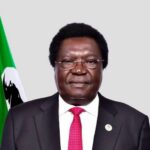
Reacting to the extension of the UNMISS mandate, the permanent representative of South Sudan to the United Nations said the resolution has placed conditions on assistance.
Akuei Bona Malwal said South Sudan is facing many issues, but that does not mean it is giving up its sovereign rights.
He added that if the penholder – the United States – had considered proposals from other delegations, the adopted resolution would have been more balanced and would have reflected the realities on the ground.
“Adherence to the principle of consent will enhance the mandate’s credibility, legitimacy, and help UNMISS carry out the mandate effectively. UNMISS respect for the principle of consent is crucial for the success of their mission in South Sudan,” said Akuei Bona Malwal.
“We are grateful for receiving United Nations acceptance to extend the necessary assistance towards the preparation for the elections. However, the resolution just adopted made the assistance conditional which does not conform to the spirit and letter of the United Nations,
“If the penholder [USA] had considered proposals from my delegation and those from the council members, the text just adopted would have been more balanced and reflective of facts and realities on the ground in South Sudan. Therefore, we encourage the penholder to have a collaborative spirit in the coming resolutions.”
The UN Security Council has primary responsibility for the maintenance of international peace and security.
It has 15 Members, and each Member has one vote.
The Security Council takes the lead in determining the existence of a threat to the peace or an act of aggression.
It called upon the parties to a dispute to settle it by peaceful means and recommended methods of adjustment or terms of the settlement.
In some cases, the Security Council can resort to imposing sanctions or even authorizing the use of force to maintain or restore international peace and security.