



El Niño and prolonged dry spells deepen food insecurity across parts of South Sudan
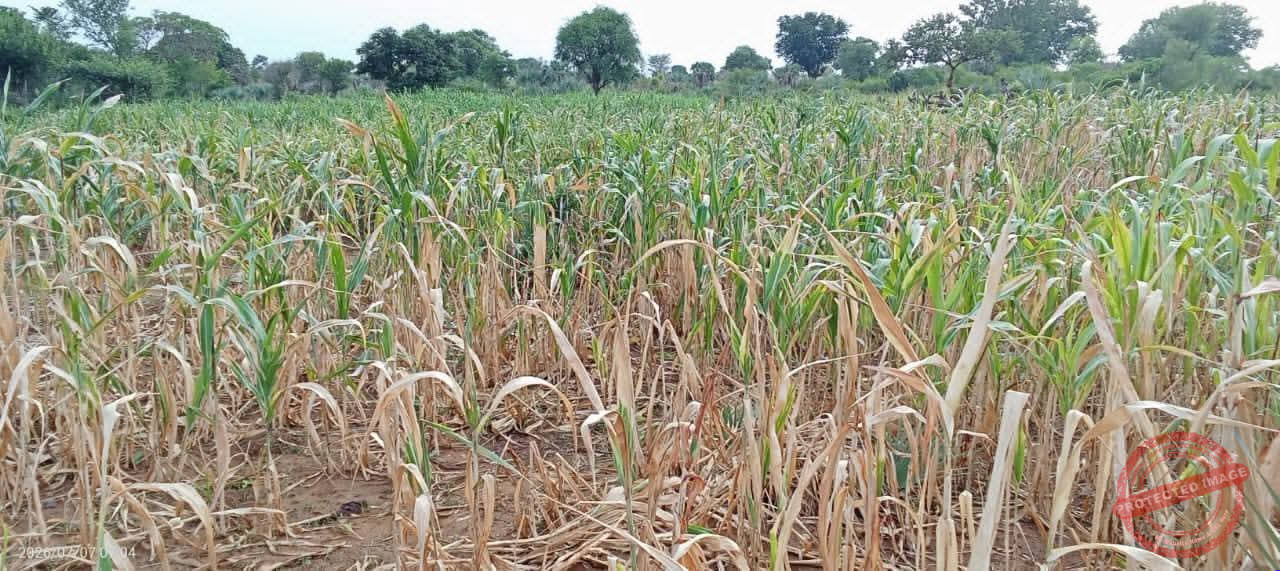
For farmers in parts of South Sudan, the promise of a good harvest is fading as prolonged dry spells and extreme heat destroy crops in the fields, leaving families worried about where their next meal will come from.
Across several states, erratic rainfall and changing weather patterns are threatening agricultural production, livestock and the livelihoods of communities that depend largely on rain-fed farming and pastoralism.
From Eastern Equatoria to Warrap, Lakes and Northern Bahr el Ghazal, farmers are reporting crop failures, while some families are increasingly turning to alternative sources of income and food to survive.
The situation is raising concerns about worsening food insecurity, particularly among households with limited resources to cope with repeated climate shocks.
What is driving the changing weather?
One of the climate phenomena associated with changing rainfall patterns is El Niño, a natural climate pattern characterised by the abnormal warming of surface waters in the central and eastern tropical Pacific Ocean.
The phenomenon can disrupt normal weather patterns across the world, influencing rainfall and temperatures in different regions. Its effects vary depending on the location and season.
In South Sudan, prolonged dry spells and rainfall deficits are adding pressure to communities already struggling with humanitarian and economic challenges.
According to a September 2026 update by the Famine Early Warning Systems Network (FEWS NET), widespread rainfall deficits persisted through September, with some areas in eastern and southeastern South Sudan receiving less than 60 per cent of their normal rainfall.
The agency warned that below-average rainfall could reduce crop production and worsen food insecurity.
Similarly, the IGAD Climate Prediction and Applications Centre (ICPAC), in its June–September 2026 climate outlook, highlighted varying rainfall conditions across the Greater Horn of Africa.
However, El Niño is not the only factor contributing to food insecurity in South Sudan. Other climate-related shocks and existing humanitarian challenges are also placing additional pressure on vulnerable households.
Crops fail as farmers face mounting losses
For rural communities that depend on seasonal rainfall to grow food and earn an income, a prolonged dry spell can mean the loss of an entire season’s harvest.
When rains fail, seeds struggle to germinate, crops wither before maturity, and water sources and grazing lands become increasingly scarce. Livestock production is also affected as animals struggle to find sufficient water and pasture.
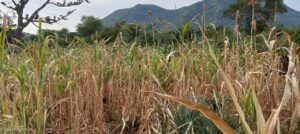
In Magwi County, Eastern Equatoria State, the impact of prolonged dry spells and extreme heat was already being felt by farmers in June.
Cooperative Ochano, head of the farmers’ association in Magwi, warned that the heat had destroyed maize and sorghum crops, leaving farmers uncertain about their future.
“The heat from the sun is too much. Our maize and sorghum crops have completely dried up. In some places, the crops are so dry that they can easily catch fire and burn. Areas such as Agoro and Omeyo have been badly affected. From what I have seen, the situation could become worse in the future if nothing is done,” Ochano said.
He called on the government and humanitarian partners to support farmers with machinery and agricultural equipment to help them recover and resume production.
The situation is also affecting communities in Lafon and parts of Imehejek in Eastern Equatoria, where farmers reported prolonged dry conditions between May and mid-July.
The affected areas include Lafon, Lofiri, Omeira, Iliu, the mountainous areas of Lafon and parts of Imehejek.
Efuk Barnabas, a farmer and agriculturalist, said many families had lost crops that were almost ready for harvesting.
“The entire farms have collapsed. Most of the farms were almost at the harvesting stage, but they were completely destroyed. People are surviving on wild fruits, and even those are becoming difficult to find,” he said.
Barnabas said the situation had forced some families to migrate to Torit, Uganda and Kenya in search of food and other means of survival.
“If urgent food assistance does not come, we will see more deaths and more displacement,” he warned.
Gold mining becomes an alternative to farming
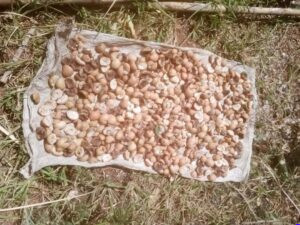
In Kapoeta South County, Eastern Equatoria State, the destruction of crops has pushed some families to turn to gold mining as an alternative source of livelihood.
Juma Buhkari, Chief Executive Officer of Kapoeta South Municipal, said families were increasingly selling gold to buy food after drought destroyed their crops.
“Climate change has affected not only South Sudan but other parts of the world. People in Kapoeta cultivated, but the crops were destroyed by drought,”Buhkari said.
“Now families in Kapoeta are collecting gold and selling one or two kilograms in exchange for food, including cereals and maize flour, to feed their children and pay school fees.”
The shift highlights how changing weather conditions are forcing households to reconsider traditional livelihoods as agricultural production becomes increasingly uncertain.
States declare emergencies as drought spreads
The impact of prolonged dry spells has also prompted state authorities to take emergency measures.
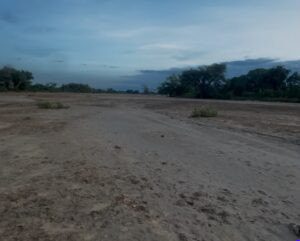
On September 7, 2026, the Warrap State Government declared a state of disaster and humanitarian emergency across all counties, citing severe drought and growing threats to food supplies.
In a statement, the government described the situation as an “unprecedented dry spell” caused by severe rainfall deficits.
The drought has reportedly resulted in widespread crop failures, livestock losses and the destruction of grazing lands, threatening communities that depend on farming and pastoralism.
In Northern Bahr el Ghazal, local authorities have also raised concerns over prolonged dry spells affecting several counties.
A rapid food security assessment conducted by the state government in September 2026 warned that approximately 70 per cent of the state’s entire population could face food shortages later this year and into early 2027, raising fears of a worsening humanitarian situation.
Lakes State has also been affected, prompting authorities to declare a state of disaster as worsening weather conditions threaten agricultural production, livelihoods and food security.
The state authorities have also said they intend to engage neighbouring states to facilitate the temporary movement of pastoralists into areas with available water and grazing land.
A growing food-security concern
The consequences of the dry spells come at a time when millions of people in South Sudan are already facing food insecurity.
According to the Food and Agriculture Organization (FAO), an estimated 7.8 million people in South Sudan faced acute food insecurity between April and July 2026. Poor rainfall has further threatened agricultural production and food supplies.
For farming and pastoralist households, the effects go beyond the loss of crops. Reduced harvests mean less food for families, lower household incomes and fewer resources to pay for essential needs such as education and healthcare.
As water sources and grazing lands shrink, livestock keepers also face difficult decisions about where to move their animals in search of pasture and water.
With prolonged dry spells continuing to threaten livelihoods across parts of the country, the experiences of farmers in Magwi, Lafon and Kapoeta illustrate the growing pressure on communities that depend on agriculture for survival.
For many families, the immediate concern is no longer simply whether the next harvest will be good, but how they will find enough food to get through the coming months.
The growing crisis has renewed concerns about the need for timely humanitarian assistance and sustained support for farmers, including access to agricultural equipment, climate information, drought-resilient farming practices and alternative livelihood opportunities.
Without adequate support, more households could lose their sources of food and income, deepening an already difficult humanitarian situation.