



EU voices regret over constitution delay as govt pledges post-election process
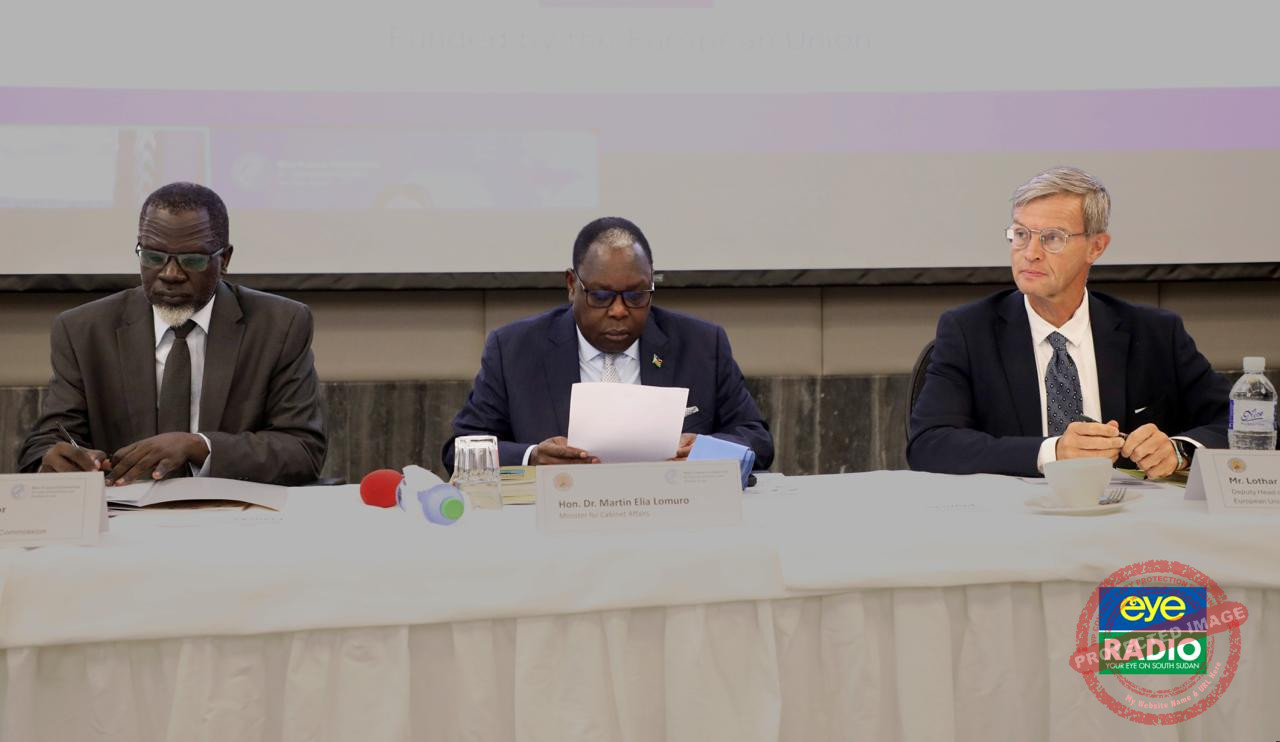
The European Union has warned that South Sudan could be left in a “legal limbo” if elections are held under the transitional constitution, while the government maintains that the permanent constitution-making process will continue after the polls.
EU Deputy Head of Mission Lothar Jascke said the decision to hold elections without first completing the permanent constitution was “disappointing and regrettable,” arguing that the permanent constitution was a central promise of the 2018 revitalized peace agreement.
“The permanent constitution was the promise in 2018 of a democratic governance system and social cohesion,” Jascke said.
He also questioned the legality of the process used to amend the peace agreement to allow elections to be conducted under the transitional constitution.
According to Jascke, the National Constitutional Review Commission (NCRC), which is responsible for supporting the permanent constitution-making process, was not consulted as required under the peace agreement.
“This is somehow disappointing and regrettable, not because they entered into [the amendment], but because the permanent constitution was the promise in 2018 of a democratic governance system and social cohesion,” he said.
Jascke said the procedures for amending the peace agreement must be respected to avoid creating uncertainty around the elections.
“Things need to be done correctly before any change can take effect. Otherwise, we are in a legal limbo, and there will always be doubt hanging over the clouds of elections,” he said.
He called for the NCRC not to be bypassed, saying the process needed to be corrected before changes to the peace agreement could take effect.
“The NCRC cannot be bypassed,” Jascke said.
However, Minister of Cabinet Affairs Dr. Martin Elia Lomuro defended the decision to proceed with elections without the permanent constitution, saying this does not mean the constitution-making process has been abandoned.
Lomuro said the process would continue after the elections under the elected government and ultimately produce the document that will govern the country.
“Although we are going for election without the permanent constitution, it is still a process that will continue post-election by the elected government,” Lomuro said.
“So let’s not lose interest in that. This process is not going to be used for governance of the country. It’s still going to be the document that will finally govern the Republic of South Sudan,” he added.
Lomuro said the constitution-making process provides South Sudanese with an opportunity to establish a governance system based on the wishes and rights of its people.
“We are doing it for ourselves, by ourselves, for our people,” he said.
He urged citizens to participate actively in the process and express their views without fear or favour.
“I want us to participate actively and to express our views without fear or favor. Otherwise, your views will remain with you. It will not contribute to the constitution,” Lomuro said.
The divergent positions come as South Sudan prepares for elections while the permanent constitution remains unfinished.
The EU is urging authorities to address what it considers procedural and legal concerns surrounding the amendment of the peace agreement, while the government says the elections can proceed and the permanent constitution can be completed afterward.
The dispute places the unfinished constitution-making process at the centre of the debate over South Sudan’s electoral transition and the country’s long-term governance framework.