
Funding cuts in South Sudan: The human cost of disinvestment -MSF
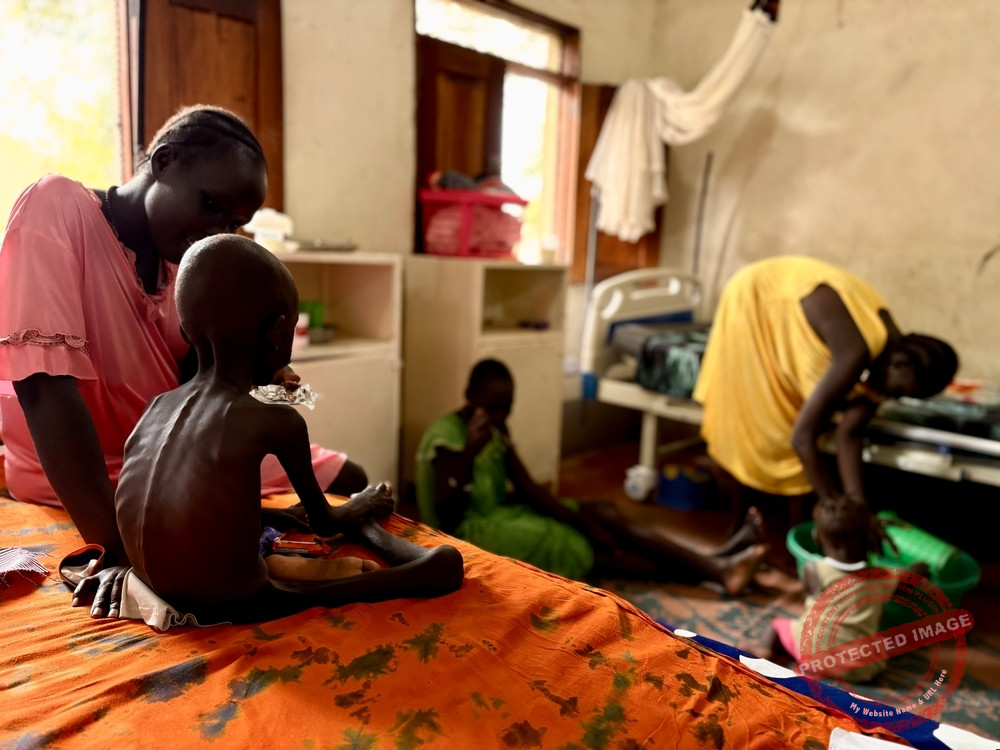
Donor funding cuts and the withdrawal of humanitarian organisations are leaving thousands of people across South Sudan without access to essential healthcare, according to Médecins Sans Frontières (MSF).
The organisation warns that the closure of health facilities, shortages of medicines and the withdrawal of medical support are forcing patients to travel long distances to reach hospitals, often arriving with conditions that could have been diagnosed and treated much earlier.
MSF medical teams are increasingly receiving women and children in critical condition at hospitals in Aweil, Northern Bahr el Ghazal State, and Akobo, Jonglei State. While the two locations face different challenges, the consequences for patients are increasingly similar: preventable illnesses and medical complications are going untreated until they become life-threatening.
Aweil: Primary healthcare facilities close as patients struggle to reach care
In Aweil, Northern Bahr el Ghazal State, the withdrawal of funding and the closure of primary healthcare facilities are forcing patients to travel long distances to access medical care at Aweil State Hospital, the only secondary healthcare facility serving an estimated 1.4 million people, according to MSF.
Abuk Athak knows what this means. A year and a half ago, she walked for two hours while in labour to reach the hospital after the nearest health centre, in Ruangol, closed in February 2025 because of a lack of staff, medicines and a midwife.
Her baby, a boy named Rau, survived.
Today, Abuk is back at the hospital with her 18-month-old son. Rau weighs just six kilograms and is suffering from severe malaria and moderate acute malnutrition.
Abuk says the closure of her local health centre has left her with no option but to wait until her children become seriously ill before seeking treatment.
“Before our healthcare centre closed, we could receive antenatal care, give birth, and get our children tested at the first sign of a fever,” she explains. “One day, it simply closed. We were told there were no more funds. Now, I am forced to wait until the very last moment to bring my children to the hospital, simply because I cannot afford the travel costs.”
MSF data shows that the number of functional Primary Health Care Centres (PHCCs) and Primary Health Care Units (PHCUs) in Northern Bahr el Ghazal fell from 131 to 63 by January 2026.
The decline is linked to funding shortages under South Sudan’s Health Sector Transformation Programme (HSTP), a multi-donor programme supporting medicines, staff incentives and basic healthcare services across the country.
Launched in 2024, the programme was initially expected to support 1,158 health facilities. However, funding shortfalls meant it began with plans to support only 816 facilities across 10 states and two administrative areas.
The HSTP followed the Health Pooled Fund (HPF), which had supported South Sudan’s public healthcare system since independence. The new programme faced funding gaps even before its launch, after the US and Sweden, both previous HPF donors, did not commit funding.
Aweil State Hospital under increasing pressure
As primary healthcare facilities close or reduce their services, more patients are arriving at Aweil State Hospital in critical condition.
MSF figures show that hospital admissions increased by 44 per cent between January and September 2026, compared with the same period in 2025. Admissions of children under five with severe acute malnutrition rose by 47 per cent, from 1,227 to 1,801, the highest malnutrition caseload recorded at the hospital in five years. Complicated vaginal deliveries also increased by 35 per cent.
In the hospital’s therapeutic feeding centre, Nyanut Akot is caring for her severely malnourished daughter.
Nyanut previously received ready-to-use therapeutic food (RUTF) for moderate malnutrition at her local clinic in Titchok, Aweil East. However, the facility has only partially functioned since April, and supplies have run out.
She says she only discovered how seriously ill her daughter had become after reaching the hospital.
“I didn’t know my daughter had become severely malnourished until we reached the hospital,” she says. “She developed a fever and convulsions, and I knew I had to find a way here.”
Reaching medical care meant walking for five hours, followed by a one-hour motorcycle journey costing 15,000 South Sudanese pounds. Nyanut had to borrow the money and does not know how she will repay it.
Her family is also facing worsening food insecurity. Drought and insufficient rainfall affected her crops, while subsequent flooding destroyed what remained. She previously grew okra, pumpkin and tobacco, but now has no harvest or income.
MSF warns that worsening food insecurity, combined with reduced access to healthcare, is increasing the risks facing vulnerable families. El Niño is expected to further disrupt rainfall patterns, raising concerns about crop failure, poor harvests and worsening malnutrition, with a risk of IPC Phase 5 (famine) conditions among some populations.
Dr Daniel Garang, an MSF doctor in Aweil, says the situation is unprecedented in his seven years working in the area.
“Every day I see mothers and their children lying on mats in the hospital compound for days after being discharged, unable to leave because they lack the money to return home,” he says. “In my seven years working in Aweil for MSF, I have never witnessed a situation like this.”
Humanitarian funding cuts deepen the crisis
MSF says the decline in support for South Sudan’s health system is being compounded by wider cuts in humanitarian funding, further limiting the capacity of organisations to provide essential services.
US funding for South Sudan’s Humanitarian Needs and Response Plan fell by 61 per cent in 2025 compared with 2024. The United Kingdom also reduced its overall aid allocation to the country by 23 per cent in 2025–26, with a further 39 per cent decrease projected for 2026–27.
By October 2026, South Sudan’s Humanitarian Needs and Response Plan was only 36 per cent funded.
The effects are already visible around Aweil. In August, the World Food Programme (WFP) stopped food distributions in Wedweil refugee settlement, home to more than 35,000 Sudanese refugees, approximately 45 kilometres from Aweil State Hospital.
The settlement’s only clinic, operated by the International Rescue Committee (IRC), has also reduced its services following US funding cuts in 2025. Without further US funding, IRC was forced to close 21 healthcare facilities across South Sudan.
The most severe cases from Wedweil are referred by ambulance to Aweil State Hospital through IRC’s referral system. With food distributions stopped, healthcare services reduced and UNICEF scaling back its activities, MSF expects more patients with severe health conditions to arrive at the hospital.
Akobo: Conflict and funding shortages leave communities without care
Approximately 1,000 kilometres east of Aweil, Akobo in Jonglei State faces a different but equally serious healthcare crisis.
Unlike Aweil, Akobo is in an opposition-controlled area affected by armed conflict. Its health system relies heavily on humanitarian organisations, while restrictions on access have significantly hindered the implementation of national health programmes.
On 6 March 2026, South Sudanese government forces launched an offensive on Akobo, forcing humanitarian organisations to evacuate. Akobo Teaching Hospital, the only secondary healthcare facility in the wider area, was subsequently looted amid the displacement and insecurity.
Nearly the entire civilian population fled across the border into Ethiopia, where they received no humanitarian assistance.
When opposition armed groups retook the town in mid-April, around 100,000 people returned to find health facilities stripped of medicines, equipment and staff.
MSF resumed emergency activities at the hospital on 11 May 2026. However, the facility had been left without electricity, fuel and beds.
In July 2026, the UN Office for the Coordination of Humanitarian Affairs (OCHA) reported that government-imposed restrictions on the movement of cash, fuel and communications equipment into opposition-controlled territories were further affecting the delivery of essential assistance to Akobo and surrounding areas.
MSF says the combination of conflict, access restrictions and declining humanitarian funding is further undermining healthcare services in the area.
Short-term funding puts healthcare services at further risk
The emergency response following the population’s return to Akobo was largely dependent on short-term funding. Several of these arrangements are now approaching their expiry dates, putting the continuity of essential services at risk.
Save the Children, which operated 22 primary healthcare facilities in and around Akobo under the HSTP, suspended its activities in late July pending an in-depth review of the security situation.
Medair took over 12 malnutrition treatment sites, with international funding initially due to expire at the end of October. A new partner has subsequently been identified to continue activities at all 12 sites until December 2027.
Food assistance has also been affected. WFP distributions, which previously reached 80,000 people in Akobo, stopped in July 2026 because of funding cuts.
ALIMA has secured funding for its activities in Akobo only until December 2026, while CARE’s funding is secured until April 2027.
MSF warns that these temporary funding arrangements leave communities vulnerable to further service disruptions as humanitarian organisations struggle to maintain essential activities.
Meanwhile, the operating theatre at Akobo Hospital has remained closed since the evacuation, leaving Akobo County without access to surgical services.
A mother dies after failing to access emergency surgery
For 45-year-old Gatwech Biel Thiep, the consequences of the healthcare crisis have been devastating.
In late August, his 30-year-old wife, Nyamuoch Geng, was eight months pregnant when she developed severe abdominal pain.
The nearest Primary Health Care Unit was just a 10-minute walk from their home, but it had permanently closed on 15 July after its supporting organisation withdrew.
The family kept Nyamuoch at home for three days, knowing the health unit was no longer operating.
As her condition worsened, they placed her on a fabric blanket and carried her by hand for two and a half hours along a muddy road to reach Akobo Hospital.
She delivered a baby girl, Nyakhan, but subsequently suffered severe postpartum haemorrhage.
With no operating theatre, blood bank or specialised surgical care available, medical teams requested an emergency medical evacuation flight. The aircraft did not arrive in time.
Nyamuoch died on 29 August.
Her husband carried her body home on his shoulders and buried her in their family yard. He is now left caring for four children, including their newborn daughter.
“The fact that our local clinic was closed, that there is no emergency surgery in Akobo, and that the plane did not come that day, it all played a part,” says Thiep. “Now I am left alone with four children, including a newborn.”
Two locations, different causes, the same consequences
The situations in Aweil and Akobo demonstrate how declining donor support and the withdrawal of humanitarian organisations are undermining access to essential healthcare across South Sudan, according to MSF.
In Aweil, the withdrawal of support from a national health programme has weakened an already fragile primary healthcare network. In Akobo, conflict, insecurity and dependence on short-term humanitarian funding have left communities with few alternatives.
In both locations, MSF medical teams are increasingly treating patients with conditions that should have been diagnosed and managed locally, weeks before they became life-threatening.
Whether in government-controlled areas such as Aweil, refugee settlements such as Wedweil, or opposition-controlled territories such as Akobo, the consequences are being felt by people who depend on humanitarian healthcare.
MSF warns that as funding cuts continue and humanitarian organisations scale back their activities, essential services risk disappearing from communities that have few other options.
Dr Daniel Garang says the consequences could be fatal.
“The funding cuts are a death sentence. How many more lives will be lost to preventable causes simply because the funding to save them is no longer there?”