
Kiir lifts state of emergency in four states ahead of 2027 elections

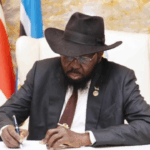
President Salva Kiir Mayardit has lifted the state of emergency in Lakes, Warrap, Western Bahr el Ghazal and Unity states, in a move aimed at creating a more conducive political and security environment ahead of the country’s anticipated 2027 general elections.
The presidential decree was announced on Thursday evening by the state-owned South Sudan Broadcasting Corporation (SSBC), following security concerns raised by leaders of various political parties during the recently concluded Inter-Party Political Dialogue in Juba.
The decision comes amid growing calls from political actors for greater political freedom, improved security and an environment that allows parties and candidates to participate freely in the electoral process.
The state of emergency was initially declared in parts of Warrap and Unity states in June 2025 following escalating intercommunal violence, cattle raiding and insecurity. The emergency measures were subsequently implemented across four states, including Lakes and Western Bahr el Ghazal.
The government justified the measures on security grounds, particularly the need to address armed violence, illegal possession of firearms, armed robbery and intercommunal conflicts.
Security forces were also tasked with conducting disarmament operations targeting civilians illegally possessing firearms and individuals accused of participating in criminal activities.
In Western Bahr el Ghazal, military authorities confirmed in November 2026 the deployment of troops to Wau County as part of security operations under the emergency measures.
However, the restrictions also raised concerns among political parties and civil society groups about their possible impact on political participation, freedom of movement and preparations for the elections.
During the Inter-Party Political Dialogue in Juba, political leaders reportedly highlighted the importance of establishing a secure and inclusive environment in which political parties can freely organise, mobilise supporters and conduct campaigns without intimidation.
The lifting of the emergency is therefore seen as an important development in efforts to build confidence among political stakeholders as South Sudan approaches its scheduled February 2027 general elections.
Despite the presidential decision, security challenges remain in several parts of the country, particularly areas affected by intercommunal violence and the proliferation of small arms.
The lifting of the emergency does not necessarily mean that insecurity has ended or that all security concerns have been resolved.
Instead, attention is expected to shift towards addressing insecurity through normal legal and security institutions while ensuring that political and civil freedoms are respected.
South Sudan is preparing for its first general elections since gaining independence in 2011, with the February 2027 polls expected to be a significant test of the country’s political transition and democratic process.