




OPINION: Africa must learn from China without becoming China
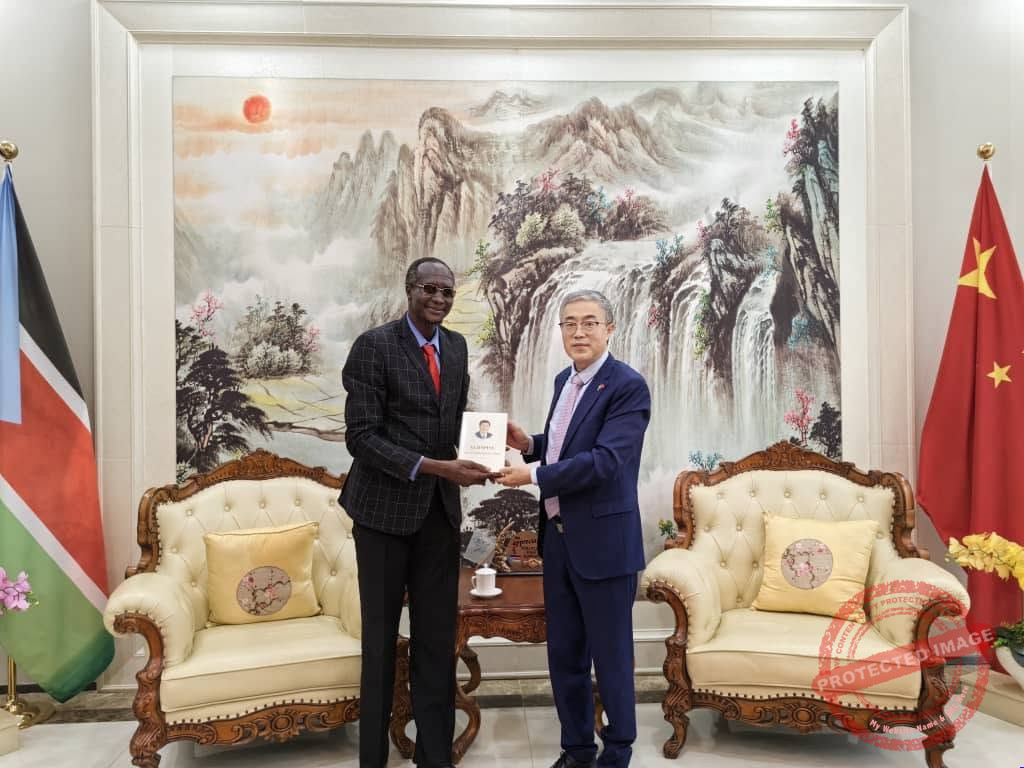
The relationship between China and Africa has reached a critical juncture where historical solidarity meets the practical demands of modern development. Participating in a recent workshop in Chengdu alongside an esteemed delegation of East African scholars, journalists, and public leaders provided a clear lens to examine how Chinese modernization intersects with African aspirations.
From Bandung to contemporary strategic partnerships, China-Africa alignment remains vital, yet the deepest value of such exchanges lies not in admiration but in discernment.
China’s rapid economic ascent serves as an informative case study rather than a rigid template; African nations must adapt functional mechanisms to their own conditions rather than unthinkingly import these great models. What works in China does not automatically mean it will work in Africa, and the maturity of our partnership depends on our willingness to say so with respect.
A foundational lesson from international diplomacy and statecraft is that lasting economic development cannot exist in a vacuum devoid of regional stability and security. During discussions on the Horn of Africa, multilateral cooperation, and the principles embedded within the United Nations Charter and the Global Security Initiative, the necessity of peaceful coexistence was repeatedly emphasized.
For African nations, internal cohesion and peaceful regional relations form the baseline requirement for any long-term planning. Without security, investments in infrastructure, human capital, and technology cannot yield durable returns. International diplomacy must be harnessed to protect national sovereignty, secure trade corridors, and establish an environment where governance structures can focus on civilian welfare rather than ongoing crisis management.
Long-term vision and structural continuity remain central pillars of China’s economic trajectory, best illustrated by its systematic execution of Five-Year Plans and its articulated characteristics of Chinese modernization. Modernization requires robust institutional capacity, digital adoption, clear regulatory frameworks, and dedicated national development priorities.
For South Sudan and the broader African continent, adopting a disciplined approach to national planning means establishing institutions that survive political transitions and focus relentlessly on domestic needs. State capacity must be deliberately built to guide industrialization, negotiate foreign agreements from a position of clarity, and maintain strategic focus across decades rather than short election cycles.
Economic growth yields genuine value only when it directly improves the daily lives of ordinary citizens. The concept of common prosperity highlights the fundamental truth that key metrics like expanding employment, extending public health services, funding primary and higher education, and modernizing agriculture are the real benchmarks of national progress.
GDP figures and macro-level trade statistics mean little if the majority of a population remains outside the formal economy or lacks access to essential services. Industrial and economic policies must therefore be judged by their ability to uplift rural communities, create dignity through employment, and foster inclusive growth that reduces poverty across all segments of society.
In exploring modernization, African societies must confront the vital imperative of preserving cultural identity and heritage. The exchanges we shared examined the balance between technical advancement and cultural continuity. Modernization must not be conflated with Westernization or the abandonment of indigenous values.
Parents, educators, and community leaders hold a profound responsibility to prepare the young generation for a complex, tech-driven world while ensuring they remain rooted in their history, languages, and core human ethics. An African continent that achieves economic wealth at the expense of its cultural foundation would be fundamentally diminished.
The practical application of modern technology to foundational sectors is vividly demonstrated in modern agricultural engineering. Visits to facilities such as advanced plant science factories and intelligent agricultural machinery groups offer direct insights into what targeted research and industrial machinery can accomplish for food security.
For African countries endowed with abundant arable land and vast water resources, achieving agricultural self-sufficiency is the ultimate prerequisite for economic independence. Integrating appropriate agricultural technology, intelligent machinery, and localized crop research can transform African farming from subsistence survival into a commercial engine capable of feeding the continent and driving industrial processing.
Geopolitics and global infrastructure directly impact the everyday realities of ordinary citizens, businesses, and mobile workers. In an interconnected global economy, international relations shape telecommunications, internet access, trade clearing mechanisms, cross-border payment platforms, and the expansion of artificial intelligence.
A clear personal illustration of these complex systems occurs when utilizing international mobile roaming while working in China. Global digital architecture, connectivity protocols, and cross-border digital tools determine whether remote workers, digital nomads, and independent entrepreneurs can seamlessly participate in the global digital economy.
Developing resilient domestic infrastructure and equitable international trade agreements ensures that African professionals can operate effectively across international borders without technical friction.
Ultimately, Africa requires neither isolated nationalism nor uncritical imitation of foreign paradigms. Neither the Western development model nor the Chinese model can be blindly applied to African soil without thorough customization.
African nations must cultivate independent analytical thinking, build unshakeable public institutions, deploy suitable technologies, participate actively in global diplomacy, and maintain absolute cultural confidence.
By studying global successes, extracting practical methods, and discarding what does not fit local contexts, Africa can shape a future that honors its people, safeguards its sovereignty, and makes a unique contribution to shared human progress.
About the Author
John Monyjok Maluth is a South Sudanese author, researcher, thinker, and advocate of human development. He is the originator of the Human Horizon Theory and writes on personal development, education, culture, leadership, technology, international relations, and the role of Africa in a changing world. John can be reached via email at maluthabiel@gmail.com.
Disclaimer: The views expressed in this opinion article are solely those of the author and do not necessarily reflect the views or position of Eye Radio.