

South Sudan on high alert after Kenya records first Bundibugyo virus death

The Ministry of Health says the country remains free of confirmed Bundibugyo Virus Disease, BVD, but has placed the national health system on its “highest state of alert” following the detection and death of an imported case in neighbouring Kenya.
Kenya confirmed its first imported BVD case in Nairobi on October 6. The patient, a Kenyan citizen who had travelled from the Democratic Republic of Congo through Uganda, died on October 5, according to the Ministry of Health.
The development has raised concern over the potential spread of the virus through the region’s interconnected borders, trade routes and transport corridors.
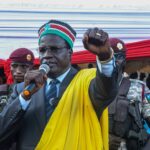
Addressing journalists this evening in Juba, the Caretaker Minister of Health, Dak Duop Bichok says there are currently no confirmed cases inside the country.
“There are currently no confirmed cases of Bundibugyo Virus Disease inside South Sudan,” the Caretaker Minister said.
The Caretaker Minister says the regional situation is rapidly changing and requires increased surveillance and preparedness.
“Our national health system is operating at its highest state of alert due to a rapidly changing regional landscape,” he said.
DRC remains regional epicentre
The Ministry says the Democratic Republic of Congo remains the regional epicentre of the outbreak.
As of October 2, the DRC had recorded 8,442 confirmed cases and 4,080 deaths, according to the briefing.
Duop says the Dungu health zone in eastern DRC is of particular concern to South Sudan because active camps are located between 10 and 50 kilometres from the South Sudanese border.
Uganda, which previously experienced an outbreak, declared it over on August 27 after completing a 42-day period without recording new cases.
Kenya is now conducting contact tracing and containment measures following the imported case in Nairobi.
Border screening intensified
The Ministry says it is working with the National Public Health Institute, the World Health Organization and the Africa CDC to strengthen preparedness.
It says one of the immediate priorities is to heighten screening at border checkpoints and transport hubs.
“The Ministry of Health, alongside the National Public Health Institute (NPHI), the World Health Organization (WHO), and the Africa CDC, is moving proactively to safeguard our population,” Duop said.
The authorities are also calling for improved access to soap, clean water and alcohol-based hand sanitisers as part of community infection-control measures.
The public is being urged to avoid direct contact with the bodily fluids of sick people or animals showing signs of illness.
The Ministry has also called for safe and dignified burials, saying suspected deaths should be handled exclusively by trained medical teams.
Citizens urged to remain vigilant
The Health Ministry is urging South Sudanese to remain calm while observing preventive measures.
“We urge all citizens to remain calm but deeply vigilant,” the Caretaker Minister said. It is advising people to immediately report cases involving fever, vomiting, diarrhoea or unusual bleeding to the nearest health facility.
Suspected cases can also be reported through the national toll-free health line 6666. The Ministry says the absence of confirmed BVD cases in South Sudan does not eliminate the risk, particularly given the movement of people across the country’s borders with the DRC, Uganda, and Kenya.
“Let us begin our session,” the Caretaker Minister concluded, as he called for coordinated action to protect the population.