

South Sudanese at the Helm of Anglican Communion Poggo defends role in Canterbury installation, same-sex debates
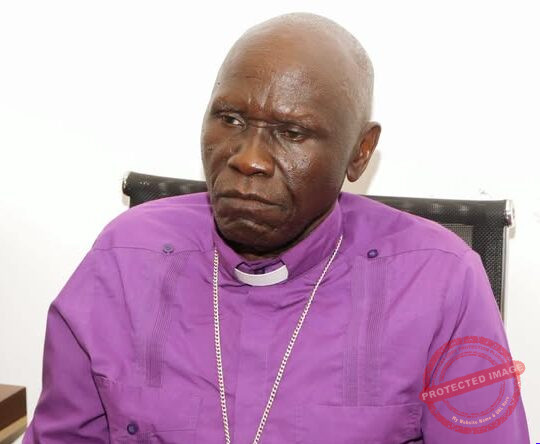
South Sudanese cleric Reverend Anthony Poggo, Secretary General of the worldwide Anglican Communion, has defended his participation in the installation of the first-ever female Archbishop of Canterbury, saying his role is to unite the Communion’s 42 autonomous churches despite differences over same-sex relationships and women’s ordination.
Poggo said his attendance at the installation was part of his official responsibilities and should not be interpreted as an endorsement of the Archbishop of Canterbury’s personal views on contested church teachings.
He faced questions from Archbishop Justin Badi Arama and Assistant Bishop Jackson Aripa George Gabriel over his participation in the ceremony, given ongoing disagreements within the Anglican Communion over sexuality and women’s ordination.
“My conscience is very clear,” Poggo said, explaining that his work as Secretary General largely focuses on bringing Anglican churches together rather than addressing disputes over human sexuality.
“In my role as Secretary General, the things I deal with, 99% has nothing to do with human sexuality. One per cent is perhaps what I deal with in terms of human sexuality,” he said.
Poggo cited his experience at his local church in London, where he said members come from different parts of the Anglican Communion but rarely discuss the issue.
“I’ve been in that church for 10 years. I’ve never heard someone stand up and talk about human sexuality in that church, either promoting it or talking against it,” he said.
He said this reflected the context in which he worships and illustrated the diversity of experiences across Anglican churches.
Poggo also reaffirmed his support for traditional marriage between a man and a woman, citing a 1998 Lambeth Conference resolution on marriage.
He noted that the Anglican Communion comprises 42 autonomous member churches, which hold differing positions on same-sex relationships and the ordination of women as bishops.
According to Poggo, his responsibility is to maintain relationships among the churches despite their theological differences, rather than compel individual provinces to change their doctrines or practices.
He said participation in an official church event should be understood within the scope of his institutional responsibilities and not as a statement of personal agreement with every position held by church leaders.
The debate reflects continuing divisions within the worldwide Anglican Communion over biblical interpretation, marriage, sexuality and the role of women in church leadership.
Poggo’s defence comes amid concerns among some church leaders in South Sudan about how the Communion’s leadership engages with churches and leaders whose positions differ from their own on these issues.
He maintained that his personal Christian convictions remain unchanged and that his principal responsibility is to foster unity among Anglican churches worldwide while recognising their differing positions.