Machar accuses Special Court of “politically motivated” rulings in first address
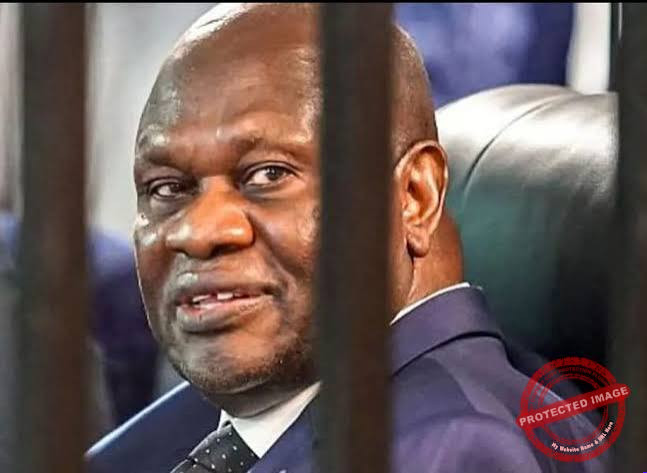
Former First Vice President Dr. Riek Machar has accused the Special Court hearing his trial of making a series of “politically motivated” rulings and questioned the role of private lawyers in the prosecution of his case.
Addressing the court this morning during his first defence testimony, Machar said he remains confident in his defence team but expressed what he described as “disappointment and dismay” over several decisions made by the three-judge panel since the trial began.
Machar said his confidence in his lawyers should not be interpreted as a lack of respect for the court or the prosecution.
He instead criticised what he described as restrictions imposed on the defence, including limitations on communication with lawyers, recording of proceedings and media coverage.
“I still have the hope that this honourable special court would listen to our case carefully, critically and pass a fair and just ruling at the end based on the actual facts and evidences provided,” Machar told the judges.
The former First Vice President also questioned the involvement of what he called co-opted private advocates in the prosecution team.
He questioned why prosecutors from the Ministry of Justice and Constitutional Affairs appeared to have taken a back seat while private lawyers had taken a leading role in prosecuting the accused.
Machar questioned whether the co-opted lawyers were members of the National Security Service assigned to prosecute the case on behalf of the complainant, or whether the proceedings had effectively become a private prosecution.
He also questioned the political affiliation of one of the private lawyers, whom he did not name, saying the participation of a lawyer affiliated with the ruling SPLM-IG in prosecuting members of the SPLM-IO raised questions about the political nature of the trial.
Machar said his concern was not about the identity of the lawyers, but what he described as the transformation of a state prosecution into a potentially politically driven case.
Machar challenges nine court rulings
Machar also challenged nine previous rulings by the Special Court, saying they had raised concerns about the fairness of the trial.
He cited the August 19 ruling rejecting the defence request for audio-visual recording of the proceedings.
Machar argued that the request was intended to ensure parity between the prosecution and defence, noting that the prosecution has a camera while the court itself has three cameras.
He also criticised the court’s decision to restrict his defence lawyers from freely interacting with the accused while they are inside the locked dock before proceedings begin or during court breaks.
Machar said the restriction had affected the defence team’s ability to carry out its professional duties.
Other rulings he challenged include restrictions on media reporting of the proceedings and the decision not to allow live broadcasting of the accused persons’ testimony.
He also questioned earlier decisions concerning the jurisdiction of the Special Court, the investigation of the Nasir incident, his immunity as First Vice President and the designation of him as accused number five.
Machar further criticised the court’s decision to rescind an earlier arrangement that allowed members of the public and media houses, including international media, to attend the high-profile trial.
He said the rulings raised serious questions about the right to a fair trial under Article 19 of the Transitional Constitution of South Sudan.
Machar raises assassination allegations
Machar also raised concerns over alleged threats against the accused persons and members of the defence team.
He said the environment surrounding the trial had become “toxic” following what he described as a plot to assassinate the accused and their lawyers.
According to Machar, the alleged plot must be properly investigated and permanently resolved before the trial environment can become conducive.
He said he was grateful that the alleged plot had been uncovered and expressed hope that justice would prevail.
Machar did not provide further details about the alleged assassination plot but said the allegations had contributed to his concerns over the security and integrity of the proceedings.
Defence says prosecution failed to establish case
Machar also maintained that the prosecution had failed to substantiate its case after months of proceedings.
He said the prosecution had taken nearly eight months, covering 71 sessions and approximately 215 days, without establishing what he described as a prima facie case against the accused.
The former First Vice President and his co-accused are facing charges linked to the violence in Nasir, Upper Nile State, in March 2025.
The charges include treason, murder, conspiracy, terrorism, destruction of public property and crimes against humanity.
The accused have denied the charges.
Machar said the prosecution had previously portrayed the accused as criminals deserving imprisonment before the court had determined their guilt.
He accused public officials and the prosecution of vilifying the accused, saying they should be presumed innocent until proven guilty.
Defence rights
Machar also thanked the court for allowing the accused to appear before it in decent clothing and for upholding their right to use pens, papers and notebooks during proceedings.
He expressed appreciation for the court’s recognition of their constitutional right to defend themselves and to be represented by an independent defence team rather than being assigned legal aid.
Machar said he continued to have confidence in his defence lawyers despite his disagreements with several court rulings.
He also urged the judges to determine the case strictly on the facts and evidence presented before the court.
Machar accused the wider political system of using coercion to undermine, compromise and interfere with the independence of the judiciary and the administration of justice.
Despite those concerns, he said he remained hopeful that the Special Court would ultimately deliver what he described as a fair and just ruling.
The prosecution has not responded to Machar’s accusations.
The court session is scheduled to resume on 14 October, when Machar will continue his defence testimony.