

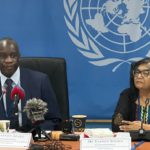
Yakani questions security chiefs over deadly violence in Tonj region

Civil society activist Edmund Yakani has questioned the country’s security leadership over its failure to prevent recurring inter-communal violence in the Greater Tonj region, following two separate attacks that reportedly killed 84 people and wounded 62 others in Warrap State.
Yakani, the Executive Director of the Community Empowerment for Progress Organization (CEPO), challenged the Ministers of Defence and Interior, the Chief of Defence Forces, the Inspector General of Police, the Director General of National Security, and the Director of Military Intelligence to explain why civilians continue to die in repeated armed clashes.
He said the latest incidents raised serious questions about the government’s ability to protect civilians, particularly as authorities have declared disarmament efforts in the Tonj region.
“As a human rights defender, we have a serious question before the leadership of the country, that this incident is happening repeatedly in Greater Tonj Region without proper response from the state authority,” Yakani said.
He referred to Monday’s attack, which reportedly left 72 people dead and 38 wounded, and a separate attack on Tuesday in Akop Payam, where a local youth leader reported 12 people killed and 24 wounded.
The Tuesday attack was allegedly carried out by armed criminals believed to have come from Marial Lou Payam and Tonj East County. Five villages were reportedly burned, while five people remained missing.
The assailants in Monday’s attack were separately reported to have come from Mayom County and Alabek Payam.
Yakani questioned why such deadly violence continues despite the government’s stated disarmament efforts in the region.
“My question I would like to raise to the attention of the country, and in particular, the CDF of the army, IGP of Police, DG of National Security and the Director of Military Intelligence, with all your presence as the leaders of South Sudan government, in the face of these repeatedly deadly armed violence in Greater Tonj region, why are we watching these incidents without proper preventive measures or without proper response of these escalations?” he asked.
He warned that the safety and protection of residents in Greater Tonj were increasingly becoming difficult to guarantee.
“Safety, protection and security of our own brothers and sisters in greater Tonj region is really getting out of hands,” Yakani said.
The activist’s remarks put renewed focus on the responsibilities of national and state authorities to prevent attacks, protect civilians, investigate killings, and hold those responsible accountable.
Yakani urges dialogue to end retaliatory violence
Alongside his criticism of the security leadership, Yakani called on communities in Greater Tonj to resolve their disputes through dialogue rather than retaliatory attacks.
He urged community members not to allow political interests or traditional leaders who may benefit from continued instability to influence them into violence.
“And I would like to take this opportunity to call upon our brothers and sisters from greater Tonj. If you have misunderstanding, disagreement among yourselves, whatever the case is, use dialogue as a means of resolving your differences,” he said.
“Don’t allow yourself to be lured by certain political individuals that are in conflict to force you to confront yourself or traditional leaders that love to survive and see such deadly violence happening among yourselves. Abstain from the use of the violence. Use dialogue as a means of resolving your differences.”
Yakani’s appeal comes amid renewed concerns over the protection of civilians, the effectiveness of disarmament efforts, and the need for sustained peacebuilding initiatives in the region.
Years of recurring inter-communal violence in Greater Tonj
Greater Tonj, in Warrap State, has experienced recurring inter-communal violence over several years, with clashes and retaliatory attacks claiming lives, displacing residents, and damaging homes and livelihoods.
The violence has been associated with cycles of revenge, armed confrontations between community members, cattle raids, and disputes that have repeatedly escalated into deadly attacks. Civilians, including women, children, and elderly people, have been among those exposed to the consequences.
The persistence of these incidents has raised concerns about the proliferation of small arms, the effectiveness of disarmament initiatives, and the ability of authorities to prevent retaliatory attacks before they spread to neighbouring communities.
In recent years, community leaders and other stakeholders have also pursued dialogue as a way to address the violence. A peace conference held in Juba brought stakeholders together under the theme “Idea Sharing Towards Ending Communal Violence in Greater Tonj.”
However, repeated reports of killings and displacement have continued to raise questions about the implementation of peace commitments and the sustainability of reconciliation efforts.
Yakani has previously attributed violence in Tonj to political ambitions among some elites, alleging that certain individuals exploit community tensions to pursue political influence, displace incumbents, or secure appointments. Such allegations underscore the need for independent investigations and should not be treated as established facts without supporting evidence.
The latest attacks have renewed calls for authorities to strengthen civilian protection, investigate the incidents, recover illegal firearms, and ensure that those responsible face justice.
The reported combined toll from Monday’s and Tuesday’s separate attacks stands at 84 people killed and 62 wounded, although the figures remain based on the reports available from local sources and authorities.
Authorities have yet to be quoted in this report responding directly to Yakani’s questions about the adequacy of security measures or explaining what additional steps will be taken to prevent further attacks.