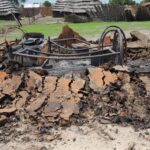
472,000 people reel from floods nationwide-OCHA

The United Nations Office of Humanitarian Affairs says the continuous heavy rains since May, couple with controlled water releases from Uganda has affected 472,000 people nationwide.
OCHA says with predictions of above-average rainfall and record-level floods from June to September, South Sudan faces severe flooding.
It said the people are affected are found across 26 of South Sudan’s 78 counties.
“The affected regions, including Northern Bahr el Ghazal, Warrap, Western Bahr el Ghazal, Jonglei, Unity, Upper Nile, and Central Equatoria, are already grappling with compounded challenges such as previous floods, ongoing conflict, displacement, food insecurity, and the broader regional impact of the Sudan crisis.”
OCHA stated that the displaced individuals have sought refuge in public facilities like schools and churches with other sheltering in the open along roadsides.
“The floods have devastated homes, destroyed crops, disrupted education and health services, and restricted access to essential facilities, escalating the risk of disease outbreaks.”
“Reports indicate rising malaria cases, respiratory tract infections, acute watery diarrhea, and snakebites since the onset of the rainy season in June. Flood-affected populations have been unable to tend to their lands and livestock, further aggravating their vulnerabilities.”
According to the UN humanitarian agency, partners are rapidly responding to the immediate needs of flood-affected populations with life-saving assistance.
“Over 66.7 metric tons of emergency health kits, including cholera kits and essential nutrition supplies, have been strategically pre-positioned in Yambio, Rumbek, Wau, Kuajok, Bentiu, and Aweil, ensuring life-saving support for nearly 860,000 people,” it said.
Up to 3.3 million people nationwide, including communities still reported recovering from the devastating floods of 2019-2022.
The anticipated flooding, OCHA said, is likely exacerbate existing vulnerabilities, especially in remote communities with significant access constraints to humanitarian aid.
Ten days ago, the South Sudan Ministry of Water Resources and Irrigation urged communities in low-lying areas along the Nile to relocate to safer grounds as river has filled up to brim, putting lives at risks.