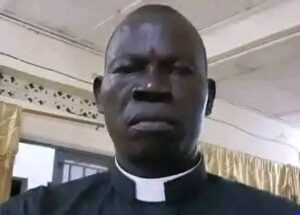

Meet Majak, Gen. Lagu’s ‘Congole’ who made Molotov bombs and procured guns for Anya-Nya fighters
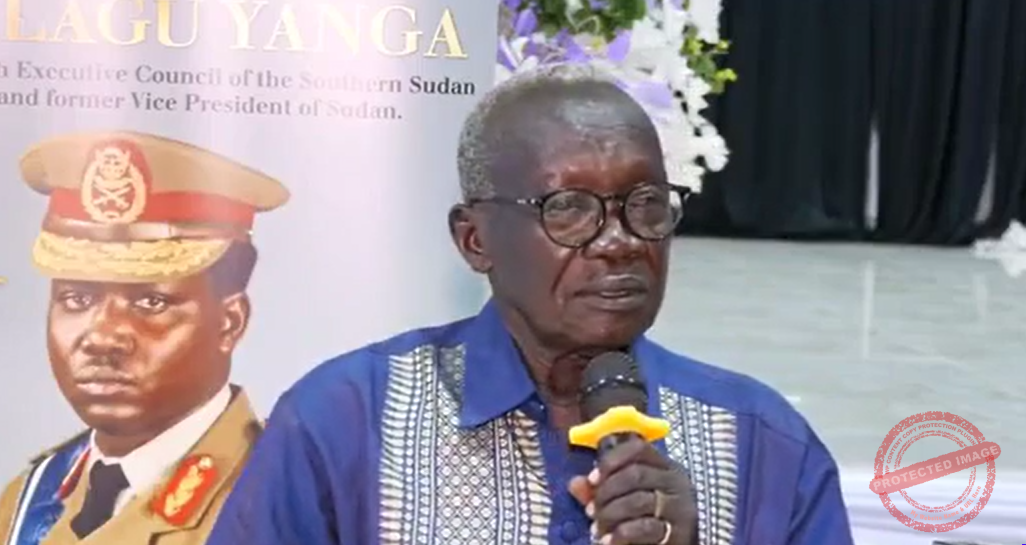
Before he became a gun procurer for the Anya-Nya I fighters, Majak Riak carried homemade petrol bombs in a backpack, throwing them at Sudanese government vehicles before running to safety. Known as “Congole,” the veteran says he was entrusted by the late General Joseph Lagu with procuring weapons through Congo during the first liberation struggle.
For Majak Riak, the late General Joseph Lagu was more than a military commander. He was the man who gave him a nickname, entrusted him with responsibilities during the first liberation struggle and, in his words, gave him a life that enabled him to witness the birth of an independent South Sudan.
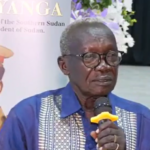
Known by his battlefield nickname, “Congole,” Majak is an Anya-Nya I veteran from Yirol in Lakes State. He says the name was given to him by Lagu in 1967 after he spent two months in Congo, where he learned to speak the local language.
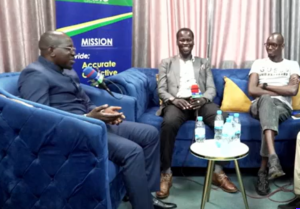
Speaking during the signing of the condolence book for the late General Lagu at the Parliament Building in Juba, Majak recalled how his language skills became useful to the liberation movement.
“I was assigned to buy guns because I spoke the Congolese language and transport the weapons to South Sudan,” he said.
Majak, an Anya-Nya I liberation war veteran, says he served as one of General Lagu’s trusted operatives, tasked with procuring guns for the fighters through Congo.
He recalled that he eventually managed to purchase more than 30 guns, which were supplied to the fighters in the bush.
Majak said Lagu would regularly ask him what weapons he had managed to obtain.
“Gen. Lagu would come to me and ask, ‘Majak Congo, what have you got?’ I would tell him that I had a few guns with me, and we would send them to South Sudan,” he recalled.
But before the fighters acquired conventional firearms, Majak said their struggle depended on improvised weapons, including homemade petrol bombs known as Molotov cocktails.
He described carrying between 10 and 12 of the bombs in a backpack and using them against vehicles belonging to the Sudanese government forces.
“I used to run very fast. My tiny legs, which you see here, were faster. I would throw them at Arab vehicles and run away before they could shoot me,” he said.
According to Majak, the bombs were used before the fighters acquired Kalashnikov rifles. He recalled that government soldiers were then using semi-automatic rifles, which he referred to as “Abuhashere”.
His account offers a glimpse into the conditions under which the Anya-Nya I fighters operated, relying on improvised weapons, limited supplies and support from communities along the borders.
Majak said the fighters also faced food shortages, sometimes surviving on wild fruits as they continued their campaign.
Despite those difficulties, he said he remained grateful to Lagu for leading the struggle that eventually resulted in South Sudan’s independence in 2011.
“My first appreciation to him is for allowing me to witness the birth of South Sudan. He died after seeing the fruits of the liberation struggle,” Majak said.
He also acknowledged President Salva Kiir Mayardit, saying the country’s independence was the outcome of a struggle carried out by generations of fighters.
Training in Israel and the liberation struggle
Majak also recalled being among 60 officers selected by Lagu for military training in Israel in 1971.
He said the group included the late Dr John Garang de Mabior, with whom he shared a room during the two-month training programme.
“Joseph Lagu organised us in the bush. We were 16 officers, including Comrade Karbuno Kwanyin Bol. He sent us to Israel, where we received professional military training for two months before returning home,” he said.
Majak described the training as an important stage in the development of the liberation movement.
He said both Lagu and Garang died after playing roles in the struggle, but left behind an independent South Sudan.
Reflecting on the country’s current leadership, Majak appealed to President Kiir to continue leading the country, saying he did not want to lose another leader who had been part of the liberation struggle.
He also recalled that when the second liberation war began in 1983, he was away in Al-Obeid, where he had spent three years. He said he would have joined the Sudan People’s Liberation Army (SPLA) had he been in Malakal when Kiir went to the bush.
A call to honour fallen liberation heroes
Beyond remembering Lagu, Majak used his remarks to appeal to South Sudanese leaders to honour other people who contributed to the liberation struggle but whose stories and sacrifices, he said, should not be forgotten.
He particularly called for the return of the remains of the late Chief Stephen Changkol, whom he described as a community leader who mobilised women and young people to provide food to fighters during the liberation struggle.
Majak said Changkol supported the Anya-Nya I fighters along the Congo-South Sudan border and later joined the SPLA during the second liberation war.
He recalled that Changkol died in a road accident in Uganda while participating in the liberation struggle and was buried in Gulu, where his grave remains.
“He used to mobilise women and youth to bring food to us at the Congo-South Sudan border during the liberation struggle. After joining the SPLA, he also participated in the liberation of this country,” Majak said.
He appealed to the country’s leadership to work towards bringing Changkol’s remains back home for burial in South Sudan.
For Majak, the death of General Joseph Lagu is a reminder of the people who sacrificed their lives, time and resources for the country’s independence.
His memories of carrying homemade bombs, procuring weapons and undergoing military training with fellow officers reflect a period when the liberation movement operated with limited resources.
As South Sudan mourns one of the central figures of its first liberation struggle, Majak’s account adds a personal voice to the history of the men and women who fought for the country.
He believes their contribution should not end with the signing of condolence books and public tributes, but should also be reflected in efforts to preserve their history and honour those who remain buried outside the country.