



EU Envoy proposes “smart” technical extension for credible polls
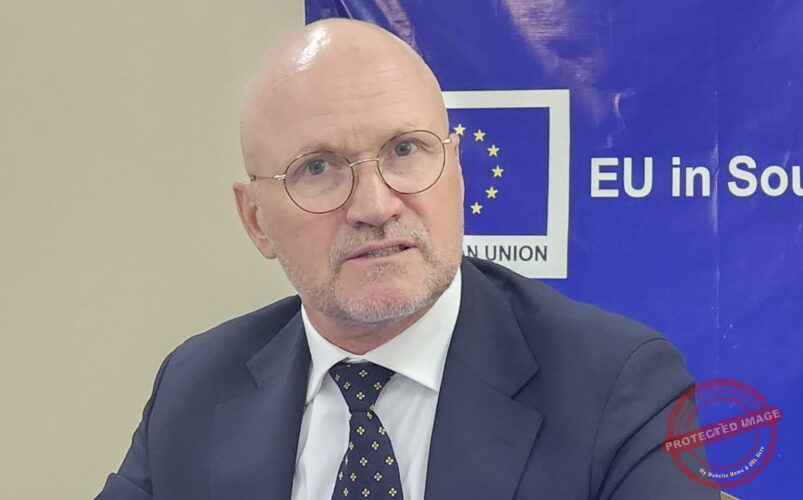
The European Union’s Head of Delegation to South Sudan, Pelle Enarson, has proposed a “smart solution” to secure a credible and inclusive election: a brief, technical extension of the peace agreement until March 2027.
In a press briefing in Juba on Monday, May 4, Ambassador Enarson stated that this proposed delay aims to provide the necessary time to resolve critical security instability and technical failures, such as the current lack of a legal department within the National Election Commission.
He emphasized that credible elections are essential to transition from the current “marriage of convenience” under the peace agreement to a government directly accountable to the people. However, he warned that the window for necessary preparations is rapidly closing.
While the Ambassador stated that the “red line” of total impossibility has not yet been crossed, he warned that technical feasibility will soon become the deciding factor regardless of political will.
If a political agreement is reached but technical preparations remain incomplete, Enarson suggested a “smart solution” could involve a brief, technical extension of the peace agreement.
“Instead of having elections in December, you can have them in March,” he suggested, noting that any such delay should be short and focused on preparation rather than “shoving” the process down the road with a multi-year extension.
Ambassador Enarson pointed to ongoing instability as a primary obstacle to a nationwide vote. Citing recent clashes in Akobo between the SPLM-IO and the SSPDF, he described a cycle of fighting and territorial shifts that makes conducting a ballot impossible in such areas.
“Akobo is the prime example of why you cannot have elections,” Enarson stated. “How are people going to perform elections when you have a volatile situation like that?” He noted that a political deal among all parties is essential to resolve security challenges and define how the polls will be conducted.
Beyond politics, the Ambassador highlighted critical technical failures within the National Election Commission (NEC). Specifically, he noted the total absence of a legal department to handle election disputes.
“In all elections, there are disputes,” Enarson explained. “How are they going to conduct elections when there is no legal department that can do dispute resolution? The government needs to start employing lawyers in the National Election Commission. They need money to do that.”
He warned that while printing and distributing ballots is a relatively quick task, building a functional dispute mechanism requires immediate investment and expertise.