





Meet Nyajuok Koak: The woman using football to build peace in Akobo
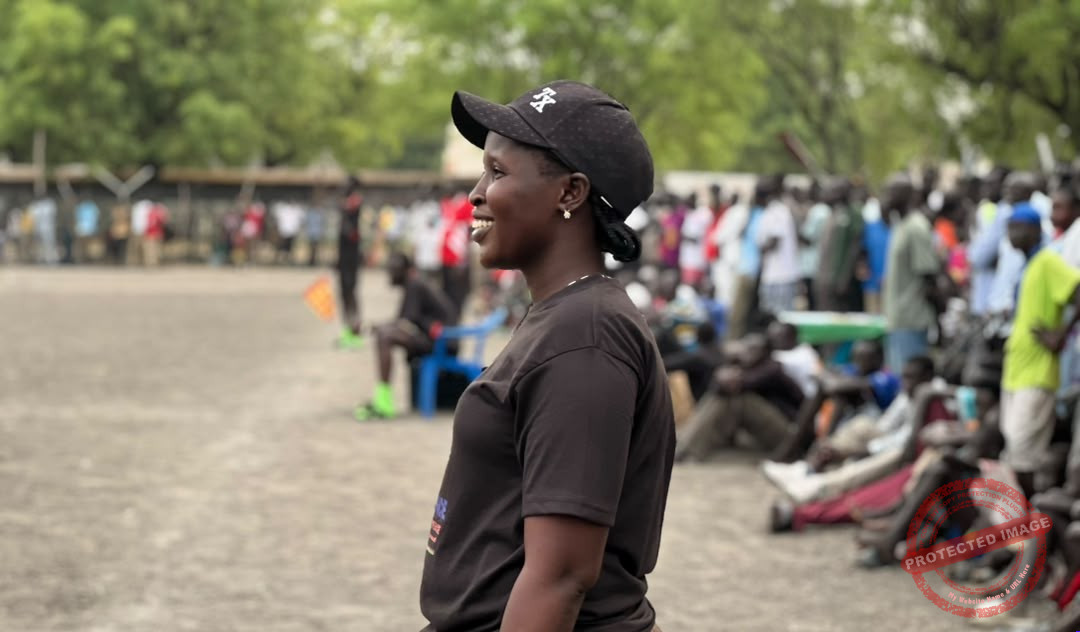
On the football field in Akobo, Jonglei State, Nyajuok Koak Kuach is often seen standing on the sidelines, her eyes fixed on the players as she gives instructions, directs movements and encourages her team.
To some spectators, she is simply a football coach. But to many women watching her, she represents something bigger: a woman stepping into a space traditionally dominated by men and showing that they, too, can lead.
She is Nyajuok Koak Kuach, a 29-year-old widow raising four daughters.
She coaches Kai-Kuiy Football Team, one of more than 10 teams competing in the Akobo Community Legend Football Cup 2026, a competition bringing together young people from different payams to promote sporting talent, unity and peaceful coexistence.
Photos and videos of her directing players during matches have attracted public attention, making her a familiar face among football followers in the area.
Yet Nyajuok’s journey into football did not begin with dreams of becoming a coach. She says she had never played football in her life. Her interest in sports started when she played bally ball in Lankien, Nyirol County. That experience gradually opened the door to football and eventually led her to coaching.
What started as a hobby has since become a voluntary commitment to young people and her community.
For Nyajuok, coaching is not just about preparing players to win matches. It is also about challenging the belief that football coaching is a man’s job.
She says her decision to take up coaching has encouraged other women to join football clubs and work alongside their male colleagues.
“I opened the door for many women to be part of coaches for their clubs because they have seen me doing it,” she says.
Her growing influence is particularly meaningful in a community where women have not always been expected to take up such roles. By standing on the touchline and directing players, Nyajuok is showing other women that they can participate in sports and take up leadership responsibilities.
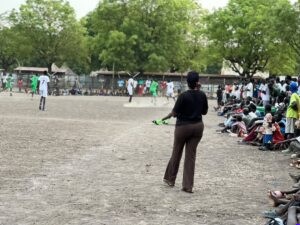
But perhaps the most important reason she continues to coach has little to do with changing perceptions about women. It is her belief that football can help bring peace to communities that have experienced cycles of revenge killings.
When football replaces revenge
Nyajuok says football competitions have created opportunities for young people from different payams to meet and interact, even where relations between their communities have previously been strained.
She explains that teams are formed from different payams, some of which have historically experienced tensions. In the past, when a person from one payam was killed by someone from another, young people from the victim’s community would sometimes seek revenge by killing someone from the other payam.
These were largely individual acts of retaliation rather than large-scale communal fighting. But they kept tensions alive and made relations between young people from different communities difficult.
Nyajuok says football has helped change that pattern. By bringing young people together on the same field, the matches have created opportunities for them to compete, interact and build relationships instead of seeking revenge.
She says many young people who previously engaged in retaliatory attacks have since abandoned revenge and begun embracing one another through sports.
For her, seeing young people from previously rival payams play together is one of the clearest signs that football can contribute to peace.
She believes sport can bring together not only communities in Akobo but also neighbouring communities from other states.
“In football, women are peacemakers unlike men – so we can use football to encourage men to embrace peace,” she says.
Nyajuok believes women have a responsibility to support efforts to end violence and encourage men to choose peaceful ways of resolving differences.
“We want to see our men embracing peace through football and sports, and we will stand behind and support them through coaching like what I am doing and what women are doing currently with other football teams,” she says.
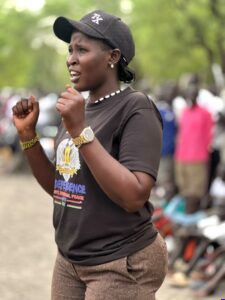
Her message is simple: women should not be left out of efforts to build peace. They can use their positions in sports and community activities to encourage dialogue, understanding and peaceful coexistence.
A personal journey of resilience
Away from the football field, Nyajuok has her own responsibilities and challenges.
She dropped out of school after completing Primary Seven following her marriage. Her husband died in 2019, leaving her to raise their four daughters. Her first-born daughter is now eight years old.
Balancing family responsibilities with voluntary coaching is not easy. But Nyajuok says she remains committed because she sees football as a meaningful way of supporting young people and contributing to peace in Akobo.
She does not coach for financial gain. Her work is voluntary, driven by her belief that young people need opportunities to engage in positive activities and that communities can overcome divisions when they have spaces to interact.
Her journey has also challenged the expectations placed on women. She believes that what men can do, women can also do, and that her experience has encouraged other women to recognise their own abilities.
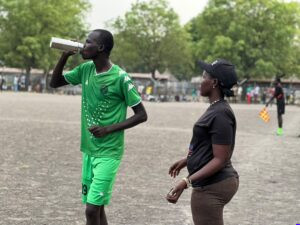
For a woman who never imagined herself becoming a football coach, the attention she is now receiving has become an opportunity to inspire others.
A call for support
Despite the enthusiasm surrounding local football, Nyajuok says teams in Akobo face a shortage of resources.
Kai-Kuiy and other clubs largely depend on voluntary efforts and lack basic sporting equipment needed to support their players and sustain their activities.
She is appealing to well-wishers and organisations to support local teams with football uniforms, boots and other sports equipment.
Nyajuok says those willing to contribute can channel their support through Akobo Peace Radio in Akobo town.
She hopes that with more support, local clubs will continue organising matches and providing young people with opportunities to participate in sports and strengthen relationships across communities.
For Nyajuok, the value of football cannot be measured only by the number of goals scored or trophies won. It can also be seen in the relationships built between young people who once viewed one another with suspicion, and in the women who are now finding the confidence to take up coaching roles.
As she continues directing Kai-Kuiy players from the sidelines, Nyajuok is pursuing something beyond football. She wants to see women take their place in community leadership, young people abandon revenge and communities learn to live together peacefully.
In Akobo, her coaching journey is becoming part of a wider story about women, sport and the possibility of building peace one football match at a time.