



Women present 13 recommendations as ResPEct anti-SGBV project closes
JUBA, South Sudan — Women’s organizations in South Sudan have presented 13 recommendations aimed at strengthening protection for women and girls and improving responses to sexual and gender-based violence (SGBV), as a four-year initiative supporting prevention and survivor services officially closed in Juba on Wednesday.
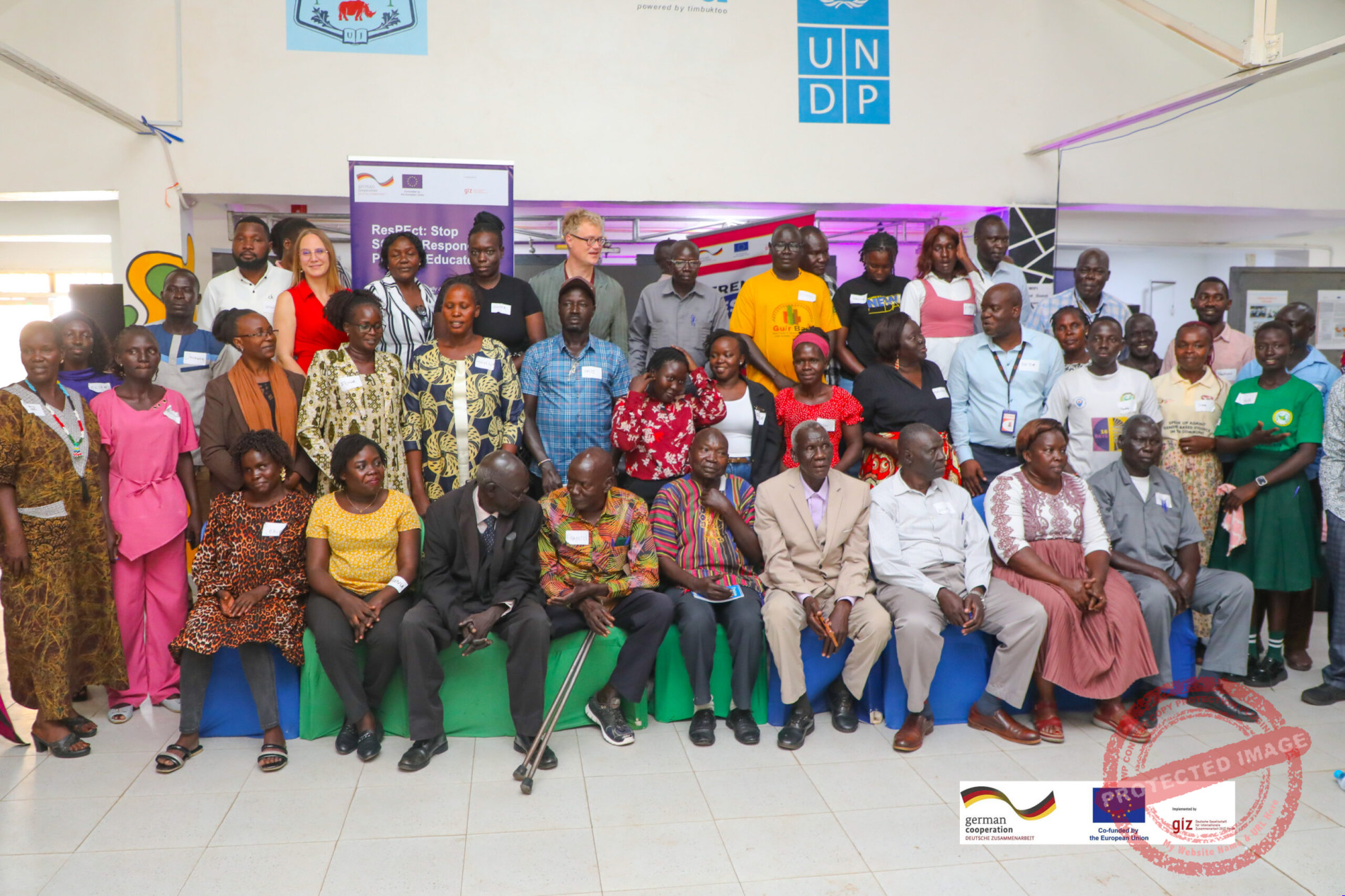
The recommendations were presented during the closing ceremony of the German and EU-supported ResPEct project at the University of Juba’s UNIPOD, where government representatives, women’s organizations and international partners called for sustained action to address gender discrimination, improve access to justice and ensure survivors receive support.
The project’s impact was reflected in the experience of Hellen Awate, a widow and mother of three from Yei River County who says counselling and business training helped her regain confidence after facing poverty, insecurity and social isolation following her husband’s death.
Awate said she struggled to provide for her young children and felt rejected by members of her community because of harmful attitudes towards widows.
“When my husband died, they may take me as if I am a cursed woman, or somebody who is very useless. When I went home with the children, nobody could value me. I had no voice to speak even at home. I was isolated. Almost every day I shed tears, night and day,” she recalled.
Her situation began to change after a local leader encouraged her to seek support at a Women and Girls Friendly Space, where she received counselling and was later selected for business skills and management training through the initiative.
Awate said the support helped her regain her confidence. She now operates a potato farm and a bricklaying business in Yei to support her children.
“I may not be seen as very important by my people and my husband’s side, but the community is seeing me as very important,” she said.
Her experience highlights the importance of combining survivor support with psychosocial care, livelihood opportunities and efforts to challenge social norms that expose women to discrimination and exclusion.
Women call for stronger protection and accountability
The 13 recommendations developed with support from the ResPEct initiative call for stronger legal protection, survivor-centered services, accountability for perpetrators and improved access to reproductive healthcare.
They also seek protection of women’s rights to own, use and inherit land and property, as well as greater participation by women, young women, survivors and women with disabilities in governance and policymaking.
Other proposals include expanding livelihood opportunities, improving access to safe and quality education for girls, strengthening community-based protection structures and increasing youth participation in preventing violence and transforming harmful social norms.
Sunday Moga, representing women’s organizations, said domestic violence and other forms of gender-based violence affects women, girls, boys and people with disabilities.
“As a grassroots women’s network, we want to advocate and at least do more awareness in that area,” Moga said.
She urged the government to strengthen enforcement of the law and ensure perpetrators are held accountable.
“For the government, at least, I want to focus on some law. Let them be serious to follow up on any perpetrator involved in gender-based violence in the community,” she said.
The recommendations call for stronger survivor-centered justice systems, expanded One-Stop Centres and referral pathways, and sustained investment in prevention and response services.
Germany and EU urge sustainable action
German Ambassador to South Sudan Sebastian Brokelmann said Germany had invested more than US$6 million through GIZ in preventing sexual and gender-based violence in the country since 2022.
He thanked the organizations and individuals involved in the initiative, saying efforts to prevent violence were essential to human dignity, social cohesion, justice and lasting peace.
“Preventing sexual and gender-based violence is a global task, not a sideline for humankind,” Brokelmann said.
He said addressing SGBV required more than providing services to survivors, highlighting the importance of confronting discrimination and the conditions that allow violence to persist.
The ResPEct initiative was implemented by the German development agency GIZ, with co-funding from the European Union and Germany’s Federal Ministry for Economic Cooperation and Development.
European Union Ambassador to South Sudan Pelle Enarson said the project’s closure should serve as a reminder that sustained collective action was needed to address gender-based violence.
He said lasting progress depended on solutions rooted in communities and carried forward by local organizations and responsible institutions.
“Lasting progress in addressing gender-based violence cannot be achieved through external support alone,” Enarson said.
He called for prevention, protection and referral services to be anchored in national and subnational systems to ensure they remain accessible and sustainable after external project support ends.
According to information provided for the closing ceremony, the initiative supported more than 12,000 women across Yei, Aweil West, Juba and other areas.
Government highlights survivor-centered services
Nunu Diana Alison, Director General of Gender, Child and Social Welfare in Central Equatoria State, reaffirmed the government’s commitment to strengthening support for survivors and improving coordination among institutions responding to gender-based violence.
She said the directorate was working to strengthen survivor-centered services through its One-Stop Centre, community engagement, psychosocial support and referral pathways.
Alison said preventing violence also required addressing unequal power relations, harmful social norms, economic barriers and institutional weaknesses.
She called for men and boys to be involved in prevention efforts, stressing that gender equality should not be treated as a competition between women and men.
Her remarks underscored the need for coordinated action involving government institutions, community organizations and service providers, alongside efforts to challenge social attitudes that allow discrimination and abuse to continue.
Sustaining the gains beyond the project
The 13 recommendations provide a proposed way forward for strengthening prevention and response efforts beyond the project’s closure.
They include maintaining Women and Girls Friendly Spaces, strengthening Women Support Networks, expanding integrated One-Stop Centers and improving coordination among institutions working to prevent and respond to SGBV.
Awate’s experience illustrates how access to counselling, community support and economic skills can help women rebuild their lives after hardship and exclusion. However, sustaining such gains will require continued access to services and opportunities for women facing similar challenges.
The next step will be translating the recommendations into practical action through government commitment, adequate funding, effective accountability and continued support for women-led organizations and community protection structures.
As the ResPEct initiative ends, its lasting contribution will depend not only on the number of women reached, but also on whether the services and community networks it supported can continue and whether women and girls can exercise their rights, access protection and participate safely in decisions affecting their future.