
From isolation to empowerment: How a widow in Yei rebuilt her life
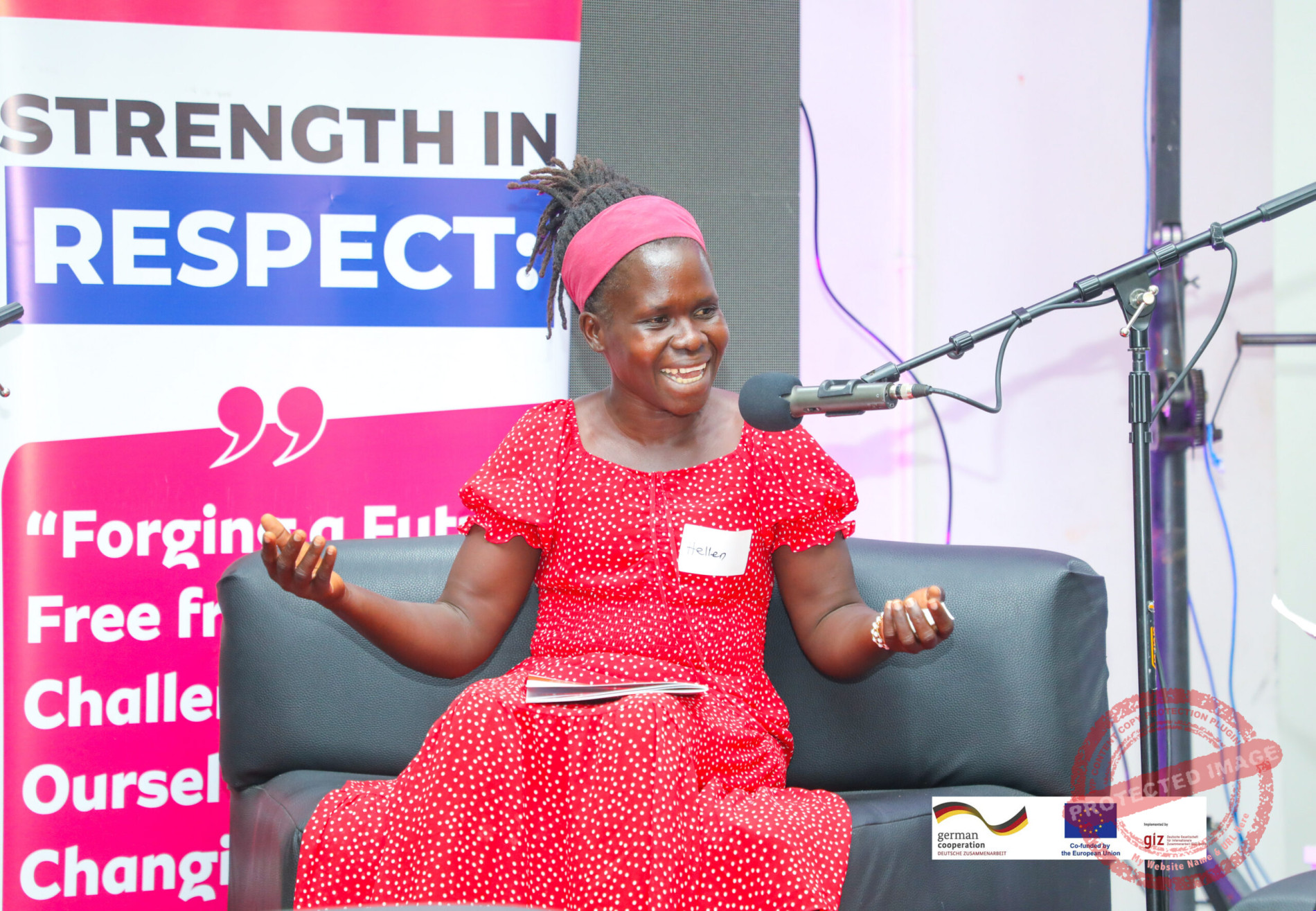
JUBA, South Sudan — Once isolated by stigma, poverty and insecurity after the death of her husband, Hellen Awate struggled to feed her young children and rebuild her life. Today, the widow from Yei River County runs a potato farm and a bricklaying business to support her family, following counselling and business training through a German-supported initiative.
Awate’s journey from despair to self-reliance highlights the potential of community-based support to help women overcome social exclusion, economic hardship and the effects of gender-based violence.
Her transformation was supported by the ResPEct project, a four-year initiative implemented by the German development agency GIZ to prevent sexual and gender-based violence (SGBV) and promote gender equality in South Sudan.
“I was living in a hard life and a hard situation when I was left as a widow because I was left with very young children to take care of. And the worst part of it, there was nothing left for me to take care of these children,” Awate recalled.
Following her husband’s death, she faced financial hardship, insecurity and social stigma rooted in harmful cultural attitudes towards widows.
She said insecurity prevented her from travelling even short distances to collect firewood, while the attitudes of some community members left her feeling unwanted and powerless.
“When my husband died, they may take me as if I am a cursed woman, or somebody who is very useless. When I went home with the children, nobody could value me. I had no voice to speak even at home. I was isolated. Almost every day I shed tears, night and day,” she said.
With young children depending on her, Awate struggled to find a way out of poverty while coping with the emotional burden of losing her husband and facing rejection.
A turning point through community support
Her circumstances began to change when a local leader encouraged her to seek assistance at a Women and Girls Friendly Space, where she received counselling and connected with other women experiencing similar hardships.
Awate said the counselling helped her regain some peace of mind, while the supportive environment gave her a renewed sense of belonging.
She was later selected for business skills and management training through the project in 2024, equipping her with knowledge she could use to improve her family’s circumstances.
“I never knew that there are organisations that would help women,” she said.
Awate recalled being welcomed and counselled when she first visited the centre, describing the experience as a turning point after a prolonged period of isolation.
The support helped her begin to see herself differently, despite the stigma she had experienced within her family and community.
“I may not be seen as very important by my people and my husband’s side, but the community is seeing me as very important,” she said.
Building a livelihood and supporting her children
Today, Awate owns a potato farm and a bricklaying business in Yei, which she uses to support her children.
Her experience demonstrates how psychosocial support and practical business skills can help women facing economic hardship work towards greater independence.
For widows and other women affected by discrimination, access to such opportunities can be particularly important where harmful social norms, insecurity and limited economic resources compound their vulnerability.
However, Awate’s experience also points to the need for sustained investment in women’s empowerment, community protection and services that help women rebuild their lives after violence, loss and social exclusion.
Beyond the end of the project
The ResPEct project officially closed in Juba on 14 October 2026, after supporting efforts to prevent SGBV and promote gender equality in South Sudan.
Implemented by GIZ and co-funded by the European Union and Germany’s Federal Ministry for Economic Cooperation and Development (BMZ), the initiative supported women’s organisations and community-based interventions aimed at challenging harmful gender norms and improving responses to violence.
At the closing event, women’s organisations presented 13 recommendations calling for stronger legal protection, survivor-centred services, accountability for perpetrators, economic opportunities and greater participation of women in decision-making.
The recommendations also highlighted the need to protect the rights of women and girls with disabilities, improve access to education and reproductive healthcare, and strengthen community-based protection networks.
For Awate, the support she received helped her move from isolation towards rebuilding her livelihood and caring for her children.
Her story underscores the importance of ensuring that women facing similar challenges can access counselling, supportive community networks and opportunities to develop sustainable livelihoods, even after donor-funded initiatives come to an end.