


IsraAID hands over Juba IDP camp protection project to local NGO CARi
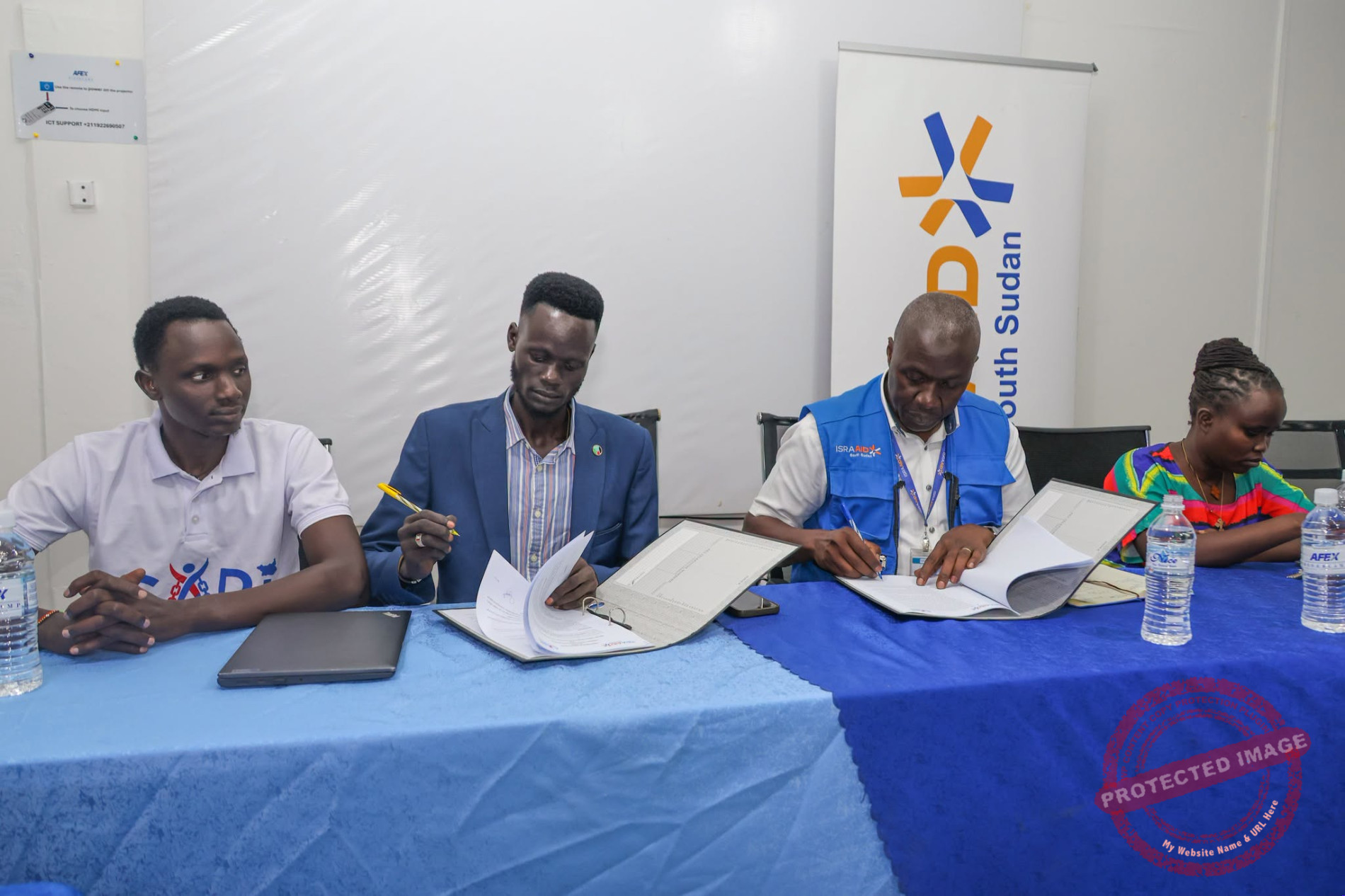
IsraAID South Sudan has signed a Memorandum of Understanding (MoU) with the Community Actions and Resilience Initiative (CARi), a national non-governmental organisation founded by former IsraAID staff, to transfer the management and day-to-day implementation of its protection project in Juba’s Internally Displaced Persons (IDP) Camps I and III.
Under the agreement, CARi will take the lead in implementing the project, while IsraAID South Sudan will provide technical guidance, oversight and capacity-building support to ensure continuity and effective delivery of protection services.
The project uses a digitised protection case-reporting system known as Anenasawa, which enables community members to report protection concerns confidentially and facilitates timely referrals to appropriate services.
Speaking during the MoU signing ceremony in Juba, IsraAID South Sudan Country Director Thomas Okollah said the handover reflects the organisation’s commitment to localisation, strengthening local institutions and ensuring the sustainability of humanitarian interventions.
Okollah said IsraAID decided to establish a national organisation with former staff after facing challenges in identifying local partners with the necessary experience, capacity and presence to continue implementing the project.
“We realised that it was high time for us to hand over the running of that project from the camp to local management. We had staff who were already trained, very experienced and had been doing this work. That is when, as part of IsraAID’s commitment to localisation, building local capacity and ensuring sustainability of our operations, we worked with the staff to establish a national NGO,” Okollah said.
He said the transition does not mean IsraAID is withdrawing from the project, but rather creating an opportunity for local humanitarian personnel to take ownership of its implementation.
“We are not withdrawing. We will remain providing oversight, technical support and capacity development as the need arises. But we want the project to be 100 per cent run by CARi. We will remain as consultants, supporting them whenever they need us,” he added.
Okollah said IsraAID has set aside approximately 280 million South Sudan pounds to support the initial three-month implementation period, with funding to be released based on activities carried out and project requirements.
He added that the current arrangement covers IDP Camps 1 and 3, with ambitions for CARi to expand its operations to other states and administrative areas as its institutional capacity and resources grow.
Meanwhile, CARi Executive Director Johnson said the organisation was established in response to concerns over the sustainability of humanitarian interventions in Juba’s IDP camps, where several organisations have provided services over the years but often exited without lasting community-led structures.
He said CARi brings together experienced humanitarian personnel who previously implemented the IsraAID project and are committed to placing affected communities at the centre of humanitarian response.
“CARi was formed by a group of experienced humanitarian personnel who sat down and looked into the problems of Juba IDP, including the challenges of organisations coming in and exiting without sustainable interventions. We wanted to provide a community-led solution,” Johnson said.
He said the organisation currently has 22 experienced staff members, adding that its mission goes beyond the two IDP camps to supporting crisis-affected communities across South Sudan.
“Our main mission is to make sure that we provide a community-led system for health and protection within Juba IDP. We understand that many South Sudanese have been displaced within and outside the country, and our objective is to reach crisis-affected communities across South Sudan,” he said.
Johnson said CARi will prioritise the participation and involvement of communities in identifying protection needs, designing interventions and mobilising resources to promote local ownership and sustainability.
He also identified women and girls affected by gender-based violence (GBV) and other protection risks as among the organisation’s key target groups, while emphasising that all crisis-affected people will remain within its scope of support.
The Executive Director acknowledged that resource mobilisation remains a major challenge for newly established national organisations but said CARi intends to work with humanitarian partners, government institutions and community structures to sustain and expand its operations.
CARi is a member of the South Sudan NGO Forum and participates in humanitarian coordination clusters, providing a platform for engagement with other humanitarian actors.
The partnership is expected to strengthen local leadership, build institutional capacity and support the continued delivery of community-centred protection services in Juba’s IDP camps.
Both organisations say the transition demonstrates how humanitarian partnerships can support locally led responses while ensuring that essential services continue to reach vulnerable communities.