
Juba visually impaired residents highlight barriers on White Cane Day
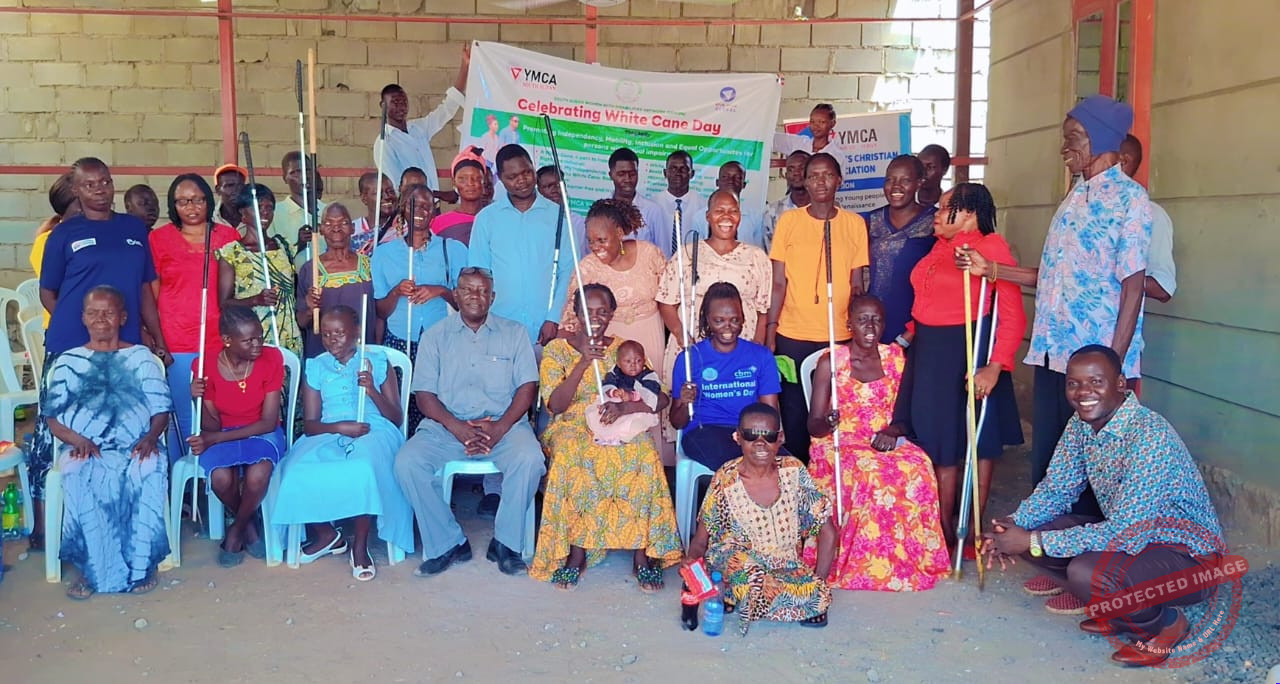
JUBA — Visually impaired people in Juba state that accessing schools and public spaces remains difficult. Communities worldwide mark White Cane Day on October 15.
The white cane helps people who are blind or visually impaired navigate. Esbon Umbo Jacob, a student, spoke at celebrations in Juba.
He stated that navigating schools and public spaces remains challenging. He noted that people assume users are elderly or have support.
“Regarding the white cane, some people may mistakenly assume that everyone who uses one is elderly. This is not true. A white cane is an essential mobility tool that helps people who are blind or visually impaired move around safely and independently. It is not a joke or a sign of old age it plays an important role in our lives.”
Ali Nyok, Secretary General of the Gudele Drivers’ Union, spoke at the event. He stated that drivers should give visually impaired pedestrians space and time to cross roads.
“Drivers should be educated about sharing the road safely, as roads are used by people of all ages and abilities, including those with visual impairments. When drivers see someone using a white cane, they should slow down, give them the right of way, and allow them to cross safely. In towns and other busy areas, reducing speed can help prevent accidents and protect everyone.”
Joyce Dikun Charles, a member of the South Sudan Women with Disabilities Network, calls on communities, drivers, and the government to remove barriers.
“My message to all the communities, the traffic police, the government, to everyone that let us work together to remove the barriers that hinder meaningful participation of persons with disabilities, especially visually impaired, because our community needs each and everyone to participate. Without persons with disabilities, we are not fully presented. So, to urge our community to support disability inclusion in South Sudan.”
The theme for the 2026 observance is “Promoting Independence, Mobility, Inclusion, and Equal Opportunities for Persons with Visual Impairments.”