




Rights group warns of broad cybercrime law provisions, citing risk of abuse and threats to freedom of expression
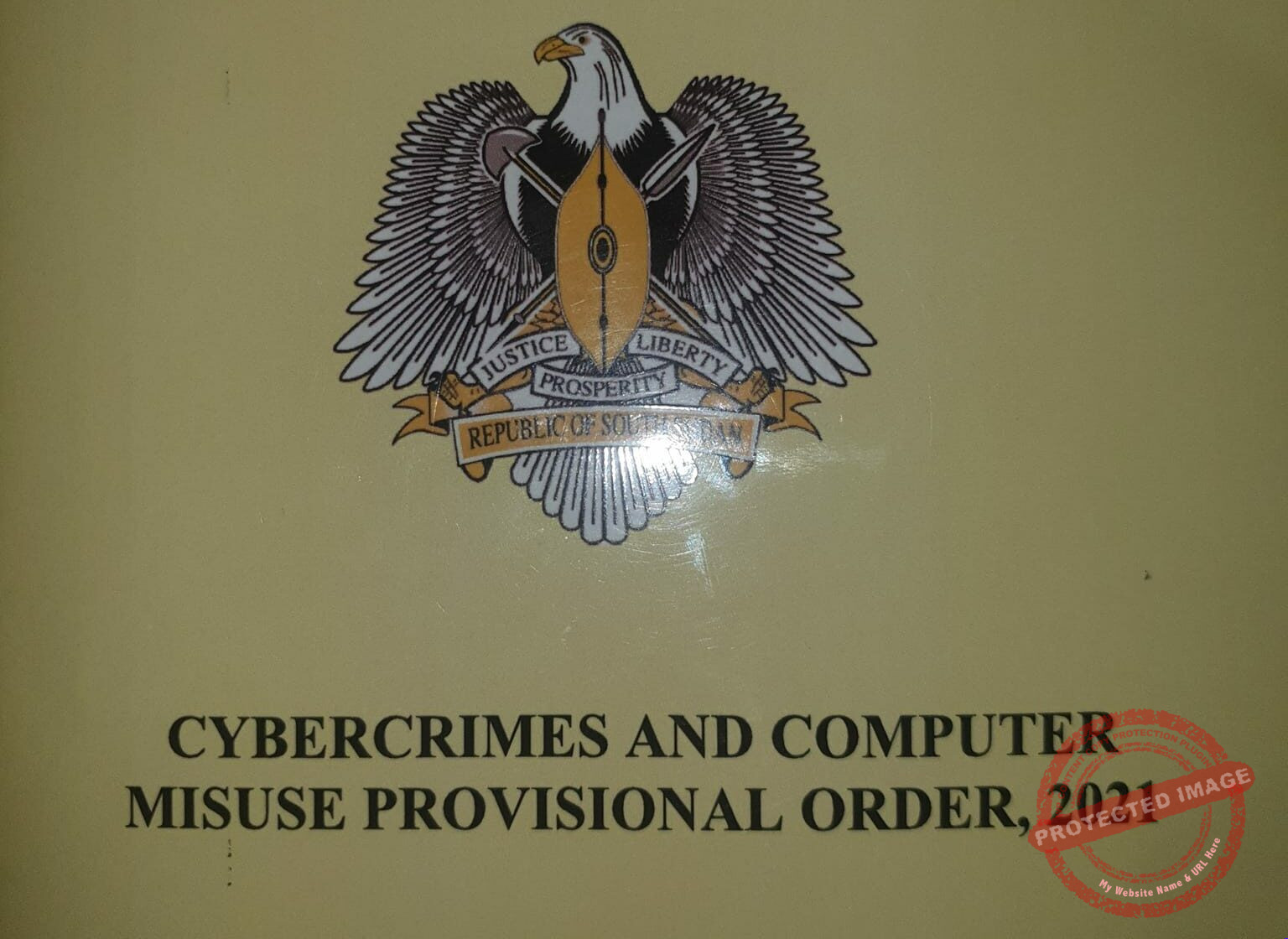
The South Sudan Human Rights Defenders Network (SSHRDN) has called for a review of provisions in the Cybercrimes and Computer Misuse Act, 2026, warning that broadly defined offences could expose journalists, activists and human rights defenders to prosecution.
The organisation has raised concerns about Sections 42, 44 and 51, which address undesirable content, misleading information and offensive communication, saying their broad definitions could leave room for different interpretations and possible misuse.
Under Section 42 of the Cybercrimes and Computer Misuse Act, administrators of online accounts and platforms are required to take reasonable steps to restrict or remove specified unlawful content after receiving written notice or an order from an authorised investigating or regulatory authority.
Failure to comply with such notices can attract a fine, imprisonment of up to five years, or both.
The Act defines undesirable content to include deceptive or inaccurate information published with the intention of defaming, threatening, abusing or misleading the public. It also covers content considered to threaten public health, public safety or national security, as well as material promoting racism, tribalism or gender discrimination.
Section 44 criminalises the intentional publication or dissemination of information through computer systems or networks that a person knows to be false or misleading, where the information is intended to be acted upon or regarded as authentic.
The offence applies where such publication results in, or is likely to result in, public panic, violence, serious public disorder, economic loss or damage to the reputation of an individual or group. Those convicted face a fine, imprisonment of up to five years, or both.
Meanwhile, Section 51 criminalises the intentional use of electronic devices to transmit communications considered harmful, abusive or inappropriate, particularly where they may cause harm or distress to others.
A person found guilty of offensive communication faces a fine, imprisonment for up to two years, or both.
Omara Joseph Wani, a human rights advocate and official with the network, says the provisions could be used against journalists and activists, particularly as South Sudan approaches its next election period.
Wani argues that the law does not clearly define what constitutes undesirable content, misleading information or false information, creating uncertainty for people expressing opinions online.
“This law can be used against activists and journalists, I mean journalists and whoever they pursue, especially when it comes to misleading information, because the scope of the definition is quite broad,” Wani said.
He added that opinions published online could be interpreted as offences under the three categories.
“So, when you publish an opinion, it might be construed as one of the three. So, anything can be utilised against you,” he said.
The network is calling for clearer definitions of the disputed terms to prevent the provisions from being used as a pretext to prosecute journalists and human rights defenders.
It is also conducting public awareness activities to help citizens, journalists and government institutions understand the law and its possible implications.
The organisation wants stakeholders to assess whether the provisions meet international human rights standards and make recommendations for possible amendments.
Wani says the law can still be amended despite having been signed by the President on February 18, 2026. He says the Constitutional Review Commission and other relevant institutions could be engaged to examine provisions considered problematic.
The network has also advised citizens approached by authorities under the law to establish whether the requests are lawful, including checking for appropriate warrants and confirming that the requesting institution has the necessary jurisdiction.
Wani says citizens should use lawful procedures to establish whether they are being properly summoned or investigated under the legislation.
“First of all, you must be able to use lawful mechanisms in order to inquire whether you are lawfully being requested,” he said.
He noted that the law follows procedures under the Criminal Procedure Act, giving individuals the right to ask whether an arrest warrant has been issued and whether the institution making the request has the authority to do so.
“You have the privilege to ask whether a warrant is being provided or not, whether there is a warrant of arrest,” Wani said.
He also expressed concern about the safety of journalists and civil society organisations conducting public awareness activities, citing fears of surveillance, insecurity and possible attacks.
Wani said weaknesses in the capacity of some security personnel could make it difficult to guarantee a safe environment for organisations involved in civic education and public engagement.
He urged civil society organisations to maintain dialogue with government institutions rather than exclude them from discussions about legal reforms, saying continued engagement and public awareness are important in protecting civic space and ensuring citizens understand their rights.
The human rights network says reviewing the disputed provisions would help clarify the scope of the offences while ensuring that the law is implemented in a manner consistent with fundamental rights and freedoms.