





South Sudan remains Ebola-free despite regional outbreaks, says Health Ministry
The Ministry of Health has assured the public that South Sudan remains free of Ebola Virus Disease despite ongoing outbreaks in neighboring countries, saying preparedness measures have been intensified to prevent any possible importation of the virus.
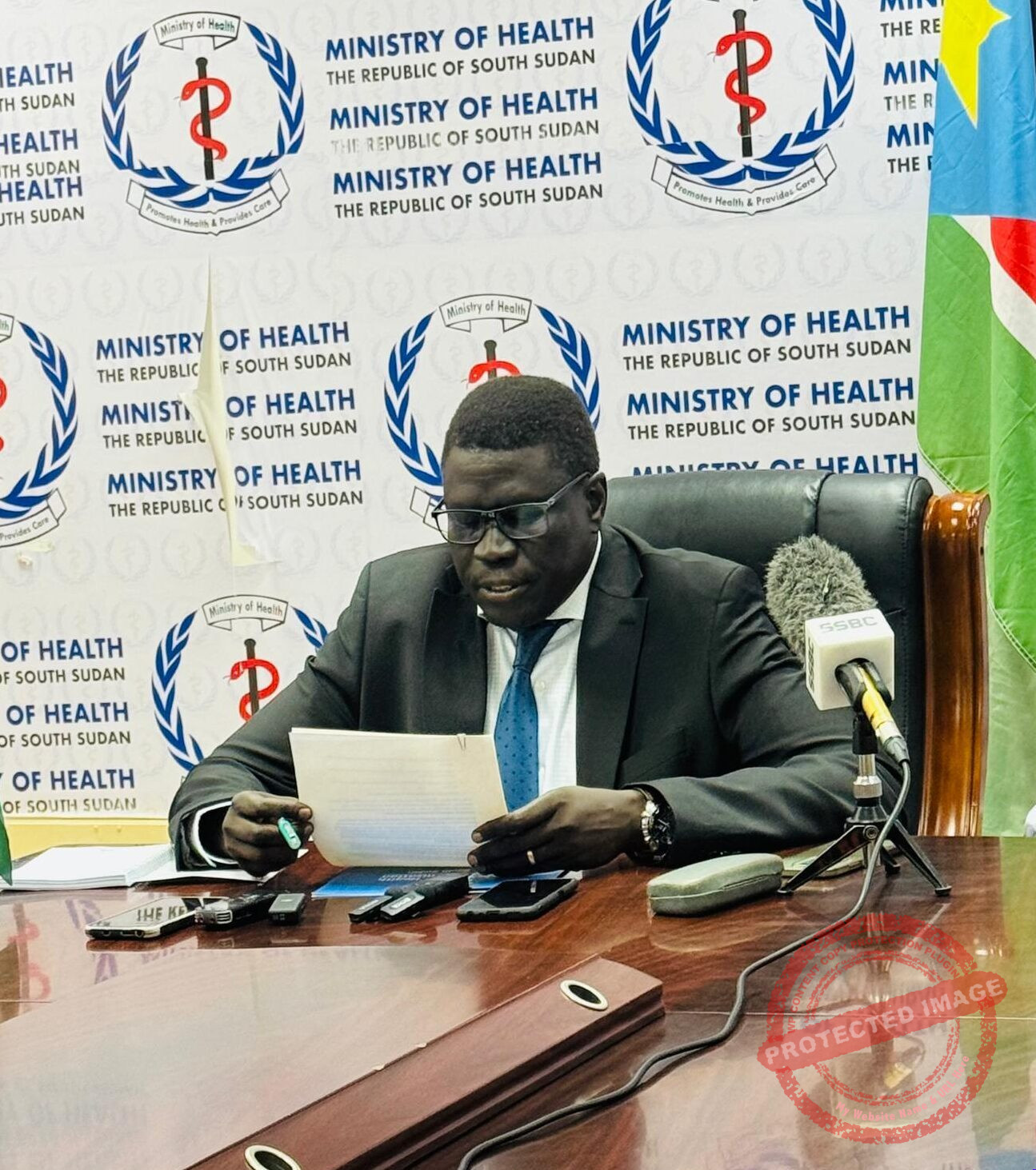
Acting Undersecretary in the Ministry of Health, Dr. Michael Mading, gave the assurance during a press briefing in Juba on Tuesday.
Dr. Mading said the Ministry has activated the National Ebola Virus Disease Preparedness and Response Plan in collaboration with the World Health Organization (WHO), United Nations agencies, health partners, and neighboring countries.
He said South Sudan has not recorded any confirmed Ebola cases, adding that all 13 suspected samples tested by the National Public Health Laboratory have returned negative results.
“I want to reassure the people of South Sudan that our country has not recorded any confirmed case of Ebola Virus Disease. All 13 suspected samples tested by our national laboratory have been negative. Given our country’s location within a highly interconnected region characterized by significant population movement, a high level of vigilance is required,” Dr. Mading said.
The Ministry said preparedness measures have been strengthened across surveillance, laboratory capacity, screening at points of entry, rapid response, infection prevention and control, and public awareness as a precaution against the disease.
Meanwhile, the World Health Organization Country Office warned that South Sudan remains at high risk of importing Ebola because of continued transmission in the Democratic Republic of Congo and frequent cross-border movement.
WHO Officer-in-Charge, Dr. Moses Ongom, said health authorities and partners have intensified preparedness activities, particularly at border points, to prevent the virus from entering the country.
“South Sudan does not have any confirmed Ebola Virus Disease in the country. However, there is sustained transmission in the neighboring Democratic Republic of Congo, and given that we share borders with the DRC, the risk of importation is therefore high,” Dr. Ongom said.
Ebola Virus Disease (EVD) is a severe and often fatal illness caused by the Ebola virus. It spreads through direct contact with the blood or other bodily fluids of an infected person or contaminated materials such as clothing and bedding. Early symptoms include fever, headache, muscle pain, fatigue, sore throat, vomiting and diarrhoea, which can progress to severe bleeding and organ failure in some cases.
The latest regional outbreak was declared in Uganda earlier this year after health authorities confirmed cases caused by the Sudan strain of the Ebola virus. While Uganda has since strengthened surveillance and response measures to contain the outbreak, South Sudanese health authorities say the country’s shared border with Uganda and the Democratic Republic of Congo, coupled with frequent cross-border movement, continues to pose a risk of importing the disease.
Health officials are urging the public to remain vigilant, report suspected cases promptly, avoid contact with anyone showing Ebola-like symptoms, and follow public health guidance to help prevent the spread of the virus.