



Egypt offers tourism, conservation expertise to South Sudan
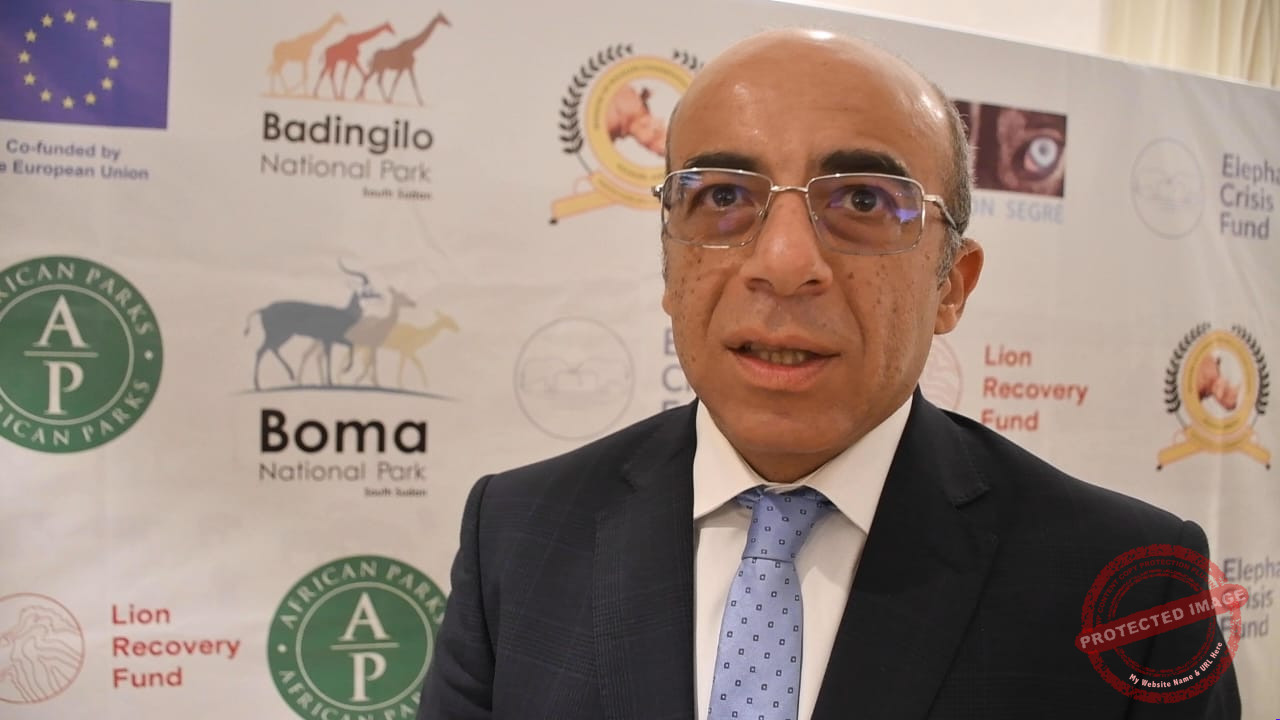
Egypt’s Ambassador to South Sudan, Hazem Mamdouh Fawzy, says Cairo is ready to share its experience in tourism development and environmental conservation with South Sudan, as the two Nile Basin countries strengthen cooperation.
Ambassador Fawzy made the remarks on Friday after the commemoration of World Nature Conservation Day held under the theme “Conserving South Sudan’s Natural Heritage with Focus on the Great Nile Migration Landscape.”
The event was organized by the South Sudan Wildlife Service, African Parks, and the European Union, bringing together conservation partners to discuss wildlife monitoring, data analysis, community engagement, and conservation achievements across the Boma-Badingilo-Jonglei Landscape.
Fawzy said Egypt and South Sudan share common interests as sister nations within the Nile Basin, adding that environmental protection efforts have broader benefits for the economy, climate, water resources, agriculture, fishing, and communities.“Egypt and South Sudan are two sister nations in the Nile Basin and the region, and there are issues of common interest,” Fawzy said.
He said protecting the ecosystem requires cooperation between the two countries because environmental challenges are interconnected.
“The ecosystem is an integrated system encompassing the economy, climate, water, agriculture, fishing, and most importantly, the lives of the people,” he said.
The ambassador said Egypt is prepared to support South Sudan’s tourism sector, particularly as the country seeks to develop nature-based tourism around its rich wildlife and landscapes.
“Egypt is ready to offer its expertise in the tourism sector. As you know, Egypt has extensive experience in this field,” Fawzy said.
He acknowledged that South Sudan’s nature tourism differs from Egypt’s archaeological and desert tourism, but said there are opportunities for knowledge exchange and cooperation.
“There are significant opportunities for collaboration and advancement with South Sudan in the tourism sector,” he added.
Fawzy also said successful conservation and tourism initiatives could contribute to stability and attract more visitors to South Sudan.
Meanwhile, a survey presented during the event showed that the Great Nile Migration remains the largest known large mammal migration on Earth, with an estimated population of about six million antelope.
The survey estimated the population of white-eared kob at about 5.1 million animals, tiang at approximately 440,500, Mongalla gazelle at around 191,200, and Bohor reedbuck at about 131,700.
The findings indicated that population changes among the four targeted migratory species between 2023 and 2025 were not statistically significant, meaning there was no confirmed decline or increase in their numbers.
Conservation partners said the findings highlight the importance of protecting the Boma-Badingilo-Jonglei Landscape, which remains a critical habitat for South Sudan’s wildlife and a major opportunity for sustainable tourism development.