



Archaeologists uncover more sections of Medieval Nubia’s Great Church in Sudan
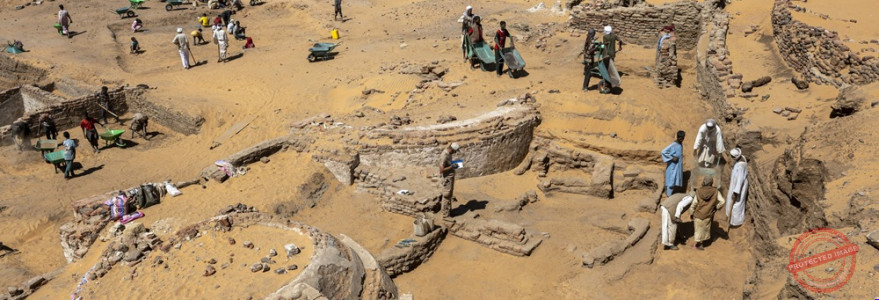
Sudanese and Polish archaeologists have uncovered additional sections of what is believed to be the largest and wealthiest church in medieval Nubia, shedding new light on the region’s Christian history.
The latest discoveries were made at the Great Church of Jesus in Old Dongola, the former capital of the Christian Kingdom of Makuria in present-day Sudan.
According to a report published by the University of Warsaw on November 10, 2026, the excavations revealed a large staircase leading into the church, supporting structures around its apse and the building’s original floor level.
The research team is led by Professor Artur Obłuski of the Polish Centre of Mediterranean Archaeology at the University of Warsaw, in collaboration with Sudan’s National Corporation for Antiquities and Museums.
The monumental church was first identified by the expedition in 2021. Researchers estimate that it measures approximately 47 metres wide and 57 metres long, with a possible height of about 21 metres.
Professor Obłuski says the building may have played an influential role in the development of religious architecture in medieval Nubia and other parts of Africa.
The excavations also revealed another church on the upper floor of an adjoining building. Archaeologists found fragments of painted decorations and Greek inscriptions containing biblical prayers and religious songs.
One of the inscriptions has been identified as part of the Prayer of Hannah, the mother of the prophet Samuel, from the Old Testament.
The team says only a small section of the Great Church of Jesus has been excavated so far, with further investigations expected to establish its full size and architectural significance.
Beyond archaeological research, the project includes efforts to protect Sudan’s cultural heritage and support surrounding communities.
The team has installed solar-powered equipment to operate water pumps serving approximately 10,000 residents and their agricultural activities. It has also introduced water-pressure systems to improve access to water in elevated areas.
The University of Warsaw says the research forms part of a wider project examining the history, urban development and social life of Old Dongola between the fourth and fifteenth centuries.